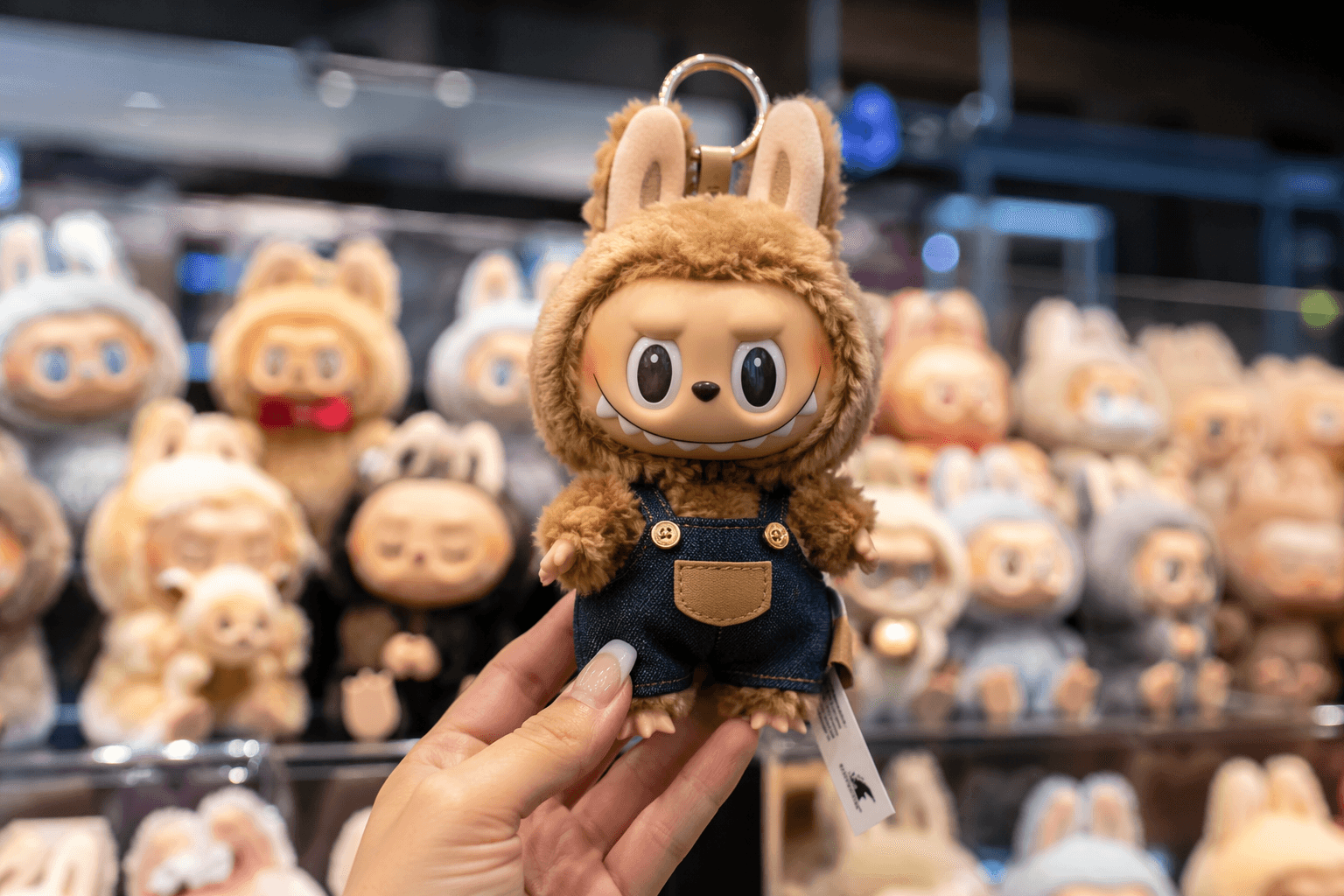
Pop Mart Files EU Trademark for Labubu Covering Food and Beverage Categories
Pop Mart's new EU trademark for Labubu (application 019336295) covers confectionery, ice cream, and coffee, signalling a food and beverage brand push across all 27 EU member states.
Beijing Pop Mart Cultural Creative Co., Ltd. filed a new EUIPO trademark application for the mark "LABUBU" on March 24, covering a scope of goods that goes well beyond the blind boxes that turned the brand into a global phenomenon. Application number 019336295 is currently under examination and lists food and beverage categories including coffee, tea, sugar, confectionery, pastries, prepared desserts, ice cream, and a range of processed food items. That language maps squarely to Nice Class 30, the EU classification governing packaged foods and confections. The filing was routed through Page White Farrer, an established European intellectual property firm, signaling a deliberate and professionally coordinated move rather than routine portfolio maintenance.
For collectors trying to read between the lines, the practical translation is this: Pop Mart is legally reserving the right to put the Labubu name on café menus, packaged snacks, drink collaborations, and event concessions across all 27 EU member states. The European cities most likely to see these formats first are those where Pop Mart already has a retail footprint and where its experiential model is most developed. London, which Pop Mart designated as its European headquarters in January 2026, is the obvious anchor. Paris and Amsterdam, both established stops on its continental store rollout, follow closely.
What application 019336295 does not mean, however, is a confirmed launch. The filing is still at the examination stage, where third parties have a window to file oppositions after the application is formally published in the EUIPO journal. No café concept, packaged food partnership, or licensed confectionery deal has been announced. Filing covers intent and protection; production and distribution agreements are an entirely separate set of steps.
The defensive logic is just as important as the commercial one. Pop Mart has weathered multiple counterfeiting waves as Labubu's popularity scaled: the brand moved 100 million units in 2025, powering Pop Mart to 37.12 billion yuan in revenue for the year, a 185 percent increase. A brand operating at that volume has strong incentive to close IP gaps before an unauthorized European food producer or café chain stakes a claim. Any business that tried to launch Labubu-branded pastries or coffee in the EU without a licensing agreement from Pop Mart would now face a far clearer legal obstacle.

The goods list also mirrors formats Pop Mart has deployed in Asia, where character-branded cafés, exhibition dessert concessions, and in-store food tie-ins have become standard parts of the IP activation playbook for major collectible brands.
The watchlist for what comes next is specific. Monitor the EUIPO journal for the formal publication date of application 019336295, which starts the three-month opposition window and will reveal whether any European food or hospitality company moves to challenge the filing. Additional filings in Nice Class 32 (non-alcoholic beverages) or Class 43 (restaurant and café services), neither of which the current application explicitly covers, would sharpen the picture considerably and indicate a more comprehensive F&B buildout is underway. Retail partner announcements from European confectionery brands or news of a licensing agent appointment in the region would be the clearest signal that protection has moved toward an actual product rollout.
This article was produced by Prism’s automated news system from verified source data, official records, and press releases, then run through automated quality and moderation checks before publishing. The system is built and supervised by the people who set the standards it runs under. Read our full AI policy.
Did this article answer your question?