Pop Mart Loses $33 Billion as Investors Question Life Beyond Labubu
Pop Mart shed $33 billion in five trading days as investors fretted over Labubu dependency, while a FIFA World Cup collection still drops this week.
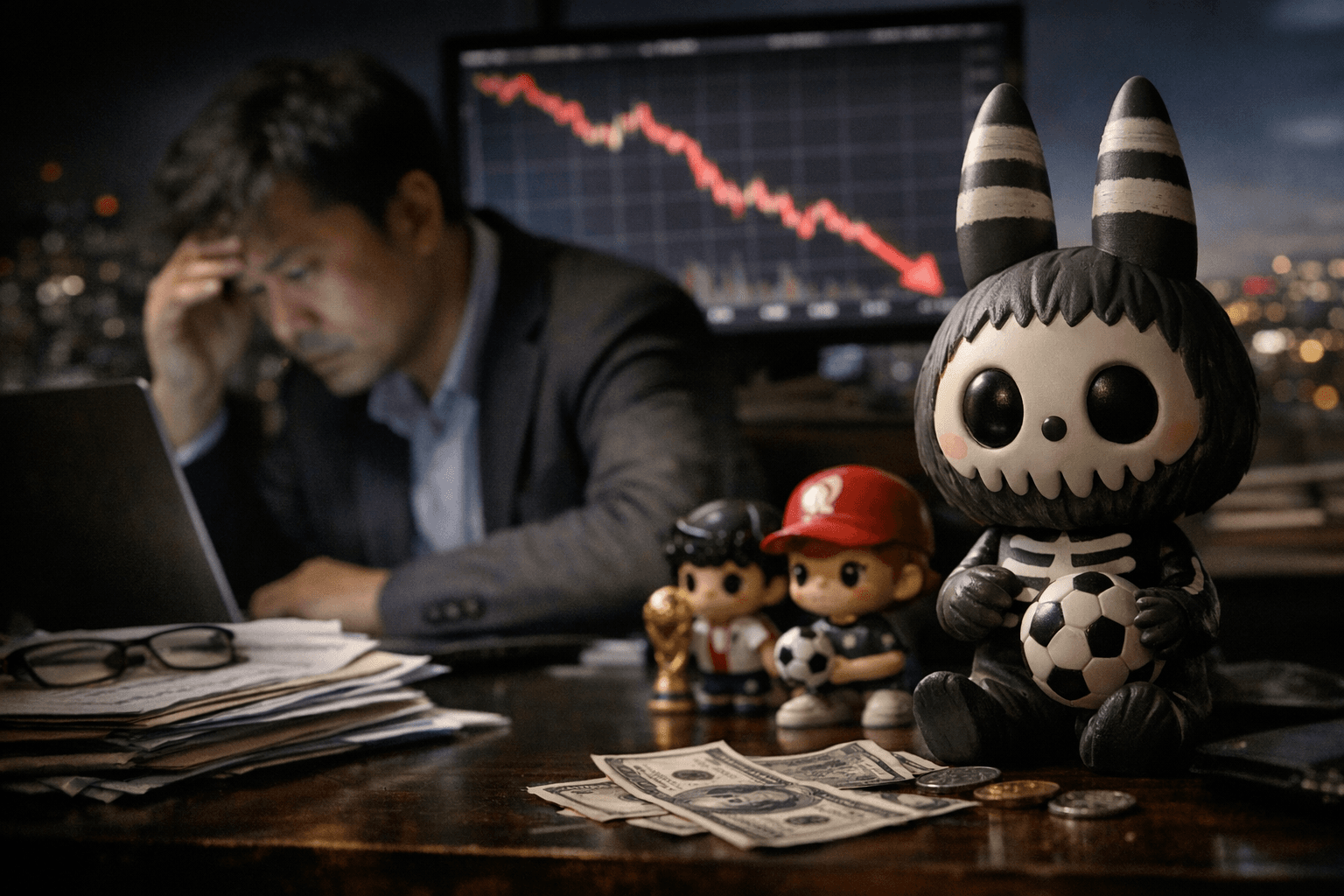
Pop Mart and FIFA confirmed a new Labubu World Cup collection for April 2 just as the Beijing-based toymaker's stock plunged more than 30% over five trading sessions, erasing roughly US$33 billion from its market capitalization. The tension between that product pipeline and the panic in the broader market captures exactly what matters most for collectors trying to read this moment.
The selloff extended a decline from Pop Mart's record August high to nearly 60%. On paper, the annual results that triggered it were exceptional: revenue surged 184.7% to 37.12 billion yuan (roughly US$5.4 billion) and net profit quadrupled to 13.08 billion yuan. What rattled investors was the source of that growth. The Monsters IP family, anchored by Labubu, accounted for roughly 38% of total annual revenue, with its own sales climbing 365.7% year-on-year to 14.16 billion yuan, making it the company's first IP franchise ever to surpass 10 billion yuan in a single year. No other single franchise came close.
Deutsche Bank's Sammi Xu downgraded the stock and warned that "we don't think the market has fully factored in a long downcycle scenario with a much lower margin." The concern is structural: when one character drives nearly two-fifths of revenue, a sustained cooling of that character's appeal hits margins harder than most sell-side models have modeled. Multiple buyback attempts failed to halt the slide, and short interest kept rising.
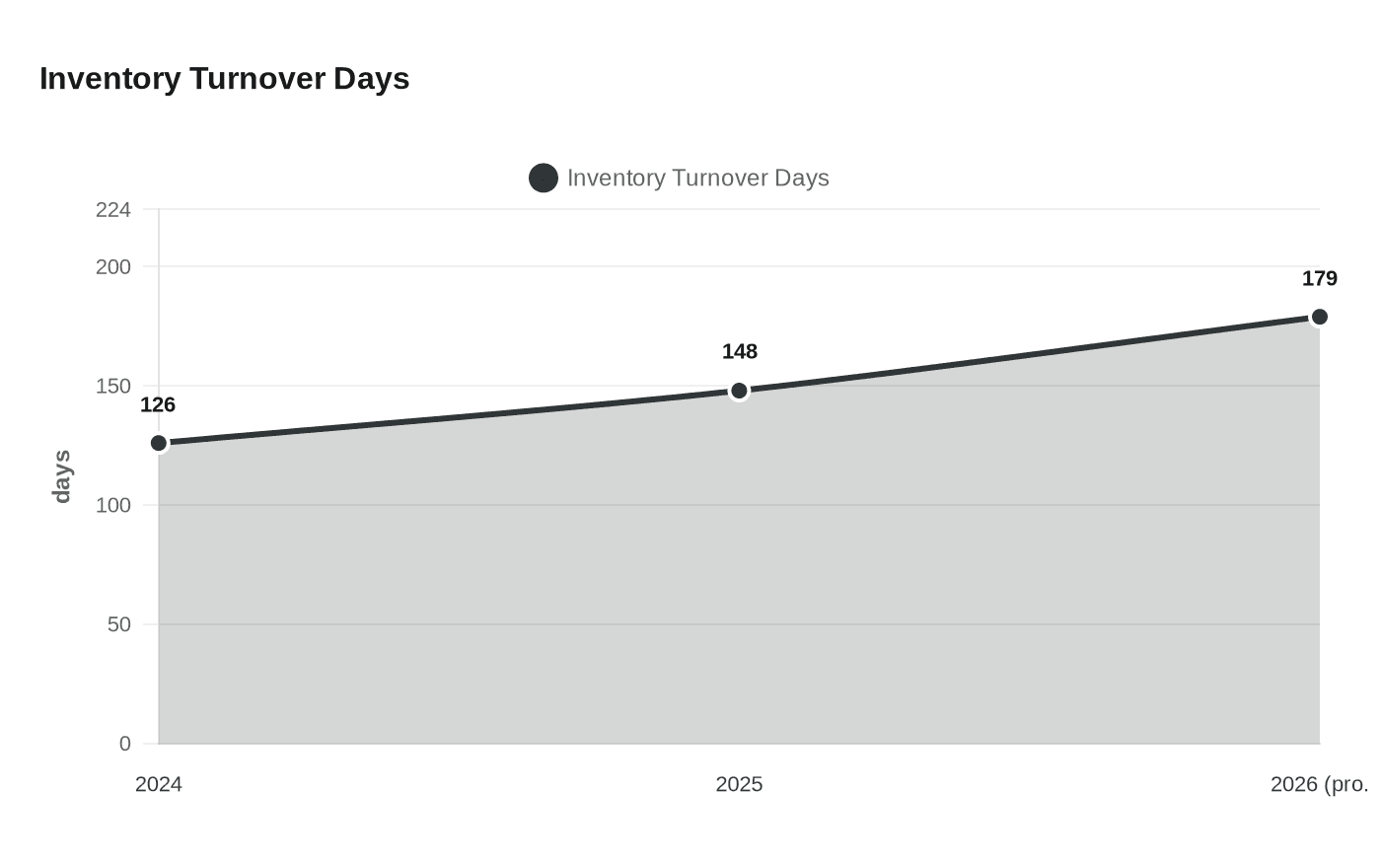
The inventory numbers sharpen the picture. Pop Mart's stock on hand grew from 1.5 billion yuan at end-2024 to 5.5 billion yuan by end-2025, and inventory turnover days climbed from 126 to 148 over the same period. Morgan Stanley projects those days could reach approximately 179 in 2026, approaching levels last seen during pandemic-era supply disruptions. For collectors, that inventory buildup has a direct shelf implication: the sub-90-second sellouts that defined peak Labubu drops in 2024 may ease in the near term, though it also reflects an overseas expansion that outran demand in several markets.
The secondary market already priced in the shift. By late 2025, resale prices in major markets had fallen by more than half from their summer peaks, with a standard Labubu figurine that traded above 500 yuan in June 2025 now selling at roughly one-fifth that price. Pop Mart, for its part, publicly welcomed the correction, arguing that lower resale prices serve long-term brand health by discouraging scalpers and making the product accessible to actual fans.
Pop Mart's answer to investor skepticism leans on IP diversification. A Labubu feature film developed with Sony Pictures Entertainment is in scripting. The company disclosed that 17 of its IPs crossed 100 million yuan in annual sales in 2025, and overseas revenue now exceeds 40% of the total. The FIFA collection, which includes a vinyl plush doll and a bottle-opener fridge magnet blind box among its formats, hits the Pop Mart app Thursday night and reaches physical stores Friday.
The practical signals to track over the next three to six months: whether inventory turnover days start declining in the next quarterly update, signaling supply-chain normalization; how the FIFA series' first-day sell-through compares to earlier marquee drops; whether secondary-market pricing on recent Labubu series stabilizes or keeps eroding; and what share of total revenue The Monsters carries in Q1 2026. If that figure retreats from 38% without a corresponding drop in total revenue, the diversification argument gets its first real data point. Until then, a company shedding $33 billion while its flagship character lands a World Cup collab is the most honest read on where Labubu stands right now.
This article was produced by Prism’s automated news system from verified source data, official records, and press releases, then run through automated quality and moderation checks before publishing. The system is built and supervised by the people who set the standards it runs under. Read our full AI policy.
Did this article answer your question?


