Cleopatra, Exiled Pharaoh Leads Golgari Counters Into a New Era
Michelangelo, Weirdness to 11 from the TMNT set is the one upgrade Cleopatra, Exiled Pharaoh's Golgari counters deck has been waiting for.
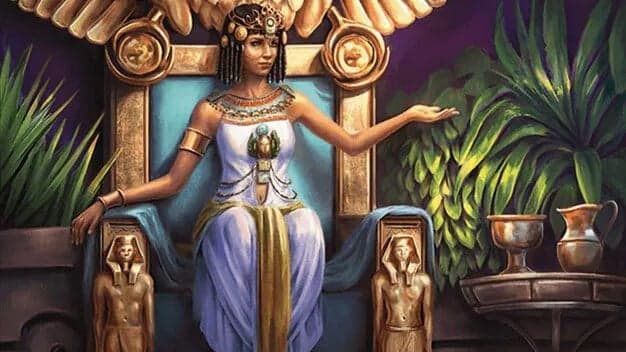
Michelangelo, Weirdness to 11 from the TMNT set costs just two mana and does exactly what Cleopatra, Exiled Pharaoh needs. That single card arriving in the format is reason enough to revisit this deck, and once you do, you'll find a commander that has quietly grown stronger with every new Universes Beyond release.
Cleopatra is a {2}{B}{G} Legendary Creature with a 2/4 body built for the long game. Her Allies ability puts a +1/+1 counter on each of up to two other target legendary creatures at the beginning of your end step, while her Betrayal ability triggers whenever a legendary creature with counters on it dies: you draw a card for each counter on it and lose 2 life. That combination is the engine. Feed it legendary creatures, stack counters, and cash those legends in for cards. What you do with the advantage is where this deck gets genuinely interesting.
What Cleopatra Actually Does
As Draftsim puts it, Cleopatra promotes a strategy that combines legends-matters with +1/+1 counter synergies, something that hasn't been done in the black/green color combination before. The aristocrat angle runs through everything. You are not just building a tall board; you are building a board that rewards you for watching it die. Cleopatra's Betrayal trigger fires on any legendary creature death with counters, including your opponents'. That means every combat step at a four-player table has potential value for you.
The trickiest design decision in building around her involves counter types. The deck naturally wants +1/+1 counters to maximize Betrayal draw triggers, but -1/-1 counter synergies are genuinely powerful in Golgari and interact well with the aristocrat shell. The warning here is blunt: you'll need to be careful adding both at the same time, as they cancel each other out.
The TMNT Upgrade That Changes Everything
The Teenage Mutant Ninja Turtles set, released March 6, 2026, injected a wave of new legendary creatures into the format, and one of them is a near-perfect fit for this deck.
Michelangelo, Weirdness to 11 costs {1}{G}, enters as a 1/1 Legendary Mutant Ninja Turtle, and carries a static ability that causes that many plus one +1/+1 counters to be placed on any creature you control whenever one or more +1/+1 counters would be placed on it. That is a Hardened Scales effect on a two-mana legend, which is exactly what this deck wants. He also enters creating a Mutagen token, an artifact that can be sacrificed for {1} to put a +1/+1 counter on a target creature. Every counter Cleopatra distributes at end step gets inflated by Mikey sitting on the table. Every creature that enters with counters arrives larger. The compounding is immediate and obvious.
Finishers and Winning Lines
One of the underrated strengths of this archetype is the number of distinct paths to victory. You are not tunneling down a single combo line; you have a full menu.
The first involves Jarad, Golgari Lich Lord, named as a powerful finisher in this shell. His activated ability costs mana but it is absolutely worth it if you can knock a threat out of the game, particularly when your legends have been stacking counters across multiple turns.
The second set of finishers relies on getting a Walking Ballista under Agatha's Soul Cauldron. Sometimes the line is to swing in with a large trampling board and ping down the rest of the damage. This is the deck's cleanest combo path: a Ballista with enough counters under the Cauldron generates repeatable damage, and combining it with a trample attack means even a partial block doesn't save the opponent.
When those lines are unavailable, Plan D takes over: sacrifice your board to Altar of Dementia and mill out someone. The Living Death variation is the most dramatic version of this: cast Living Death, sacrifice your board to Altar targeting yourself, then reanimate all your creatures. You rebuild your entire board from the graveyard and leave opponents with whatever survived mill. It is as filthy as it sounds.
Counter Type Considerations and -1/-1 Synergies
The deck's trigger fires whenever opponents' legends die with counters, which opens an interesting side door. You might want to dip your toes into -1/-1 counter synergies, since Cleopatra triggers whenever your opponents' legends die with counters. Placing -1/-1 counters on your opponents' legends and watching them die to their own board can generate explosive card draw.
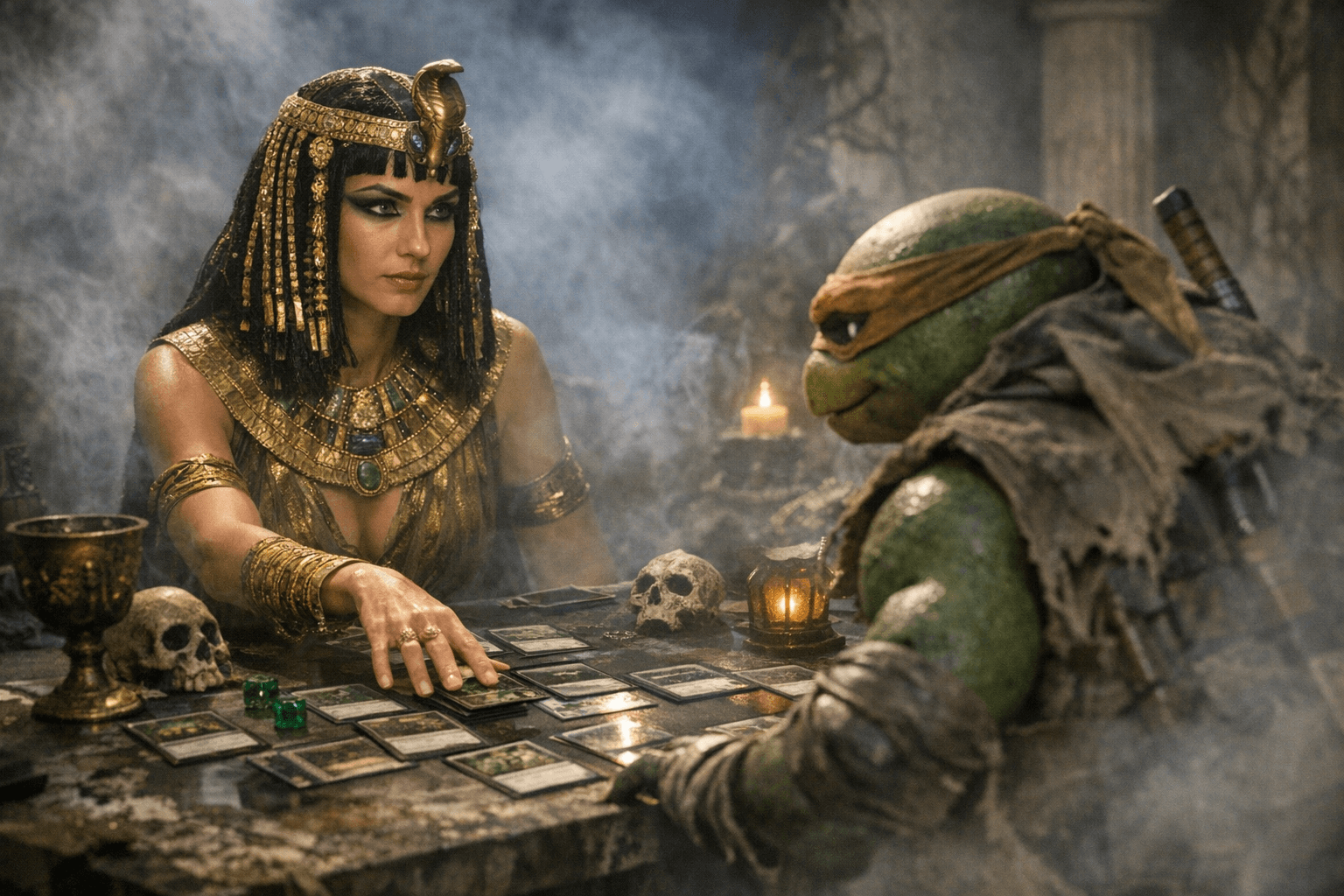
The intersection of -1/-1 counters and aristocrats makes Yawgmoth, Thran Physician and Grist, the Hunger Tide notable additions to consider. Yawgmoth in particular pulls double duty: he's a sacrifice outlet, a -1/-1 counter source, and a card draw engine in his own right. Grist adds graveyard recursion and removal wrapped in a Golgari legend who can actually be played from the command zone as a Planeswalker. Both fit the broader shell, but remember that Yawgmoth's -1/-1 counters will actively counteract any +1/+1 counters on your own creatures. Build with intention.
The Decklist Skeleton
The deck runs heavy on creatures, which makes sense for a legendary-matters strategy that depends on having sacrificeable board presence at all times. The breakdown:
- Commander (1)
- Creatures (37)
- Instants (10)
- Sorceries (8)
- Enchantments (6)
- Artifacts (7)
- Battles (1)
- Lands (30)
The label "Golgari Legendary Counters" captures the identity precisely. Thirty-seven creatures is a significant commitment; this is not a spellslinger deck masquerading as a creature deck. The single Battle slot is a nod to the relative scarcity of useful Battle cards in Golgari, but it signals the deck is willing to explore every card type if it synergizes with the gameplan.
Threats and How Opponents Will Come For You
The biggest threat to this deck is graveyard hate and decking yourself. Both deserve serious thought in deckbuilding.
Graveyard hate is obvious: Living Death stops working when your graveyard is exiled, and Agatha's Soul Cauldron becomes awkward when your graveyard is empty. Pack redundancy where possible and consider ways to protect your yard or reload it quickly.
The decking risk is subtler and more personal. There are games where opponents force you to draw your library by trading two big legendary creatures in combat. When Cleopatra's Betrayal trigger fires over and over on counters-loaded legends, the card draw can be so explosive that you run yourself out of cards. This is not a theoretical concern; it happens in real games. Watch your library count in long grindy sessions, particularly when you're generating ten or more draw triggers in a single turn cycle.
Where Cleopatra Sits in the Broader Golgari Counter Landscape
Cleopatra ranks competitively among Golgari counter commanders. The broader pool of commanders in this design space includes Tayam, Luminous Enigma, described as a commander that can turn counters floating around your creatures into mini recursive spells in casual matches, though any kind of counter will do. Tayam has a reputation in higher-powered environments as well.
Felothar, Dawn of the Abzan takes a slightly different angle, blending aristocrats with counters. Key payoffs for Felothar are creatures like Basking Broodscale and Scurry Oak that produce tokens when counters are put onto them; they simultaneously build a board to benefit from Felothar's counters and provide sacrifice fodder the following turn. Felothar's flexibility over construction is real, but Cleopatra's built-in card draw sets her apart: it doesn't require additional pieces to generate advantage, just creatures dying with counters.
The larger ranked context includes commanders like Skullbriar, the Walking Grave, Felisa, Fang of Silverquill, Anim Pakal, Thousandth Moon, and Sarulf, Realm Eater all competing in adjacent +1/+1 or counter-matters territory. Cleopatra sits comfortably in the mix and, with Michelangelo, Weirdness to 11 now legal and accessible, she may be pulling away from that pack. A two-mana legendary that amplifies every single counter she places is not a subtle upgrade. It is the missing piece that turns a good deck into a deck that warrants immediate reconsideration.
This article was produced by Prism’s automated news system from verified source data, official records, and press releases, then run through automated quality and moderation checks before publishing. The system is built and supervised by the people who set the standards it runs under. Read our full AI policy.
Did this article answer your question?