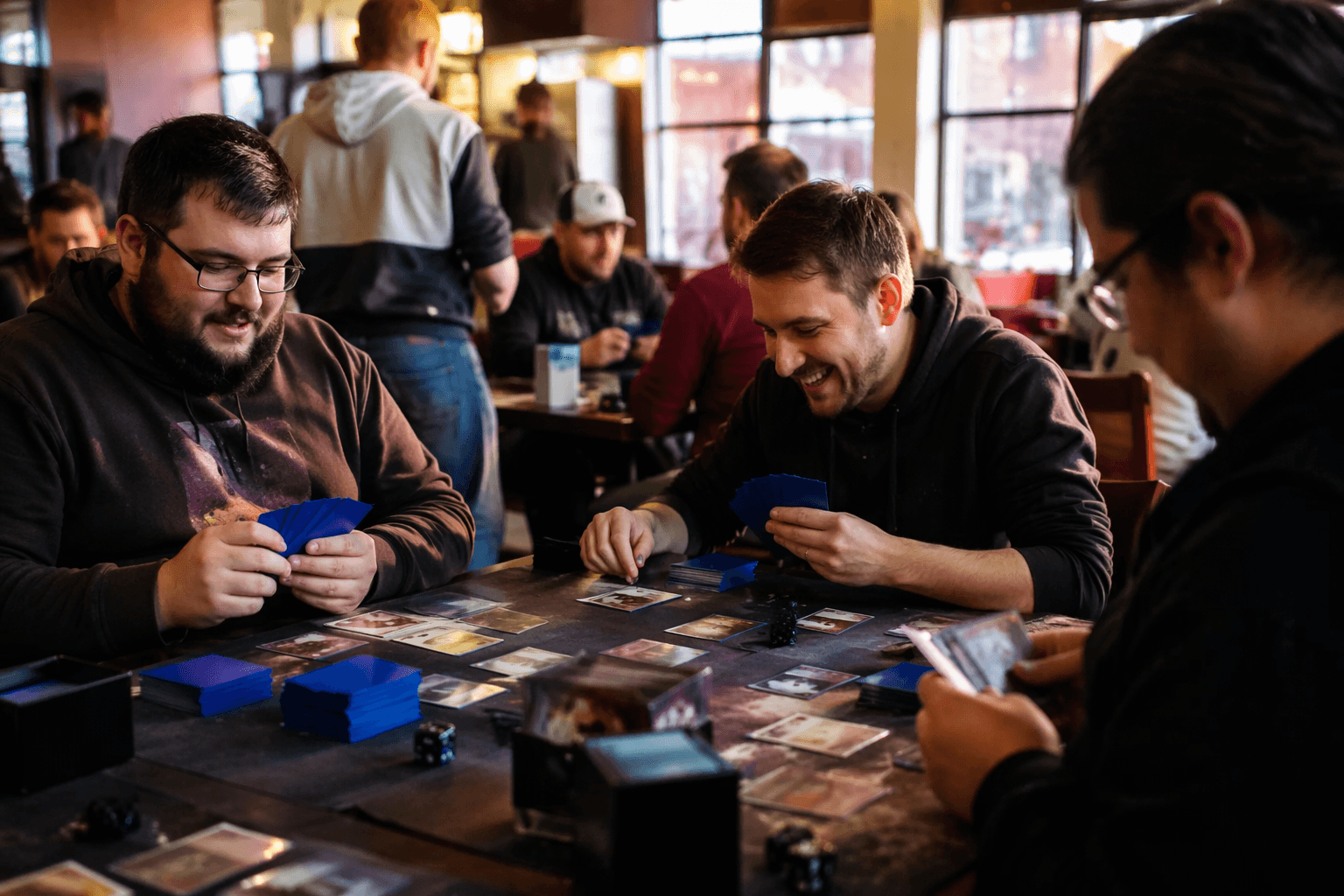
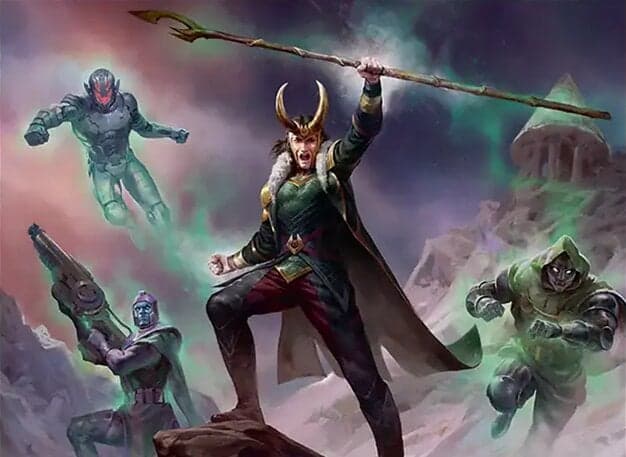
Commander's Rapid Evolution Raises Questions About Long-Term Community Sustainability
Commander is changing faster than ever, and EDHREC's Cas Hinds is asking the question the whole community is quietly thinking: can the format keep up with itself?

If you've sat down to a Commander game recently and felt like the rules, the card pool, or even the social contract around the table has shifted since the last time you played, you're not imagining it. The format is evolving at a pace that's genuinely unprecedented, and Cas Hinds, writing for EDHREC, has put that feeling into words with a long-form piece titled "The Rate of Change With the Commander Format," published March 16, 2026. It's the kind of article that lands differently depending on where you sit in the Commander ecosystem, but it's asking a question that touches every player: is the speed at which Commander is changing actually sustainable for the community that loves it?
The Format Has Never Stood Still, But Something Feels Different Now
Commander has always been a living format. It started as a casual, multiplayer experiment among judges and grinders who wanted a slower, more social way to engage with Magic, and it grew organically into the most-played format in the game. Rules changes, errata, Commander-specific card designs, preconstructed decks, and shifts in community norms have always been part of that evolution. But there's a difference between a format growing and a format sprinting, and the argument at the heart of Hinds' piece is that Commander may have crossed from one into the other.
The structural changes Hinds interrogates aren't just cosmetic. They involve the foundational assumptions players bring to the table: what kinds of cards are designed for Commander, how frequently those designs push against or outright redefine existing rules, and how quickly the broader community is expected to absorb those changes and update their understanding of the format. When those shifts come fast enough, players don't just adapt. Some of them disengage entirely.
Cultural Shifts Are Harder to Track Than Rule Changes
Rule changes have a timestamp. You can point to a date when a card went to the banned list, or when a mechanic interaction was clarified, and orient yourself around it. Cultural shifts in Commander are murkier, and Hinds' piece is particularly sharp on this point. The social contract that governs Commander tables, the unwritten agreements about power level, the etiquette around certain strategies, and the community consensus on what "fun" looks like in a multiplayer game, all of these are being renegotiated in real time as the format's player base grows and diversifies.
That diversification is largely good news for the longevity of the format. More players means more perspectives, more deck archetypes, and more ways to experience Commander. But growth also creates friction. A format that was once maintained by a relatively tight-knit community with broadly shared values now serves millions of players with wildly different expectations. When changes come quickly on top of that existing tension, the community's ability to reach consensus about what Commander even is starts to strain.
Precon Culture and the Pace of New Product
One of the most concrete drivers of Commander's accelerating change is the sheer volume of product Wizards of the Coast releases specifically designed for the format. Preconstructed Commander decks have shifted from an occasional release to a near-constant presence in the release calendar, and each new wave introduces not just new cards but new mechanical concepts, new pushed card designs, and new implicit arguments about what competitive or casual Commander should look like.
This is where the structural and cultural dimensions of change start to intersect. Every precon that introduces a powerful new mechanic or a splashy Commander with a complex ability set raises the baseline of what players encounter at the table. Players who can't or don't want to purchase new product to stay current find themselves in an arms race they didn't sign up for. The rate of release doesn't just affect deck construction; it affects the social dynamics of every pod that sits down together.

Why Sustainability Is the Right Question to Ask
Hinds frames the piece around sustainability, and that framing matters. The question isn't whether Commander is good right now or whether individual changes have been good or bad in isolation. The question is whether the cumulative rate of change leaves the community enough breathing room to absorb, discuss, and genuinely consent to where the format is heading.
Sustainability in a format context means something specific: can the average engaged player keep up with what's happening without burning out? Can new players find a stable entry point that doesn't feel like it's been obsoleted six months later? Can long-term players maintain the emotional and financial investment that made Commander their primary way of engaging with Magic in the first place? These aren't hypothetical concerns. They describe real friction points that are already visible in community spaces, at local game stores, and in the ongoing conversation about power creep and format identity.
The Value of Naming What's Happening
Long-form pieces like Hinds' serve a specific function in a community like Commander's. Data can tell you which commanders are being built and which cards are being slotted into decks at what rate. EDHREC is extraordinarily good at that kind of analysis. But quantitative data can't fully capture the experience of sitting across from a new precon commander you've never seen before and feeling like the game you loved has quietly moved the goalposts while you weren't watching.
What Hinds does in "The Rate of Change With the Commander Format" is give language to something players have been feeling but perhaps struggling to articulate. That's valuable independent of whether you agree with every conclusion in the piece. The conversation about how fast Commander should change, who gets to decide that, and what the community owes its least resourced and most casual members is exactly the kind of conversation that a format with Commander's reach needs to be having out loud.
What Comes Next
Commander's structural trajectory isn't going to reverse. The product pipeline is real, the player base keeps growing, and the appetite for new card designs in the format shows no signs of slowing. But the pace of cultural adaptation is something the community has more agency over than it sometimes appears. Local metas can set their own norms. Pods can agree on eras, budgets, or power levels that let everyone play the game they actually want to play rather than the one that the current release calendar implies they should.
The deeper sustainability question Hinds raises may not have a clean answer, but the fact that it's being asked clearly, publicly, and on a platform with EDHREC's reach means it's now part of the format's ongoing conversation. That conversation, more than any individual rule change or banned list update, is what will ultimately determine what Commander looks like for the next decade.
This article was produced by Prism’s automated news system from verified source data, official records, and press releases, then run through automated quality and moderation checks before publishing. The system is built and supervised by the people who set the standards it runs under. Read our full AI policy.
Did this article answer your question?