EDHREC Reassesses Aetherdrift Commanders, Comparing Predictions to Reality
EDHREC’s Aetherdrift scorecard shows which legends turned spoiler buzz into real decks and which ones stayed niche. The gap between Gonti and the stragglers tells the story.
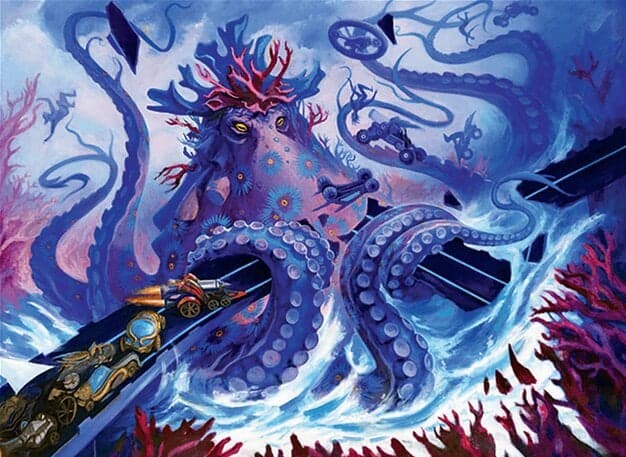
Gonti, Night Minister ended up in 4,614 Commander decks, while Valor’s Flagship barely reached 10. That spread is the whole Aetherdrift usefulness check: some legends converted the set’s hype into durable deckbuilding interest, and others never escaped the spoiler-season conversation. EDHREC’s Over/Under framework is built for exactly that kind of reality check, measuring whether a new commander clears 1,200 decks after a year of circulation. Kyle Massa used the format for Aetherdrift on February 15, 2025, after applying it to Murders at Karlov Manor, The Lost Caverns of Ixalan, Foundations, and Doctor Who.
A death-race set that had to earn staying power
Aetherdrift was never a normal Commander release. Wizards built it around the Ghirapur Grand Prix, a multiversal race for the Aetherspark, with ten racing teams battling across the Multiverse in what the setting describes as the second annual interplanar edition of the event. The set also brought in the new mechanics start your engines! and speed, which gave it a loud, aggressive identity from the start. That matters in Commander because a flashy combat set can create instant interest, but only commanders with enough card advantage, flexibility, and deck space keep that interest alive once people start sleeving up lists.

The story framing helped sell the spectacle too. Miguel Lopez’s guides and K. Arsenault Rivera’s story chapters put Chandra Nalaar in the middle of the race, and the action spilled through places like Ghirapur, Avishkar, and Muraganda. In other words, this was a lore-heavy set with a clear visual hook, not just a pile of mechanical toys. That makes the Commander data more meaningful, because it shows which legends actually carried the setting’s identity into long-term deckbuilding.
The precons gave players a clean entry point
Wizards also shipped Aetherdrift with two ready-to-play Commander decks, Living Energy and Eternal Might. Each deck is a full 100-card list, and each includes 10 new-to-Magic cards, which makes the product line a real on-ramp rather than a teaser. Jubilee Finnegan’s decklist reveal mattered because precons often shape the first wave of adoption: when a set gives players a functional shell out of the box, it can drag the whole theme into more tables. Living Energy leans green-blue-red, while Eternal Might is white-blue-black, so the release covered both artifact-driven energy play and a graveyard-leaning zombie build.
That kind of support is one reason Aetherdrift’s commander conversation stayed broad. The set did not force every brewer into a single race-matters lane. Instead, it offered artifact pressure, vehicle shells, token engines, theft, graveyard value, and counters-based builds, which is exactly the kind of spread that gives Commander players real choices after the first weekend of hype passes.
The legends that actually turned into decks
The clearest success stories are the commanders that cleared EDHREC’s 1,200-deck benchmark by a wide margin and did it with flexible shell identity. Gonti, Night Minister is the standout example, sitting at 4,614 decks and supporting theft, group hug, and Treasure lines that keep the deck interesting even when the table knows what it is up to. Vnwxt, Verbose Host is right there too at 4,538 decks, and its card draw, wheels, and control package gives it a sturdier long-game identity than a purely novelty commander would have.
Kolodin, Triumph Caster also proved that Aetherdrift’s vehicle identity could absolutely hold up. Its 3,394 decks are backed by vehicles, artifacts, and aggro, which is the exact mix that Commander players like when they want a commander to turn cardboard into pressure quickly. Sab-Sunen, Luxa Embodied landed at 3,480 decks with +1/+1 counters, Voltron, and ramp, while Caradora, Heart of Alacria reached 1,666 decks by blending +1/+1 counters, vehicles, and toolbox utility. Those numbers tell a very clear story: broad, modular commanders outlast the ones that need too many exact pieces to matter.
Where the hype cooled off
The weaker adopters were the legends that looked fine on paper but did not inspire broad enough deckbuilding. Basri, Tomorrow’s Champion stalled at 125 decks despite a tokens, cats, and lifegain identity. Sundial, Dawn Tyrant only reached 221 decks, and Caelorna, Coral Tyrant sat at 220. Mu Yanling, Wind Rider did better than those two at 1,103 decks, but it still missed the 1,200 line that EDHREC uses as the Over/Under cutoff.
Sita Varma, Masked Racer shows how a commander can get some community attention without becoming a staple. It sits at 495 decks, with +1/+1 counters, ramp, tokens, and aggro all present in the data, yet the interest is still far below the set’s real winners. Valor’s Flagship is the extreme case, with only 10 decks and a vehicle, artifacts, and lifegain profile that never found enough traction. If you are deciding where to spend time and money, those are the names that belong on the cautious side of the ledger.
Build this, skip that
- Build this: Gonti, Night Minister if you want a high-ceiling value engine that turns theft and Treasure into repeated table pressure. Vnwxt, Verbose Host if card draw, wheels, and control are your language. Kolodin, Triumph Caster if you want Aetherdrift’s vehicle theme to actually close games instead of just looking cool.
- Build this: Sab-Sunen, Luxa Embodied and Caradora, Heart of Alacria if you want commanders with real room to tune, because their counters-plus-ramp or counters-plus-vehicles shells give you room to personalize the list without fighting the commander.
- Skip or stay selective: Valor’s Flagship unless you specifically want a tiny, theme-first vehicle deck. Basri, Tomorrow’s Champion, Sundial, Dawn Tyrant, and Caelorna, Coral Tyrant all stayed well below the adoption line, which is usually a sign that the commander asks for more setup than most tables want to support.
The big lesson from Aetherdrift is simple: Commander players do not just reward the coolest premise, they reward the cleanest deck. EDHREC’s Over/Under retrospective is useful because it separates a loud release from a lasting one, and Aetherdrift makes the difference plain. When a legend clears 3,000 or 4,000 decks, it has become part of the format’s living conversation; when it stalls near 100 or 10, it is a curiosity, not a build-around. That is the line worth remembering the next time a set promises the need for speed.
This article was produced by Prism’s automated news system from verified source data, official records, and press releases, then run through automated quality and moderation checks before publishing. The system is built and supervised by the people who set the standards it runs under. Read our full AI policy.
Did this article answer your question?