Gutter Grime Turns Cheap Sacrifice Decks Into Massive Ooze Swarms
A $0.40 enchantment from Innistrad can turn every nontoken creature you sacrifice into a bigger Ooze, and in the right Commander shell that is enough to end games.
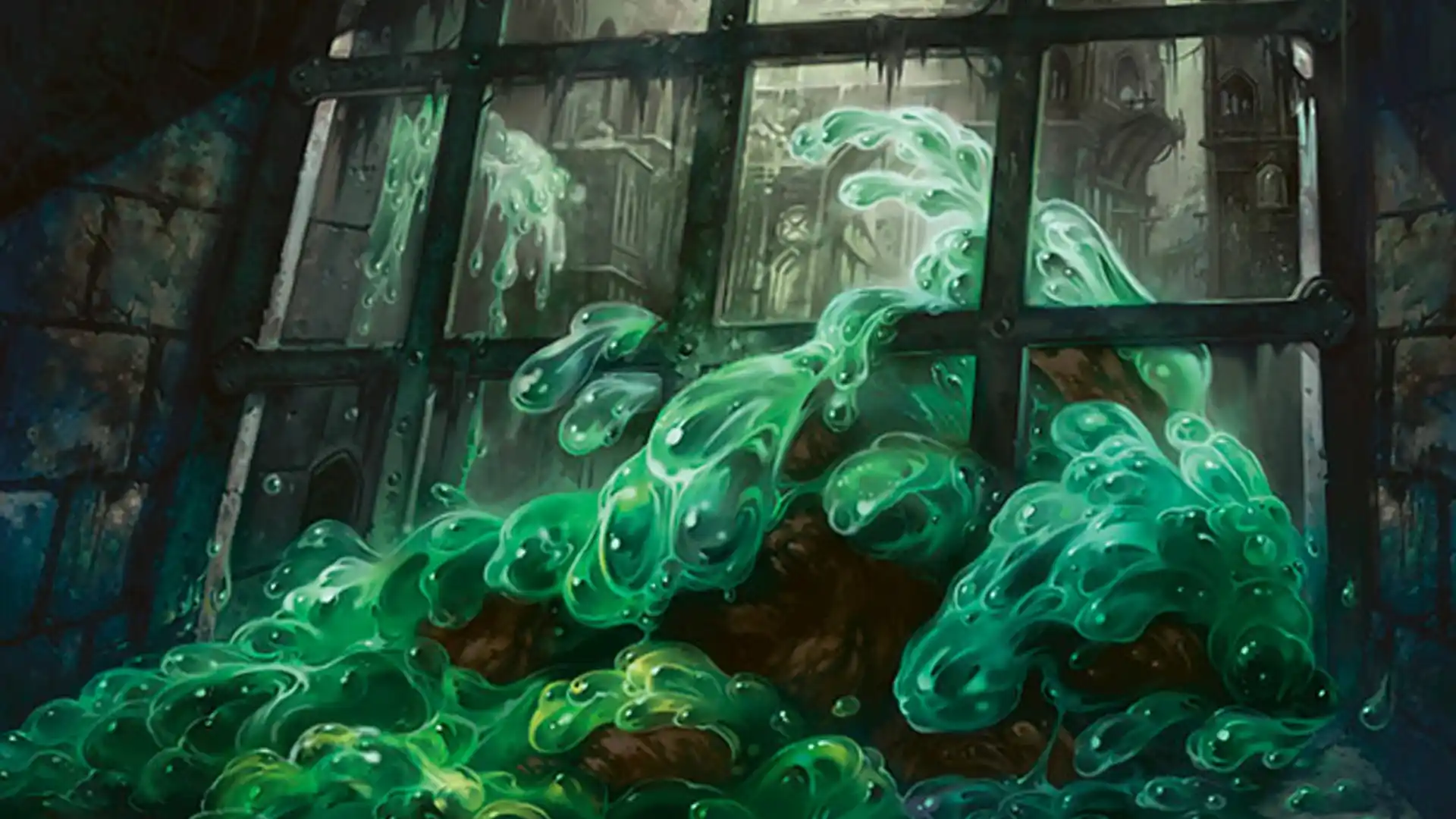
Why Gutter Grime is more than a meme
A $0.40 enchantment from Innistrad can turn every nontoken creature you sacrifice into a bigger Ooze, and in the right Commander shell that is enough to end games. Gutter Grime costs five mana, so it is never pretending to be efficient on raw rate, but the payoff is brutally simple: whenever one of your nontoken creatures dies, you get a green Ooze and a slime counter, and the Oozes scale with every counter already on the enchantment.
That scaling is the entire reason the card deserves a second look. The token’s power and toughness are each equal to the number of slime counters on Gutter Grime, and those numbers keep updating as more counters are added. In practice, the first creature death gives you a fragile token, but the second, third, and fourth deaths quickly turn the board into something that can overrun tables. Gutter Grime was printed in Innistrad in 2011, it is a rare enchantment illustrated by Erica Yang, and it remains legal in Commander, Legacy, Modern, Vintage, Brawl, Oathbreaker, and Penny.
What kind of board state makes it dangerous
Gutter Grime is at its best when your deck already expects creatures to die on purpose. If you are playing sacrifice outlets, recursive bodies, and repeatable death triggers, the enchantment stops being a clunky five-drop and starts behaving like a growing army in a single card. The important detail is that it only checks nontoken creatures, so you want real bodies entering and leaving the battlefield, not just disposable tokens feeding a sac outlet.
That means the sweetest setup is usually a steady loop of creatures you are happy to cash in. One death is only a foothold, but multiple deaths in the same turn can create an Ooze that immediately matters. In a token-heavy deck, Gutter Grime still likes the support, but the actual fuel has to come from nontoken creatures, recursion, or commanders that keep replaying the same bodies over and over.
The best homes are already doing the work
Aristocrats is the cleanest home for Gutter Grime because those decks are already built around turning creatures into value. Henry Wu, InGen Geneticist, and Meren of Clan Nel Toth are both natural fits because they give you reasons to loop creatures through the graveyard and back onto the battlefield, which is exactly the kind of churn Gutter Grime wants. If your commander is already rewarding sacrifices, reanimation, or repeatable deaths, the enchantment becomes a payoff that fits the game plan instead of a detour.
Ooze typal lists give Gutter Grime another lane entirely. Aeve, Progenitor Ooze is especially appealing because the deck already wants a battlefield full of Oozes, and Gutter Grime supplies both the creature type and the size increase. That matters more than it sounds, because every new death does not just add another body, it makes the next body larger too. For a tribal deck that wants to keep snowballing, that is a very real way to move from cute to lethal.
The support pieces that push it over the top
The card gets much scarier when you add proliferate and token-doubling effects. Evolution Sage can speed up the slime counter growth, which means every future Ooze arrives bigger than the last. Parallel Lives does something even more obnoxious by doubling the token output, so every nontoken death starts creating a much faster army. Once those pieces are online, Gutter Grime stops asking whether it will make a board and starts asking how fast it can take over the table.

You do not need a pile of expensive staples to make that happen either. The enchantment is sitting in the low-$0.40 range on current market trackers, with a market price around $0.43 and an all-time high that never got far beyond $0.50. That is the definition of a budget sleeper: cheap enough to test, old enough to be overlooked, and threatening enough to steal wins from decks that are not prepared for a growing Ooze wall.
The combo line is real, not just Christmas-land
Gutter Grime also has a genuine combo finish attached to it. Commander combo databases list Gutter Grime plus Reassembling Skeleton plus Phyrexian Altar as a line that produces infinite death triggers, infinite ETB and LTB triggers, infinite sacrifice triggers, and an infinitely large creature token. EDHREC’s combo page marks it as legal in Commander Brackets 1-2 and shows it appearing in only a small number of decks, which is exactly the kind of low-profile package that slips under the radar until it ends a game.
The appeal here is not just that the combo exists. It is that all three cards are individually useful in the kind of deck that wants Gutter Grime anyway. Reassembling Skeleton is a sacrifice-friendly recursive body, Phyrexian Altar is a premium outlet, and Gutter Grime turns the loop into a growing board presence instead of just a pile of triggers. When a combo also doubles as battlefield pressure, it earns its slot much faster than a pure two-card trick.
Another route if you want to lean harder into land play
The enchantment also has room in decks that care about land-based engine turns. One listed line uses Beifong’s Bounty Hunters with an Earthbend-ed land and a sacrifice outlet, creating infinite enters and dies triggers while also opening up Landfall synergies. That is not the default home for Gutter Grime, but it shows how flexible the card can be once you stop treating it like a random old rare and start treating it like an engine piece.
That flexibility is the real story. Gutter Grime is not powerful because it does one flashy thing on its own. It is powerful because it bridges sacrifice, token production, and tribal growth in a way that rewards decks already built to exploit death as a resource.
The verdict on this budget pick
Gutter Grime is not a standalone all-star, and it is never going to compete with the cleanest five-mana finishers in Commander on rate alone. But in the right shell, especially Aristocrats and Ooze tribal, it becomes a genuine win condition that keeps getting better the longer the game goes. At roughly forty cents, it is the kind of card that punishes anyone who dismisses old Innistrad rares too quickly, and that is exactly why it belongs in the conversation.
This article was produced by Prism’s automated news system from verified source data, official records, and press releases, then run through automated quality and moderation checks before publishing. The system is built and supervised by the people who set the standards it runs under. Read our full AI policy.
Did this article answer your question?