How Many Lands Commander Decks Really Need, and Why It Depends
There is no magic land count in Commander. The right number swings from 23 in cEDH to the low 40s in slower decks, and curve, ramp, and table speed decide the rest.

The number is not the point
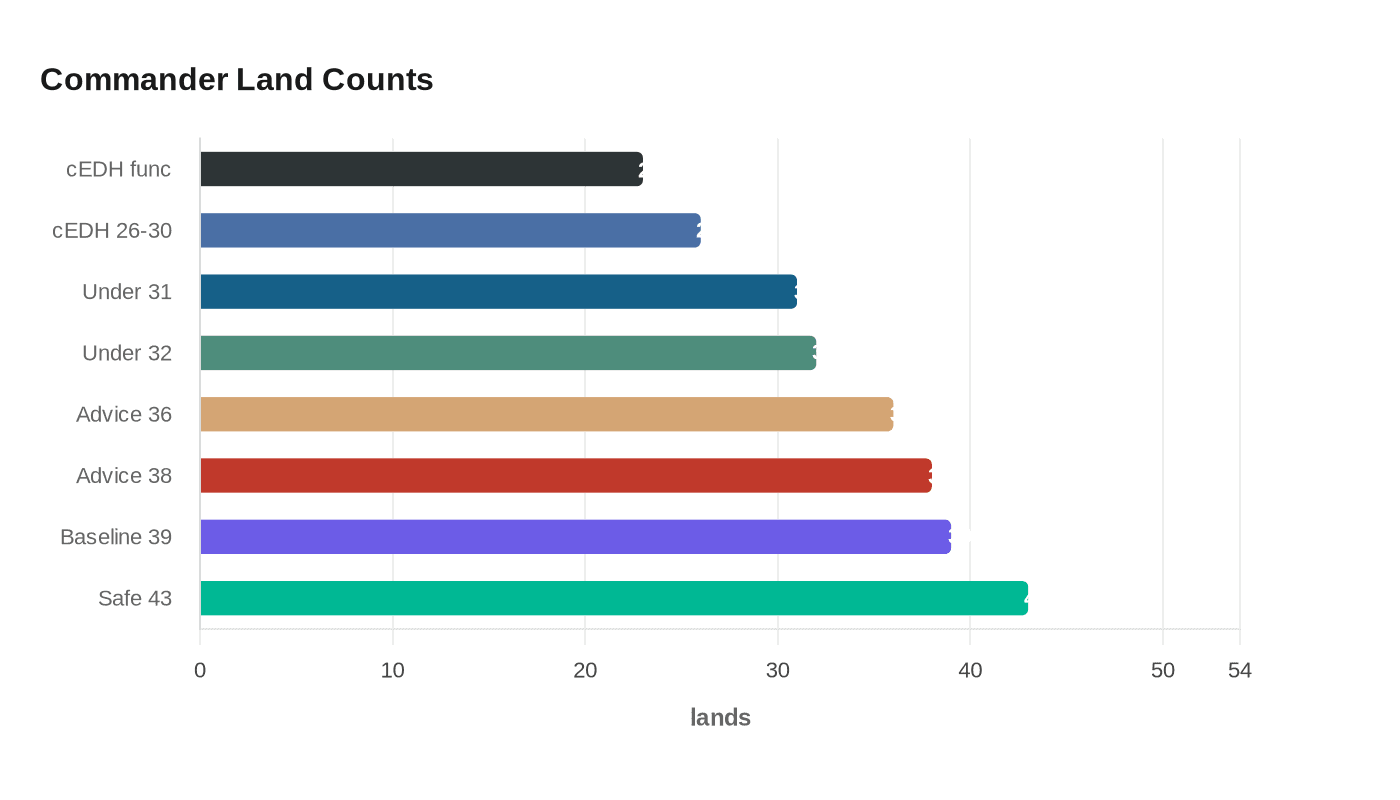
If your Commander deck keeps missing land drops, the rest of the list barely matters. That is the real lesson here, and it is why a clean-looking curve can still play like garbage when the mana base is too greedy. EDHREC’s old database snapshot showed the average deck running just over 29 lands, but its own building advice now starts much higher, at 36 to 38 lands, with another mana-base article treating 39 as a baseline. That gap is the trap.

Commander is a 100-card singleton format, and that matters more than people admit. You are building from exactly 100 cards, including the commander, and in the official rules no two cards can share the same English name except basic lands. Because the format is multiplayer for three to five players and is built around slower games, a stumble on turns two through five is not a small hiccup. It is often the moment the table gets ahead and never gives the game back.
Why one number never fits every deck
The cleanest way to think about land counts is not “what is best,” but “what kind of game am I trying to play?” Lily’s converted math gives a safe baseline as high as 43 lands, while the broader practical range sits around 36 to 46 for normal Commander decks. That is not a commandment; it is a warning against shaving lands just because your deck has a nice spread of spells.
At the extreme top end, cEDH breaks the usual rules because the decks are built to be fast, compact, and brutally efficient. There, a list can function on 23 lands, and many efficient builds sit around 26 to 30. Those numbers do not translate cleanly to Bracket 2 through Bracket 4, where games last longer and opponents are more likely to punish a missed land drop instead of racing past it.
That difference is exactly why the current Commander Brackets conversation matters. Wizards introduced Commander Brackets as a beta matchmaking system on February 11, 2025, then followed with updates on October 21, 2025, and February 9, 2026. The bracket system is still being refined, and the point is obvious: table speed, power level, and expectations vary enough that a single land count cannot cover every list.
What actually changes the number
Curve matters, but it does not tell the whole story. A deck full of three-mana value pieces can get away with less land than a list loaded with five- and six-mana spells, but even that is only part of the equation. Commander is not a duel format where you can count on one clean line of play; it is a long, messy multiplayer game where your first five turns need to do something even when your topdecks are awkward.
Ramp density is the next lever. EDHREC’s 2019 data article found the average deck in its database sat at just over 29 lands and 4.15 mana rocks, which tells you exactly how low-land decks survive: they are not just hoping, they are compensating. If your deck has cheap rocks, signets, dorks, or other early mana smoothing, you can shave a land or two. If your ramp is slow, conditional, or tied to your commander surviving, you need to count lands more honestly.
Color demands are just as important. A two-color deck with a stable mana base can usually be leaner than a three-, four-, or five-color pile that needs specific colors on specific turns. The more your deck asks for double pips, early colored mana, or a commander that costs five or more, the less room you have to be cute with your land count.
Where players most often get it wrong
The most common mistake is underbuilding because the curve looks “reasonable.” That is how people end up with 31 or 32 lands, a handful of rocks, and a hand that cannot cast half the spells on time. It feels fine when goldfishing a perfect opener; it falls apart the moment the table applies pressure or the first two draw steps miss.
The other mistake is overbuilding without enough action. Some decks pile on lands, then forget that Commander rewards actual cards that change the board. The sweet spot is not just more lands, it is enough lands plus enough smoothing, so your deck still functions after the first wave of interaction.
A practical way to think about it:
- Start around 36 to 38 lands for a normal Commander list.
- Push toward 39 to 43 if your commander is expensive, your curve is high, or your deck wants to hit land drops past turn five.
- Trim only if you have real early ramp and card selection, not just wishful thinking.
- For cEDH, 26 to 30 is common territory, and 23 can work in the sharpest lists, but that is a different ecosystem entirely.
That last point matters because too many players copy a low-land number from a turbo list and drop it into a midrange or battlecruiser shell. The result is predictable: the deck looks lean, but it loses the one resource it cannot function without.
The real Commander lesson
Official Commander materials describe the format as social, and that philosophy shows up in deckbuilding more than most people realize. The Commander Rules Committee says it updates the rules roughly every three months when needed, which is another reminder that the format is a living thing, not a solved puzzle. Wizards’ bracket experiment, the continued discussion around unbans, and the push to sort decks by power level all point to the same conclusion: a “good” mana base depends on the room you are sitting in.
That is why the right answer is never just a number. If your deck is slower, more color-hungry, or built to keep making plays into the late game, you should respect the higher end of the range and stop pretending 30-something lands will save you. In Commander, consistency comes first, greed comes second, and the decks that win the most games are usually the ones that can simply keep playing Magic.
This article was produced by Prism’s automated news system from verified source data, official records, and press releases, then run through automated quality and moderation checks before publishing. The system is built and supervised by the people who set the standards it runs under. Read our full AI policy.
Did this article answer your question?