How to Play Commander, Magic's Most Popular Multiplayer Format
Commander started with five dragons and a Highlander quote; now it's Magic's most popular format. Here's everything you need to know to play.
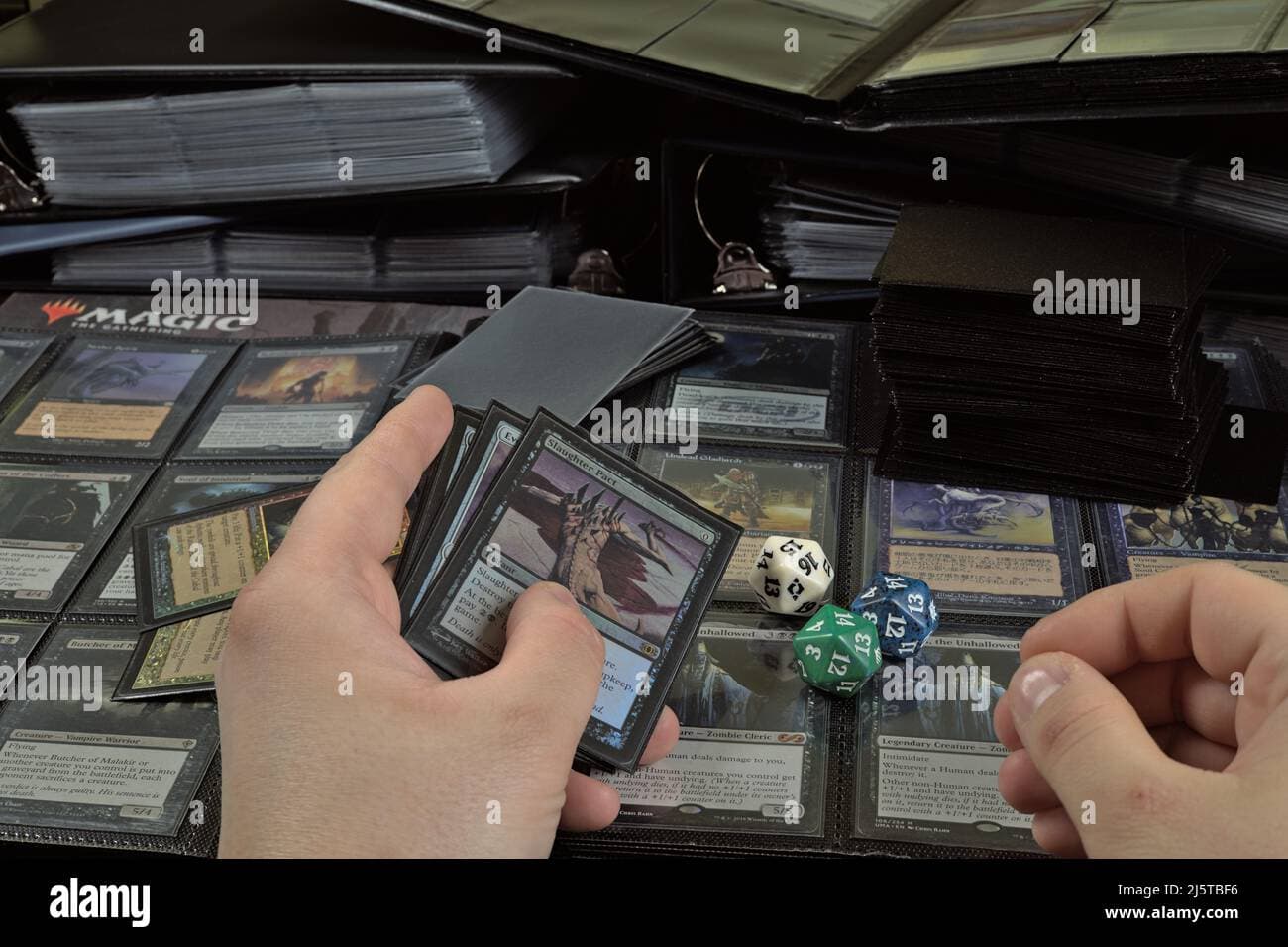
Every Commander deck tells a story, and that story starts with a single legendary creature at the helm. Ninety-nine cards built around one commander, no sideboard, no duplicates (with a handful of delightful exceptions), and three or more opponents standing between you and victory. If you've been playing Magic: The Gathering on Arena and keep hearing about this "100-card format," or if you're a seasoned player who's been avoiding the deep end long enough, here's how it all works.
Where Commander came from
The format's origin traces back to 1994, when Wizards of the Coast released a set called Legends. That set introduced the first Legendary Creatures to the game, though at the time they carried the considerably less glamorous type line "Summon Legends." The existence of those cards planted a seed. Players began building casual decks around them, and a format started to take shape.
That format came to be called Elder Dragon Highlander, later shortened to EDH. The name is a double reference: the Elder Dragons were a specific cycle of five legendary creatures from the Legends set, and "Highlander" nodded to the 1986 film of the same name. One of the format's early building-block rules borrowed the film's most famous line: "There can only be one." In EDH's early days, a deck could only be led by one of the five Elder Dragons themselves: Arcades Sabboth, Chromium, Nicol Bolas, Palladia-Mors, and Vaevictis Asmadi. Playing anything else wasn't an option.
EDH slowly gained popularity among players who were tired of the monotony of sixty-card competitive formats. The appeal made sense. Where Standard and Legacy rewarded optimized, often repetitive gameplay, EDH rewarded creativity and chaos. The format eventually grew large enough that Wizards of the Coast formalized it under the name Commander, which is how most players refer to it today. The EDH abbreviation stuck around, though, and you'll still hear both names used interchangeably in most playgroups.
The deck: 100 cards, one commander
Commander is interesting because of how it differs from other formats structurally. Every Commander deck must contain exactly 100 cards: ninety-nine main deck cards and one commander. There is no sideboard. You build what you bring, and you play what you build.
The commander itself is a legendary creature (or, in some cases, a planeswalker with the appropriate designation) that lives in its own zone called the command zone. It can be cast from there, and if it would leave the battlefield, you have the option to return it to the command zone instead of sending it to the graveyard or exile. That recursive availability is a core part of what makes your commander the anchor of your strategy.
Deck construction follows the singleton rule: you may only include a single copy of any given card. The exceptions are basic lands, which you can run as many copies of as you want, and any card that explicitly states otherwise. Shadowborn Apostle is the most frequently cited example of the latter, a card that reads you may have any number of it in your deck. Cards like that are intentional design outliers, and they're rare enough that the singleton rule holds for the overwhelming majority of the card pool.
How a game plays out
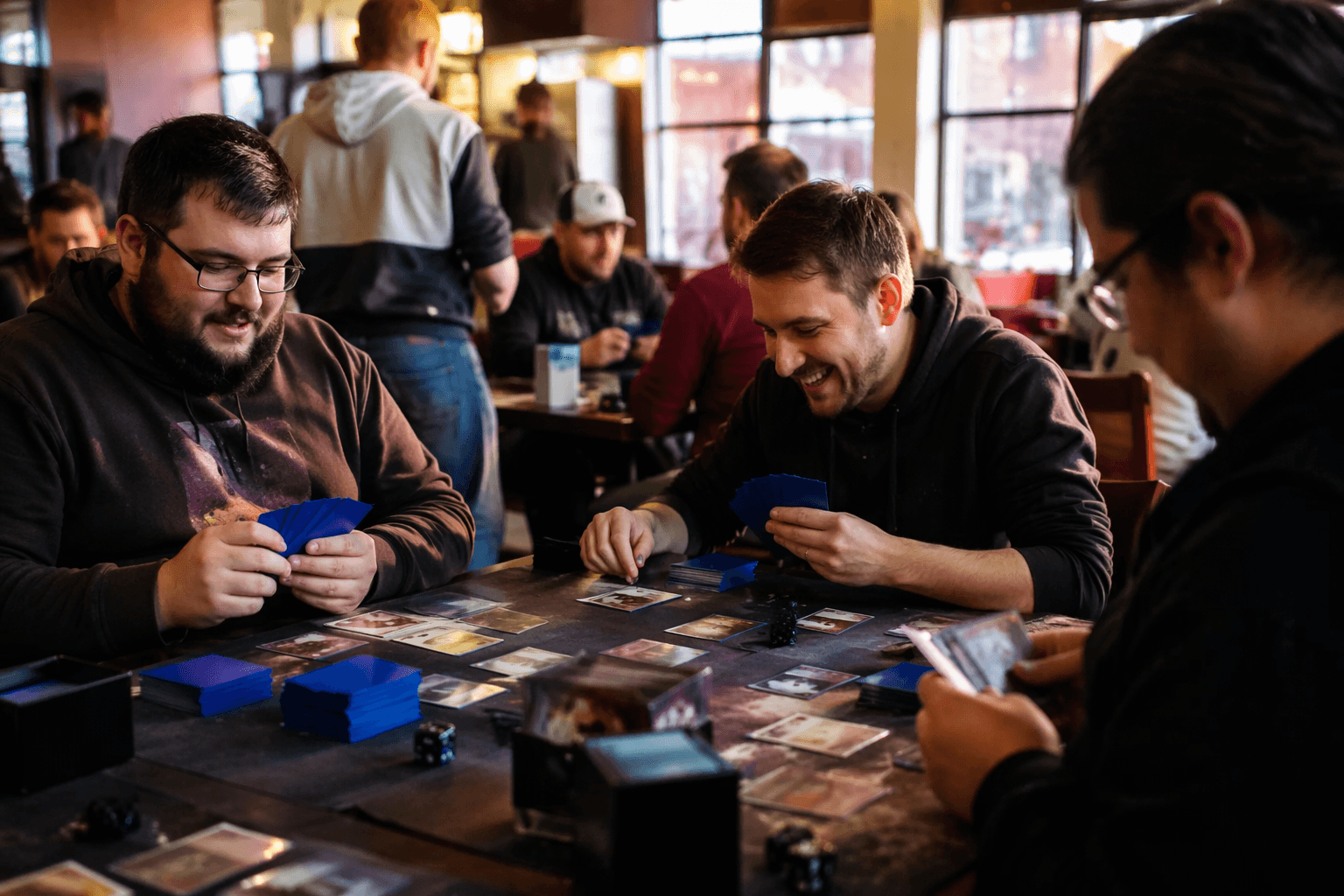
Commander is a multiplayer format, typically played between four players, though you can run it with more or fewer. Sit down at a table with three other decks and each player starts at forty life, double the twenty you'd start with in most other formats. The higher life total reflects the longer, more complex games Commander is designed to produce. You win by reducing each other player's life total to zero.
That "each other player" language matters. This isn't a one-on-one format at its core. You're navigating a table of opponents, managing threat assessment, temporary alliances, and the political reality of being the person who just played Nicol Bolas on turn five. The multiplayer dynamic is what separates Commander from formats like Modern or Legacy in ways that go beyond card legality. It rewards social awareness as much as technical play.
Building your first deck
The best entry point for most new players is a preconstructed Commander deck, which Wizards of the Coast releases regularly. These come ready to play out of the box and are built around a specific legendary creature and theme, giving you a functional 100-card deck and a clear sense of what kind of strategies the format supports.
When building your own deck, start with your commander. Every other card in your ninety-nine should support that creature's strategy, and your deck's color identity is locked to the colors in your commander's mana cost and rules text. A commander with only green and white in its cost means your deck can only include cards within those two colors and colorless cards. That color identity rule is one of the format's most elegant constraints; it focuses deckbuilding in a way that makes the whole table more varied.
For resources beyond the basics, Wizards of the Coast maintains the official Commander format hub, which covers current rules, the banned list, and format policy. EDHREC, the community's most-used reference site, publishes its own guide titled "How to Play Commander" and aggregates data on which cards appear most frequently in decks built around any given commander. If you want to know what 10,000 Atraxa players are running in their ninety-nine, EDHREC is where you look.
Why Commander dominates
No other format in Magic has the combination of accessibility and depth that Commander does. You can play a precon on day one and have a genuinely entertaining game. You can also spend years tuning a single deck and never feel like you've exhausted its possibilities. The singleton rule means no two games play out identically, and the multiplayer table means no two tables ever feel the same.
The format's roots, five Elder Dragons, a Highlander quote, and a bunch of players who wanted something different, are still visible in how it works today. There can only be one commander. Everything else follows from there.
This article was produced by Prism’s automated news system from verified source data, official records, and press releases, then run through automated quality and moderation checks before publishing. The system is built and supervised by the people who set the standards it runs under. Read our full AI policy.
Did this article answer your question?