Ignored Esper Sentinel and Gaea’s Cradle, Commander table pays the price
A missed Esper Sentinel let a Gaea’s Cradle snowball the table out of the game. The fix is to treat early engines as shared threats, not someone else’s problem.
AliEldrazi’s warning is bigger than one bad pod
AliEldrazi, the online handle of Ali Aintrazi, has the kind of credibility that makes a Commander lesson stick. He is a former U.S. National Champion who says he has been playing professional TCGs for more than two decades, so when he points to a board state and says the table let it get away, the real takeaway is not the heartbreak. It is the sequencing mistake.
This is the part Commander players keep relearning the hard way: a single ignored Esper Sentinel can quietly become a card-advantage engine, and once Gaea’s Cradle joins the mix, the game can flip from manageable to hopeless. In a four-player format built on temporary alliances, that usually happens because everyone assumes someone else will be the adult at the table.
Why Esper Sentinel is the first warning light
Esper Sentinel is not just another white one-drop. It is widely regarded as a Commander staple and gets compared to a mini Rhystic Study for a reason: it taxes noncreature spells, or it draws cards. MTG Rocks goes so far as to say that pretty much every white Commander deck in the cEDH Database plays it, which tells you how much real pressure this card creates from the first turn.
That pressure is easy to underestimate because it does not look scary on its own. It is only one mana, it only asks awkward questions, and it only punishes you when you start trying to play actual Magic. But that is exactly why it is dangerous. If the table lets Sentinel sit there, every removal spell becomes more expensive in practice, every player starts rationing interaction, and the Sentinel pilot gets to turn the whole pod into a tax-collection engine.
The mistake is not just “nobody removed the card.” The mistake is failing to recognize that Esper Sentinel changes the shape of the game the moment it lands. It warps decisions around itself, and that warp is the real threat.
How Gaea’s Cradle turns a good position into a lock
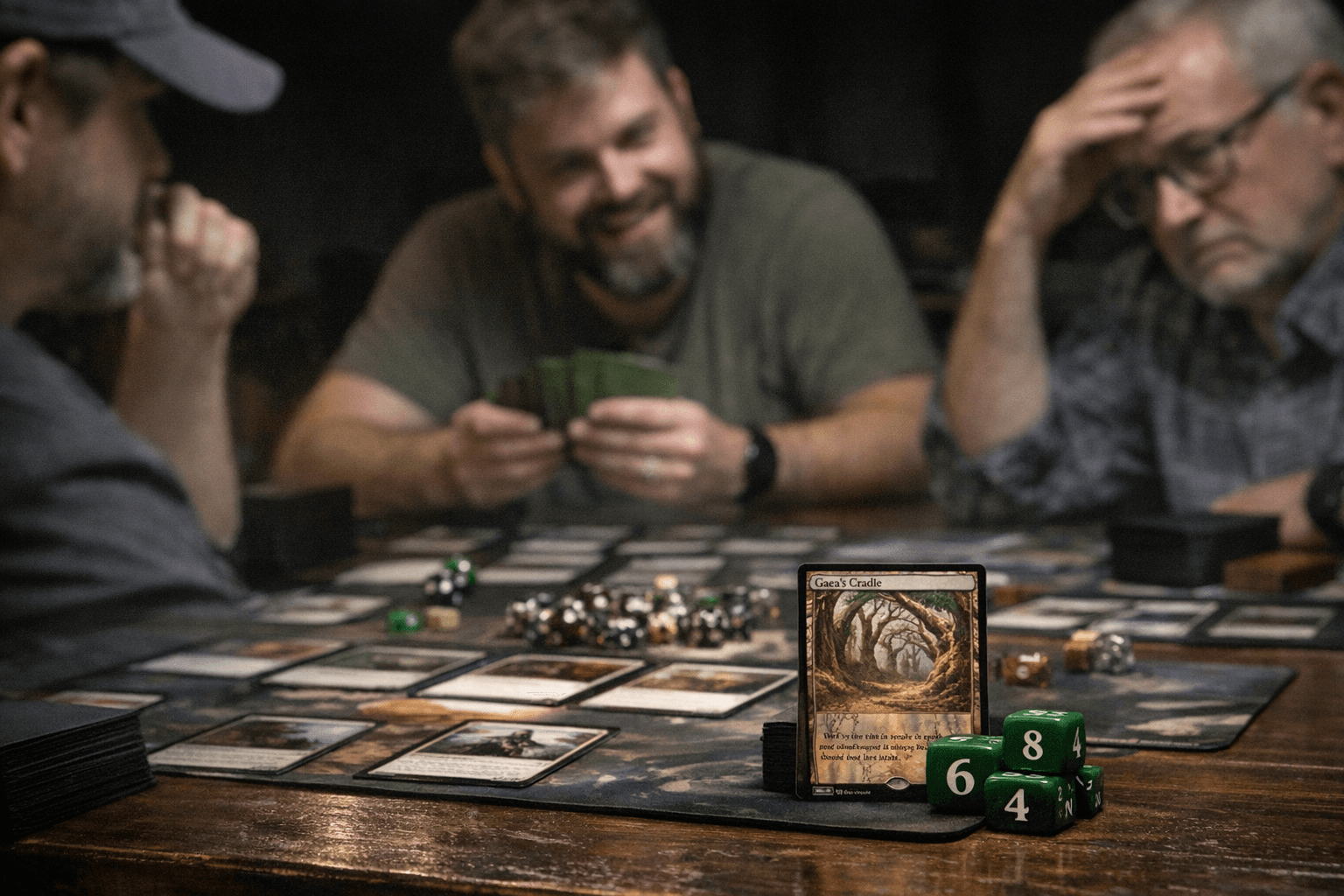
Gaea’s Cradle is the other half of the disaster. It remains a defining explosive land for creature-heavy Commander strategies because it converts board presence directly into mana. Once enough creatures are in play, every turn gets bigger, every follow-up spell gets easier, and every attempt to catch up gets more awkward.
That matters even more when a Sentinel has already forced the table to play inefficiently. If the white player is drawing extra cards and the creature deck is cashing in Cradle mana, the rest of the pod starts to fall behind on both resources at once. You are no longer just answering a threat. You are trying to answer a threat while the threat keeps refueling itself.
This is why the Cradle turn is such a brutal pivot point in Commander. Plenty of decks can survive one strong permanent. Fewer can survive a draw engine plus a mana engine, especially when the table has already let both of them go unchecked long enough to matter.
The pod sequence that let the game slip away
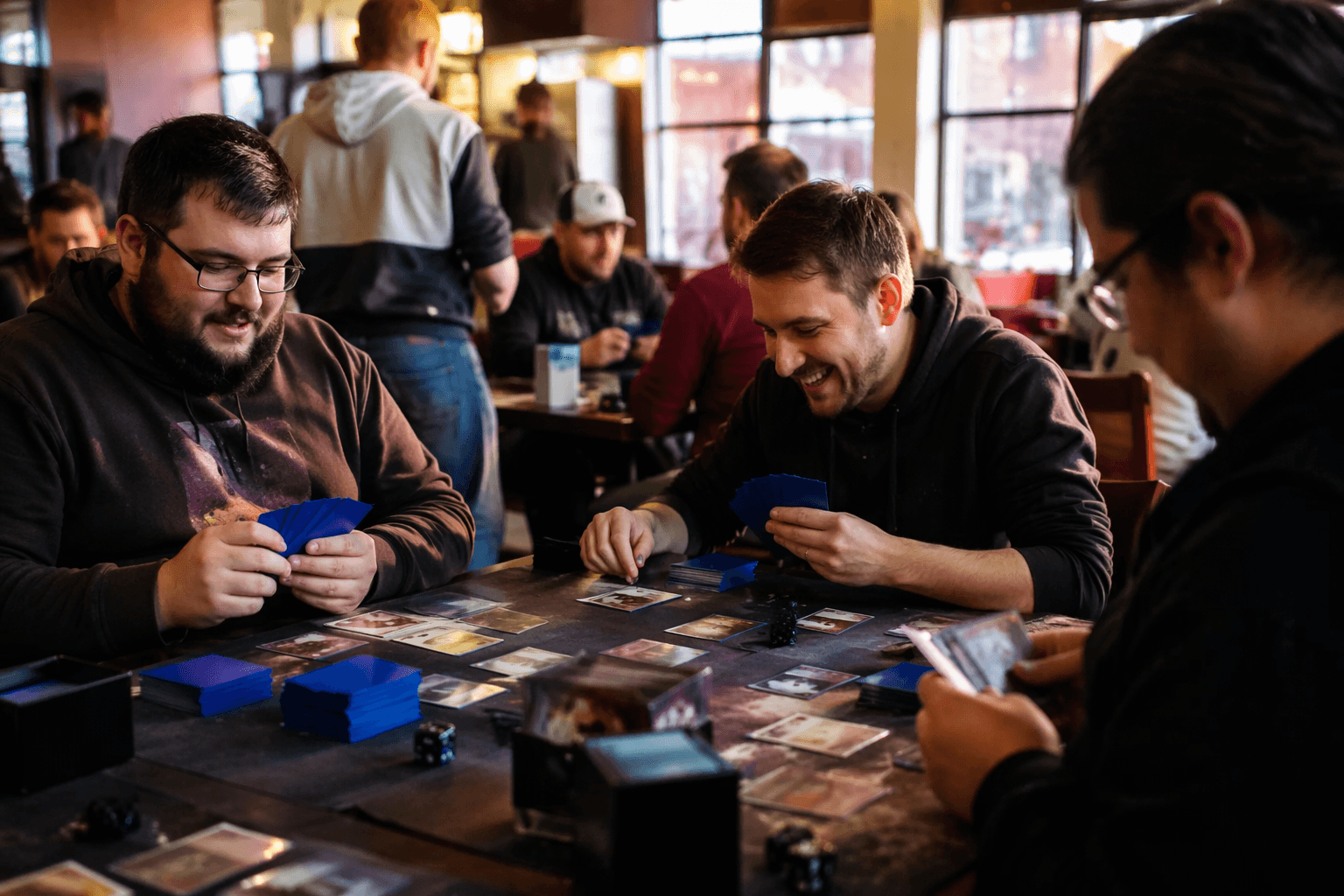
The sequence is almost always the same. A turn-one Esper Sentinel resolves, and the table treats it like a nuisance instead of a plan. Someone says they will deal with it later, someone else wants to save removal for a “real” threat, and the third player assumes the white player is not the main problem anyway.
Then the table starts making the usual Commander bargains. Temporary alliances form around whatever looks loudest that turn, and the Sentinel gets to sit quietly in the background while everyone negotiates around it. That is the exact point where the pod fails threat assessment. The card is small, but the value it generates compounds, and every turn you leave it up you are paying for the mistake with future tempo.
When Gaea’s Cradle arrives, the game state stops being theoretical. Creature development suddenly turns into mana acceleration, which means the Sentinel pilot can convert the extra cards into more pressure, more protection, or a tighter hold on the table. At that stage, the game is not simply behind. It is structurally behind, because the player with Sentinel and Cradle has already gotten paid twice for the table’s hesitation.
Where the table failed, step by step
Commander is a multiplayer format where politics and temporary alliances are central, and The Command Zone has even devoted a 2025 episode to Commander politics because this part of the game matters so much. The lesson is not that you should ignore politics. The lesson is that politics should help you coordinate answers, not delay them.
The table failed in three places:
- It treated Esper Sentinel as a minor annoyance instead of an early engine.
- It let the first player to benefit from the tax effect keep drawing into more leverage.
- It waited until Gaea’s Cradle had already turned creature presence into a mana advantage before acting.
That is the core pattern. By the time the table finally agrees the board is dangerous, the dangerous player is usually a full turn cycle ahead, and in Commander that can be enough to make the game functionally unwinnable.
The checklist you actually use in your own games
If you want to avoid this exact disaster, start with a different default. The first job in a multiplayer pod is not to “save resources.” It is to identify which low-cost permanents will snowball into a resource gap if they survive.
Use this checklist when the first engine hits the table:
- Ask whether the card creates cards, mana, or both.
- If it is Esper Sentinel, treat it like a turn-one tax on the whole pod, not a harmless 1/1.
- If a creature deck is developing board presence, count Gaea’s Cradle as future mana, not just a land drop.
- Spend early removal when it prevents the table from falling behind on two axes at once.
- Use table talk to align on timing, not to postpone responsibility.
That last point matters more than people admit. Politics in Commander is not just about deflecting attention or making temporary deals. It is about deciding, together, which permanents are too efficient to ignore. If one player says “I can handle it later,” the real question is whether later will still exist.
The rule that survives the next pod
AliEldrazi’s story works because everybody who has played enough Commander has lived some version of it. The names on the table change, but the script stays the same: a cheap engine gets ignored, a mana source turns on, and suddenly the game belongs to the player who was left alone to accumulate value.
The fix is brutally practical. Kill the engine before it prints cards, kill the land engine before it prints mana, and stop assuming the first threat is too small to matter. In Commander, the table usually does not lose to the biggest spell. It loses to the one it decided not to respect.
This article was produced by Prism’s automated news system from verified source data, official records, and press releases, then run through automated quality and moderation checks before publishing. The system is built and supervised by the people who set the standards it runs under. Read our full AI policy.
Did this article answer your question?