Korvold, Fae-Cursed King Deck Guide: Sacrifice Synergies and Jund Strategies
Korvold, Fae-Cursed King turns every sacrifice into a card draw trigger — master the input/output machine and this Jund commander becomes unstoppable at any table.
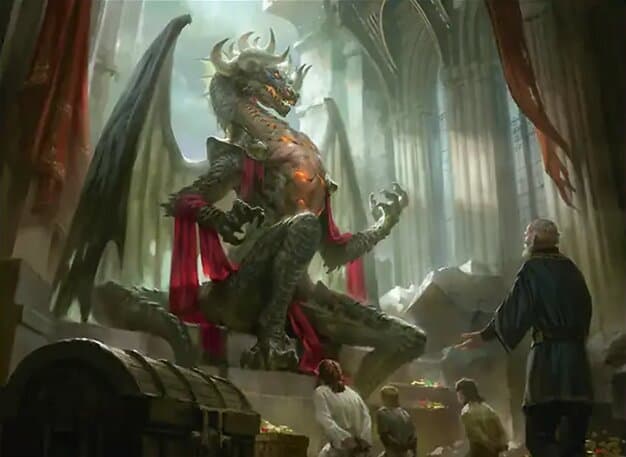
Korvold, Fae-Cursed King earns a reputation as one of the most played commanders in the format for a simple reason: every permanent you sacrifice makes it larger and replaces itself with a fresh card. That self-reinforcing loop, rooted in Jund's black-red-green color identity, is what Drew Knapp breaks down in TCGplayer's Commander Bestiary series, and it's what makes Korvold worth understanding from the ground up before you sleeve a single card.
Who Is Korvold, and Why Does Jund Love Him?
Released in Throne of Eldraine, Korvold's power level was immediately apparent. As Draftsim notes, his debut "brought it to relevance in one of the most powerful Standard environments in recent memory, one of which held a slew of bannings." That kind of competitive pedigree doesn't transfer directly to Commander, but it signals something important: this is a card designed to generate advantage at an alarming rate when given the right support.
In Commander, that support is everywhere. Draftsim puts it plainly: "Maybe more so than any legendary creature canonically hailing from Jund, Korvold embodies the Jund ethos of sacrifice." Jund has always been about trading resources aggressively, grinding opponents out of gas, and converting short-term losses into long-term advantage. Korvold doesn't just fit that philosophy; he accelerates it. Every token you cash in, every Treasure you crack, every creature you throw into an altar draws you a card and puts a +1/+1 counter on your commander. The snowball effect is real and rapid.
The Input/Output Machine: The Core Strategic Concept
The mechanical heart of any Korvold deck is what Draftsim calls the input/output machine, and understanding it is non-negotiable before you start making card choices. As Draftsim explains: "The core tenet of a deck featuring sacrifice fodder and outlets is the abuse of the input/output machine. The input/output machine is simple: sacrifice your Treasures, Insect tokens, Food tokens, Saprolings, and Eldrazi spawn (the input) to your machine, be it Goblin Bombardment, Plumb the Forbidden, one of the Altars, or Korvold itself, and generate an output (cards, life, cards, tokens, cards, counters, and more cards)."
The repetition in that output list is intentional and instructive: cards dominate because drawing more cards means finding more fodder, which means more triggers, which means more cards. The loop is self-sustaining once it gains momentum. Your sacrifice outlets, whether that's Goblin Bombardment converting creatures into damage, Plumb the Forbidden turning deaths into draws, an Altar like Phyrexian Altar or Ashnod's Altar converting creatures into mana, or Korvold himself triggering on every sacrifice, are the machines your tokens and Treasures run through. Picking the right outlets for the right moment is where the skill expression lives.
Building the Engine: Sacrifice Fodder
The question then becomes: where do the inputs come from? Draftsim's sacrifice fodder list answers that directly, and the card choices reveal the strategic priorities clearly. "These are cards that cheaply or instantly provide you a swathe of artifacts or creatures you can feed Korvold," according to Draftsim. "A lot of these give you Treasure tokens which fuel your spells while drawing you cards with Korvold. The overarching point of these is to create as many game objects as you possibly can to fuel the engine."
The key fodder producers highlighted by Draftsim include:
- Dockside Extortionist - the premier Treasure generator in the format, capable of producing a massive pile of inputs from a single cast against artifact-heavy tables.
- Tireless Provisioner (from Modern Horizons 2) - every land drop becomes a Treasure or Food token, turning your mana development into sacrifice fodder simultaneously.
- Pitiless Plunderer - converts every creature death into a Treasure, meaning your sacrifice fodder regenerates itself as you spend it.
- Scute Swarm - land drops translate directly into exponential Insect token generation once it copies itself, providing a near-unlimited supply of inputs.
- Tendershoot Dryad - produces a Saproling on every upkeep and grants them +2/+2 during your city's blessing, rewarding the high-permanent-count strategy intrinsic to Korvold builds.
- Prossh, Skyraider of Kher - enters the battlefield creating Kobold tokens equal to the mana spent to cast it, and can sacrifice those tokens itself, making it both a fodder factory and a secondary sacrifice engine.
- From Beyond and Awakening Zone - enchantments that produce Eldrazi Spawn tokens on each upkeep, providing steady trickle fodder that also taps for mana in a pinch.
- Bitterblossom - reliable Faerie Rogue token production every upkeep at the cost of one life, which Korvold decks can easily afford given how fast they draw cards.
- Avenger of Zendikar - a high-end play that floods the board with Plant tokens and can scale them into genuine threats, offering both fodder and a threat in one card.
- Brass's Bounty - a sorcery that converts each land you control into a Treasure token in a single shot, creating a massive burst of inputs for a finisher turn.
- Revel in Riches - generates a Treasure on each opponent's creature death and provides an alternate win condition if you accumulate enough of them.
The through-line across all of these is volume. The goal isn't quality of individual tokens; it's the sheer quantity of game objects hitting and leaving the battlefield to chain Korvold triggers together.
Outlets: Where the Value Gets Realized
Fodder without a place to put it is just a board full of small tokens. Your sacrifice outlets determine how that fodder converts into actual advantage. The outlets Draftsim identifies span several functional categories:
Goblin Bombardment converts any creature into a direct damage ping, letting you deal incremental damage while triggering Korvold without needing to attack. Plumb the Forbidden is a flexible instant-speed spell that can be cast in response to a board wipe, sacrificing creatures that would die anyway to draw a fresh hand's worth of cards. Altar effects, whether Phyrexian Altar for mana or Ashnod's Altar for colorless, let you convert creature tokens into resources mid-combo and keep chains going. And Korvold itself is always available as an outlet since it can sacrifice any permanent you control, not just creatures, which matters when you're sitting on a pile of Treasures and need to trigger it before your opponents can respond.
The strongest Korvold turns thread multiple outlets together, converting one type of output immediately into another type of input.
Building for Your Playgroup: Power Level and Budget
Drew Knapp's Commander Bestiary primer emphasizes that Korvold supports a wide range of construction philosophies. As TCGplayer notes, "There's no shortage of ways to build your Korvold commander deck given the prevalence and support for such a popular strategy," and the Bestiary guide includes both a full decklist and specific modifications for different power levels and budgets.
The budget consideration is genuine here. Dockside Extortionist sits at the high end of the price range and represents the ceiling of what the deck can do with Treasure generation. Cutting it doesn't collapse the strategy; it shifts the deck toward slower engines like Awakening Zone and Brass's Bounty that still function effectively at mid-power tables. For competitive-leaning builds, stacking multiple fast Treasure producers alongside fast-mana rocks lets Korvold come down early, get a few sacrifice triggers before opponents stabilize, and snowball from there.
The fundamental architecture stays constant regardless of budget: maximize game objects entering the battlefield, maximize the rate at which they leave through sacrifice, and let Korvold convert every exit into a card and a counter. That machine scales up or down gracefully, which is exactly why Korvold remains one of the most-built commanders years after his Throne of Eldraine debut. The Jund ethos of sacrifice has never had a better avatar at the Commander table.
This article was produced by Prism’s automated news system from verified source data, official records, and press releases, then run through automated quality and moderation checks before publishing. The system is built and supervised by the people who set the standards it runs under. Read our full AI policy.
Did this article answer your question?