Local Game Stores and Third Spaces Are Essential to Commander's Future
Commander doesn't grow through tournament wins; it grows through LGS regulars and kitchen-table stories. Here's why those spaces are the format's most undervalued asset.
What a Third Space Actually Is (and Why Commander Needs One)
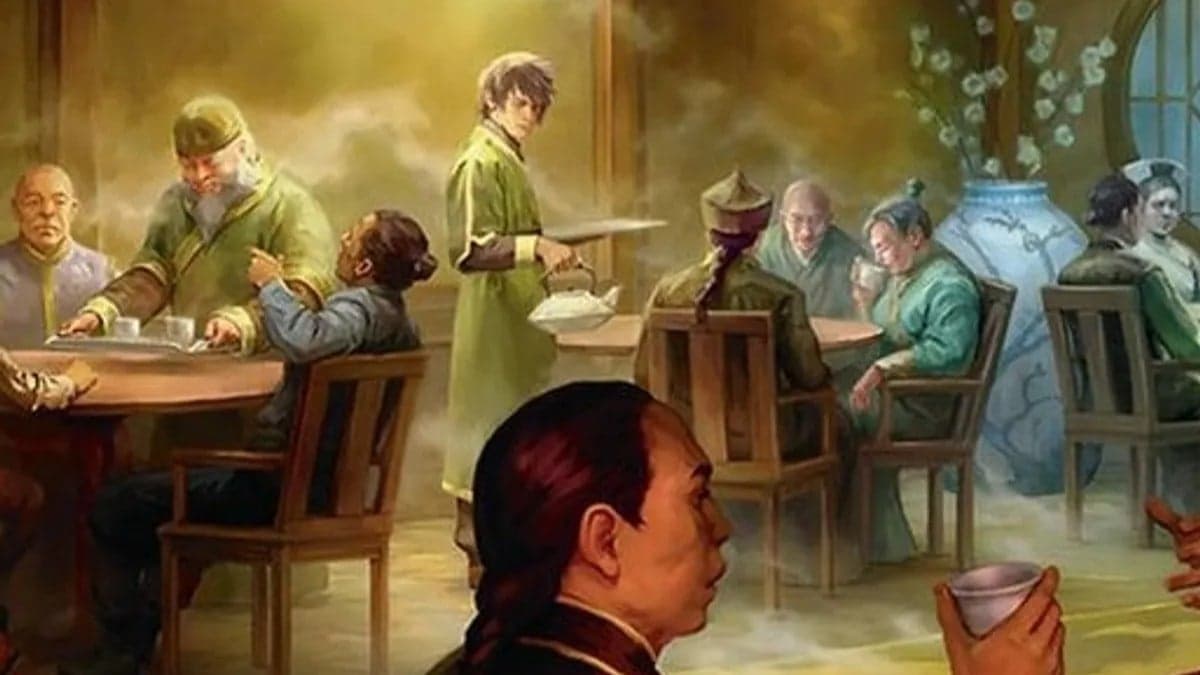
The sociological term "third space" refers to any location that is neither home nor work, the neutral ground where community actually forms. Think of the barbershop, the coffee shop, the park bench. For Magic players, Cas Hinds argues in a recent EDHREC piece, those spaces have always had a name: the local game store.
The concept matters especially for Commander because the format has no centralized competitive infrastructure to fall back on. Standard, Pioneer, and Modern players can point to organized play, Grand Prix-style events, and ladder rankings. Commander's legitimacy is built differently, person by person, table by table, through the slow accumulation of shared stories, inside jokes, and house rules that never appear in any official rulebook. Strip away the in-person venue where those things happen and you're not just closing a store; you're severing the connective tissue of the format itself.
The Landscape Has Shifted
Before the pandemic and the rise of platforms like SpellTable, the options were straightforward. As community member Reversal put it in the piece, "For years MTG third spaces were the LGS and the kitchen table but technology coupled with Covid has changed that drastically. Now you can hang out with your fellow Eldrazi and Phyrexian people with a click of a button and a camera."
That shift created genuine flexibility, but it also introduced a real risk: if playing online is frictionless enough, in-person venues can start to feel optional. Hinds pushes back against that framing. The internet may be "third space adjacent," as the article acknowledges, but adjacent is doing a lot of work in that sentence. Adjacency isn't community. The serendipitous conversation between pods, the veteran player who notices your mana base and quietly offers a suggestion, the playgroup that forms because two strangers kept sitting at the same table on Wednesday nights; those things don't replicate cleanly through a webcam.
The LGS as Onboarding Infrastructure
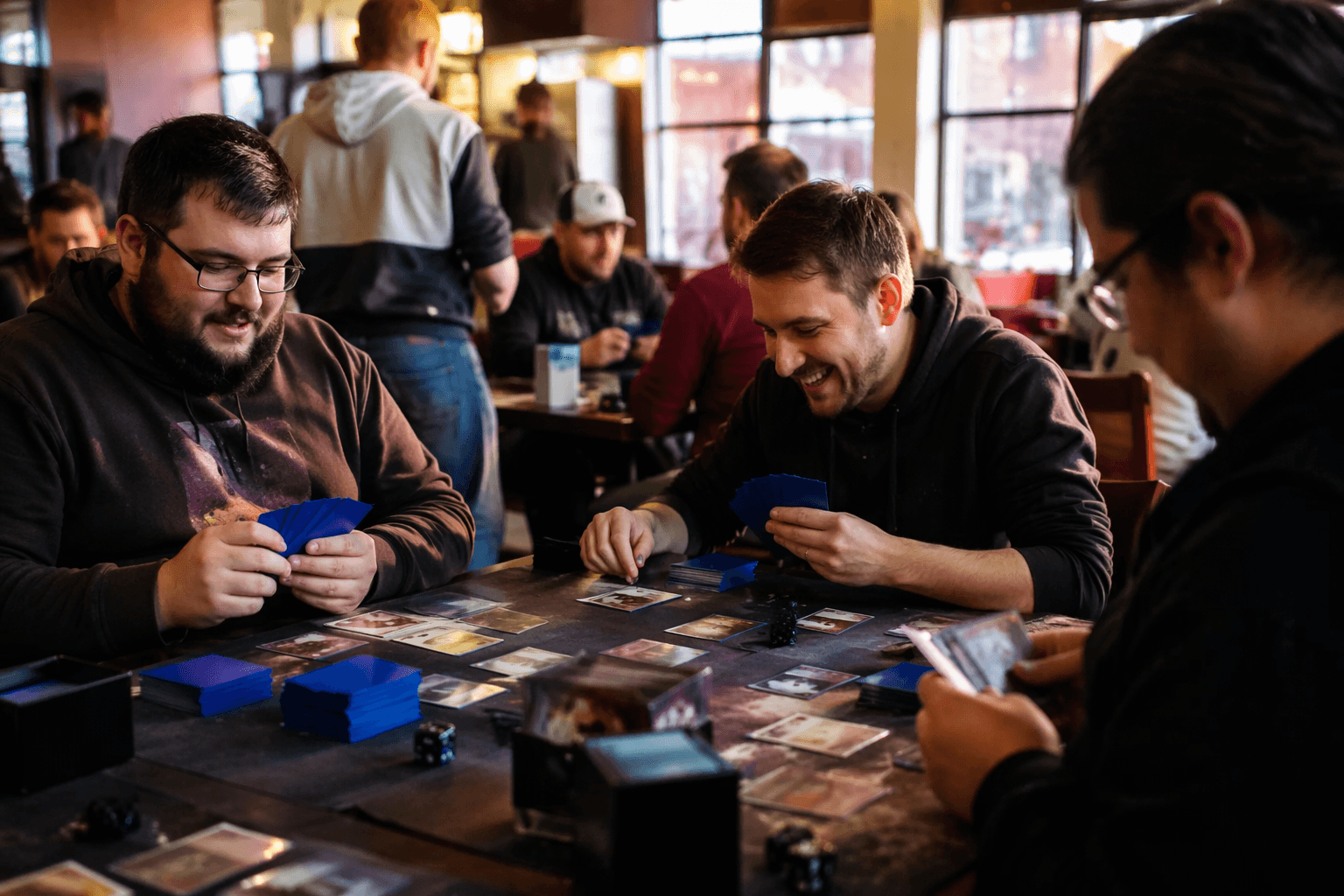
One of the most practical arguments in Hinds' piece is the role the LGS plays as Commander's front door. New players don't find Commander by reading rule documents. They find it because someone dragged them to a store, handed them a precon, and walked them through their first game at a table full of strangers who were rooting for them to have fun.
The formats that work in an LGS context are the ones designed around that exact experience. Hinds highlights several event structures that stores can deploy:
- "Learn to Play" nights, specifically designed to lower the barrier for complete newcomers
- Commander nights with rotating pods, which prevent the format from calcifying around the same four players every week
- Precon upgrade clinics, where experienced players help newer ones take their out-of-the-box deck to the next level
That last one is particularly shrewd programming. A precon upgrade clinic isn't just a goodwill gesture; it's a sales event dressed as a community service. Players who upgrade their precons buy singles. Singles come from the store. The store's secondary market stays healthy. Everyone wins.
In-store event programs that committed to structured Commander programming saw measurable increases in turnout, according to Hinds' reporting. The format rewards consistency: players come back when they know a table will be there.
The Access Question
The piece also confronts something that gets glossed over in most LGS-boosting rhetoric: cost. Third spaces only function as community infrastructure if people can actually enter them. Jane, one of the community voices featured in the article, makes the point directly: "LGSs are a little oasis where you can sit at the table without buying anything and there is so much magic in that!"
That framing reframes the LGS not as a retail endpoint but as a public good, something closer to a library than a boutique. For players who are financially stretched, or for marginalized communities who face additional barriers to participation, the low-cost accessibility of a well-run LGS carries real weight. Hinds ties this back to Commander's broader cultural health: a format that can only be accessed by players with disposable income is a format with a ceiling on its own growth.
What Store Owners and Organizers Should Be Doing Right Now
The actionable core of Hinds' argument is that third spaces need to be treated as recurring social events, not one-off promotions. A Commander night isn't a product launch; it's a standing appointment. Stores that treat it as such, building regulars, establishing house rules, creating the muscle memory of "we play here on Thursdays," are building something that resists the gravitational pull of online-only play.
A few specific programming ideas that surface in the piece:
- Themed Commander parties tied to major set releases, capitalizing on the excitement cycle that Wizards already generates around new products
- Precon upgrade nights positioned around Universes Beyond drops, when lapsed players and curious newcomers are most likely to walk through the door
- Community-organized programming like locally recorded podcasts, collaborative upgrade workshops, or live Commander nights designed for content creators to film
That last category is more important than it might seem. Content creators who film at an LGS are essentially producing a commercial for in-person play every time they post. The store becomes a character in the content, and the implicit message to every viewer is: this is what it looks like when Commander works the way it's supposed to.
The Bigger Picture
Commander is the most-played format in Magic's history by many measures, with EDHREC tracking hundreds of millions of deck combinations and a community that spans kitchen tables, game stores, and convention halls worldwide. That scale creates an illusion of self-sustaining momentum. Hinds' piece is a useful corrective to that complacency.
The format's future isn't secured by Wizards printing more precons or by EDHREC indexing more cards. It's secured by the stores that keep their lights on, by the regulars who show up even when their deck hasn't been updated in six months, and by the community organizers who treat a Wednesday night Commander pod as something worth protecting. Healthy third spaces create the pipelines where new players learn the game, where experimental archetypes get stress-tested, and where the secondary market for singles and precons stays alive.
The kitchen table was always the soul of Commander. The LGS is what keeps that table standing.
This article was produced by Prism’s automated news system from verified source data, official records, and press releases, then run through automated quality and moderation checks before publishing. The system is built and supervised by the people who set the standards it runs under. Read our full AI policy.
Did this article answer your question?