Muddle, the Ever-Changing Opens Flexible Commander Builds Around Copying and Myriad
Muddle is already drawing real Commander interest, and the question is whether you want copies, combat tempo, or an ETB engine built around a very weird shapeshifter.
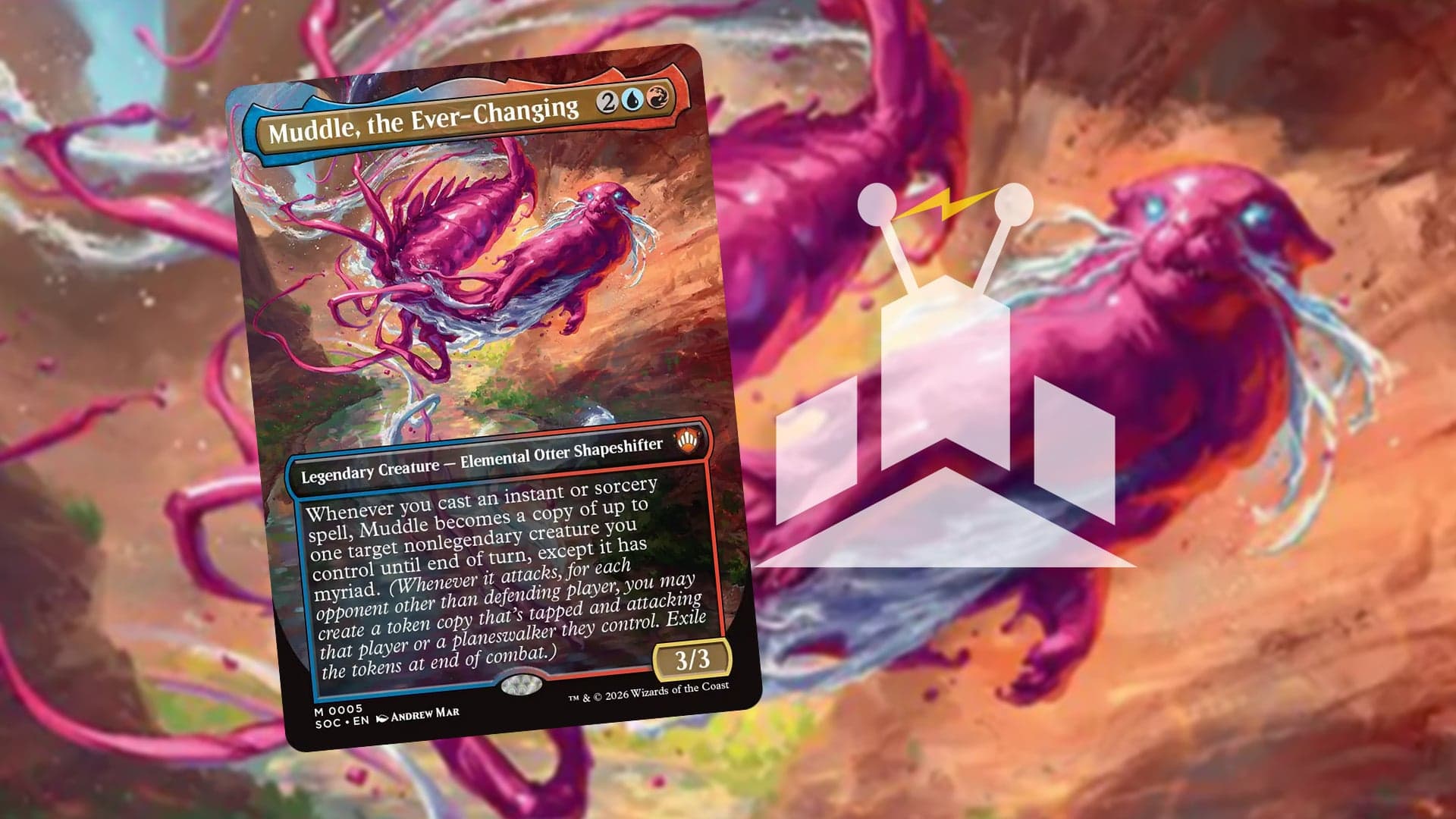
The first read on Muddle
Muddle, the Ever-Changing is the kind of commander that makes people stop and reread the card. EDHREC’s snapshot already had it at 1,315 decks as a new commander, with the card page showing 1.40K decks and a 0.84% inclusion rate, which is enough to prove players are testing it without pretending the format has solved it yet.
That early traction matters because Muddle does not look like a generic value creature. Gatherer identifies it as a legendary creature from Secrets of Strixhaven, and its type line, Elemental Otter Shapeshifter, tells you almost everything you need to know about why this card invites nonsense in the best Commander way. It is built to copy, to change, and to create board states that reward the rest of your 99 for being chosen with intent.
Why the early numbers matter
The deck-construction conversation around Muddle is already clustering into Spellslinger, Clones, Tokens, and Aggro, and that spread is the point. A commander that lands in all four buckets is not a narrow combo piece pretending to be flexible. It is a build-around that asks you what kind of game you want to play before you sleeve the list.
That flexibility also explains why Muddle feels like a real puzzle rather than a solved template. One deck can lean into extra bodies and token pressure, another can turn copied creatures into tempo advantage, and a third can get greedy with interaction and combo-style lines. The card’s identity is not “do the thing once”; it is “find the version of the thing your deck is best at abusing.”
The cleanest build paths
ETB value and copied triggers
One of the most obvious directions is enter-the-battlefield value. If Muddle is making copies of creatures, then every ETB trigger becomes a potential multiplier, and Panharmonicon-style support starts to look less like cute synergy and more like a real engine. That path rewards players who like snowball turns, stacked trigger math, and winning by making every copy matter twice.
This version of Muddle is the closest thing to a classic value shell, but it still asks for discipline. You want creatures that do something immediately, not just bodies that look efficient on paper. If the copies only exist to attack later, you are leaving too much on the table when Muddle can turn a single resolved creature into a problem the table has to answer twice.
Izzet Elementals and creature duplication
Another lane is leaning into Izzet Elementals and other creature types that naturally benefit from being duplicated. That matters because Muddle does not need to copy random filler to be effective. It can turn a board built from the right creature families into a steady stream of pressure, value, or both.

This is the path for players who like tribal-adjacent deckbuilding without locking themselves into a rigid tribal script. You still get the satisfaction of coherent creature selection, but Muddle keeps the list from feeling linear. The payoff is a board that can swing from setup to damage in a single turn because the commander is multiplying the best thing already on the table.
Copying Muddle itself
Lucchesi also points out that Muddle can be built around cloning and copying Muddle itself, which is exactly the sort of line that sounds ridiculous until you remember how Commander works. If your commander’s identity is already tied to copying, then doubling down on that text can create a board state where every extra copy increases both pressure and resilience.
This is the version most likely to appeal to players who like weird stack interactions and the kind of game where removal has to work overtime. The danger is obvious: if your whole plan depends on keeping the commander in play, you can get punished fast. The upside is just as clear: when it works, it looks like a deck that turned one strange legend into an engine instead of a gimmick.
Spellslinger combat tempo
Lucchesi’s own take makes the sharpest case for Muddle as a tempo commander. He passed on a Panharmonicon-style ETB build, calling it “a tad boring,” and instead leaned into combat damage with evasive instants and sorceries like Distortion Strike, Leap, and Shadow Rift. That choice says a lot: Muddle can be a value machine, but it can also be pushed into a tighter, more aggressive shell that rewards clean sequencing and pressure.
This build path is for players who want their spells to do two jobs at once. The cheap evasion pieces help Muddle connect, which means your copied creatures matter in combat instead of sitting around as abstract value. It is also the most likely version to feel skill-testing, because you are balancing attack steps, protection, and spell timing rather than just assembling a passive engine.
What Secrets of Strixhaven changes
Secrets of Strixhaven matters here because it frames Muddle as part of a larger brewing puzzle, not a one-card novelty. Myriad gives the deck another layer of combat math, while Muddle’s copying and form-changing identity makes the whole package feel like it wants to be explored from multiple angles. The commander is not just asking for good cards, it is asking for the right mix of bodies, triggers, and attack patterns.
That is why the early EDHREC tags are so useful. Spellslinger, Clones, Tokens, and Aggro are not four separate decks pretending to share a legend. They are four different answers to the same question: how do you turn a legendary Elemental Otter Shapeshifter into a game plan that actually wins?
Muddle is strongest when you treat it like a multi-tool. If you want pure ETB value, the commander will support it. If you want copied threats, tribal-adjacent pressure, or a fast evasive tempo shell, it can do that too. The real test is not whether Muddle is weird, because it absolutely is. The real test is whether you build with enough intent to make that weirdness lethal.
This article was produced by Prism’s automated news system from verified source data, official records, and press releases, then run through automated quality and moderation checks before publishing. The system is built and supervised by the people who set the standards it runs under. Read our full AI policy.
Did this article answer your question?