Mutate Mechanic Deserves a Commander Comeback, Argues EDHREC Writer
Six years without a single new mutate card is too long, argues EDHREC writer John Sherwood, who makes the case for bringing Magic's strangest creature mechanic back to Commander.
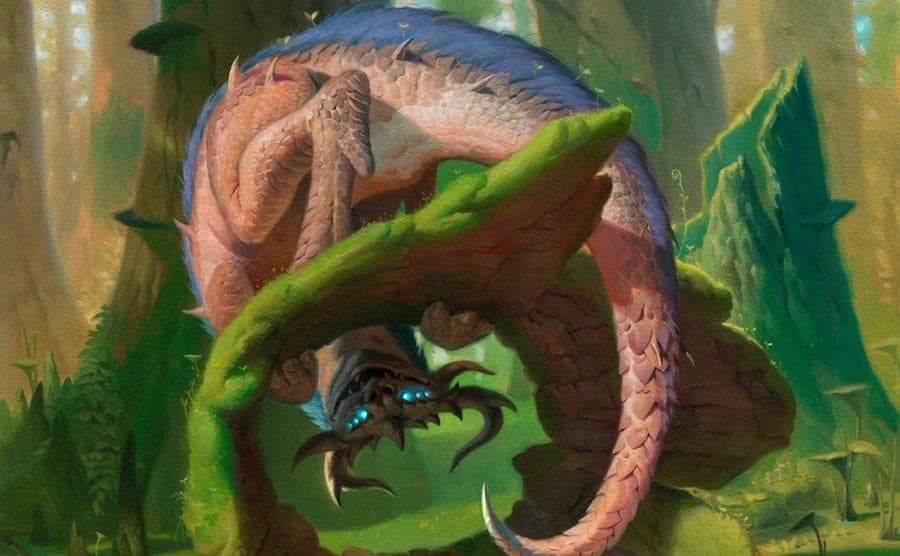
It's been six years since Ikoria, and we haven't seen any cards with mutate since. That's a long time for a mechanic to sit on the shelf, especially one that Commander players have never really stopped thinking about. EDHREC writer John Sherwood recently made the case for a mutate revival, and the argument lands harder than a Gemrazer trigger.
What Mutate Actually Does
Before getting into the why-it-should-return conversation, it helps to nail down exactly what mutate does, because even seasoned players can mix up the details.
Creatures with mutate have an alternate casting cost. If you pay the mutate cost, you choose to play the creature underneath or over the top of target non-Human creature. One goes on top, one on bottom, your choice. The new amalgam has the name, color, abilities, power, and toughness of the top card, along with all the abilities of the bottom card. Think of it as a living Voltron: each new mutation piles on more abilities while the creature grows increasingly difficult to deal with cleanly.
A mutated creature is considered one individual creature with all the abilities of every creature it has merged with. If the creature dies, it only counts as one creature dying, and the constituent creatures it has merged with are merely put into the graveyard along with it. That consolidation is both mutate's greatest strength and its most glaring weakness.
Why Mutate Went Missing
Mutate is a set mechanic from 2020's Ikoria: Lair of Behemoths and hasn't been seen on a new card since. Due to set design timelines, most new mechanics take at least two years to make a second appearance. Ikoria released in 2020, meaning mutate could have returned in any set after 2022, and yet mutate is still missing in action as of March 2026.
The delay isn't accidental. Although mutate was beloved by a small minority of players, it was confusing to the majority. The mechanic ranks medium-highly on the Storm Scale due to its immense complexity; part of the issue was making sure the environment in Standard around Ikoria did not result in problematic interactions, and consequently its power level had to be managed to prevent breakouts in larger formats.
The playtesting burden alone is significant. Whether as a cameo or as a main set mechanic, new mutate cards must coexist with other cards in a product. That requires playtesting for the Limited and Standard environments, and then there are the old mutate cards to consider for eternal formats. Apply the same playtesting burden to 20-40 cards in Standard with hundreds of other non-Human creatures, and if mutate is ever going to be a full set mechanic again, design has their work cut out for them.
The Commander Problem: Parasitic by Nature
Even setting aside design complexity, mutate has always had a particular tension with Commander that Sherwood addresses directly, and it comes down to the dreaded p-word: parasitic.
The third-most popular mutate legend is Otrimi, the Ever-Playful, the face commander from the Enhanced Evolution preconstructed deck. Otrimi offers repeatable graveyard recursion for cards with mutate. It looks like an intentional attempt to shore up the strategic downside of creature vulnerability. Mutate is less risky if you can get your cards back after the creature dies.
But Otrimi's design solution creates a different problem. Otrimi suffers from a common ailment among commanders designed around a set mechanic: it's parasitic. The set mechanic eats up slots to feed the commander's ability, at the expense of overall deck performance. There are only 19 mutate cards to choose from in its Sultai color identity. Sherwood draws from bad personal experience with parasitic mechanics: 19 cards is not enough support for a commander deck's central theme.
The one biggest drawback to mutate is that, regardless of how many creatures are under the mutated one, they still only count as a single unit. Applying a long list of mutating creature spells to one creature is like putting all your eggs in one basket. If the one mutated creature is destroyed, so too are all the cards beneath it.
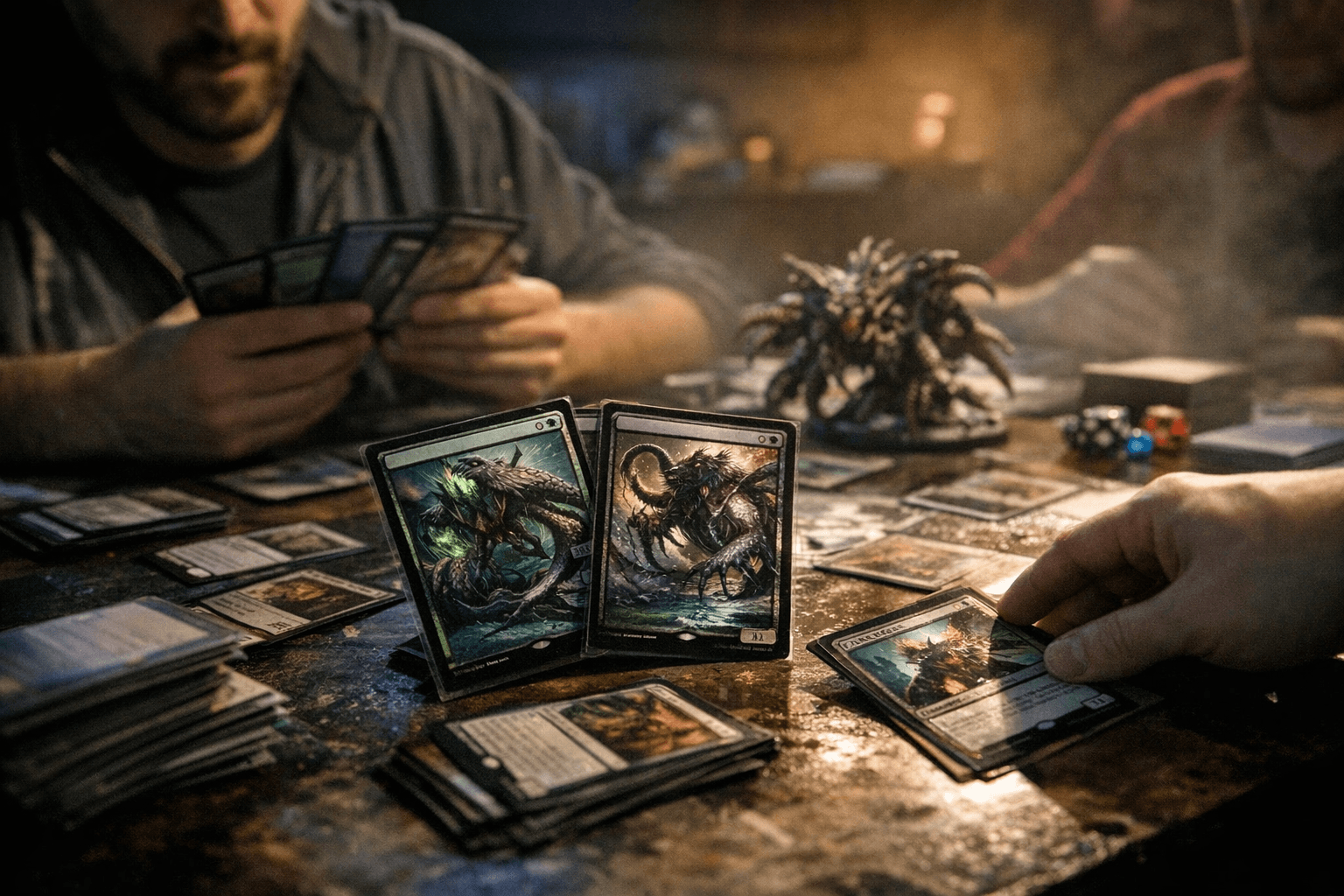
Many of the existing mutate cards have abilities that stack, and many of them are efficient removal effects like Gemrazer. The upside is real, in other words. The problem is structural: there just aren't enough pieces in the cardpool to build the engine properly.
The Case for a Return
So why bring it back at all? Because the upside at the Commander table, with access to a 30,000+ card pool, is enormous, and the current cardpool bottleneck is precisely what new printings would fix.
Sherwood's wishlist is specific. He'd like to see mutate make cameos in Commander precons, in premier sets like Modern Horizons, and yes, even in Universe Beyond. And if it returns as a full set mechanic: he'd like it to focus on two-color pairs, instead of three-color like Ikoria. That shift would reduce complexity, widen the pool of viable commanders, and make deckbuilding feel less like a scavenger hunt.
The mechanic's compatibility with Commander's card pool is one of its structural advantages. The only real restriction on mutating is that it can't be applied to a human creature, which means it works with essentially every set ever released because they all have non-human creatures in them. This means there are infinite possibilities for the combos you can come up with in eternal formats like Commander.
Unlike energy counters, mutate came loaded with potential commanders. Each color wedge has at least one legend that keys on mutate, and Commander 2020 launched an entire preconstructed deck devoted to the mechanic. The infrastructure was already there from day one. What's missing is six years of additional support.
Untapped Design Space
Perhaps the most compelling part of Sherwood's argument is forward-looking. The mechanic has untapped lore potential, and the design space feels like it hasn't been fully explored.
That sentiment tracks with the original enthusiasm from Ikoria's release. The most exciting and impressive thing about mutate is the cards they haven't made yet. Unlike bestow or meld or any of the past attempts at such a mechanic, the templating of mutate leaves plenty of room to access the effect differently. Imagine a blue instant which mutates all of a player's creatures into one, or a Reanimate that mutates a creature from your graveyard onto one you have in play.
Even the technical side of playing it has a ceiling that hasn't been reached. Keeping a mutate chain going is the key to maximizing the mechanic. If you construct a deck where almost all nonland permanents are creatures with mutate, you've got a great chance to hit one when your commander mutates. And the whole pile triggers every time a new creature mutates onto it.
The Verdict
Sherwood is fully in favor of giving mutate another go. The argument is grounded not in nostalgia but in practical Commander deckbuilding reality: the mechanic was hamstrung by the limits of a single set's card pool and a three-color identity structure that made consistent builds nearly impossible. Focused reprints, two-color designs, and precon cameos could solve every one of those problems without requiring a full-set commitment from Wizards.
Mutate is the rare mechanic that gets better the more cards exist around it. Six years later, with a Commander format bigger and more experimental than ever, the timing for that expansion has never been better.
This article was produced by Prism’s automated news system from verified source data, official records, and press releases, then run through automated quality and moderation checks before publishing. The system is built and supervised by the people who set the standards it runs under. Read our full AI policy.
Did this article answer your question?