Overlooked Uncommons That Deserve More Spots in Your Commander Decks
Bennie Smith's EDHREC deep-dive names Trash the Town and Yedora, Grave Gardener among the sub-$5 uncommons quietly outperforming their rarity in Commander.
Every Commander player knows the rarity-defying power of Sol Ring. It's an uncommon that shows up in roughly 84% of all decks tracked by EDHREC, outperforming the vast majority of mythic rares in raw inclusion numbers, banned in Legacy and restricted in Vintage while living its best life in your 99. Sol Ring has been the proof of concept for years: rarity doesn't determine impact. Yet when it comes to building and upgrading Commander decks, the instinct to scroll past uncommons in favor of flashier rares is stubborn and expensive. Veteran Commander writer Bennie Smith made that case directly in a recent EDHREC piece, spotlighting a set of underplayed uncommons that deserve real consideration the next time you crack open a precon or start a fresh build.
Smith's argument isn't just a gut-feel recommendation. It draws on EDHREC's aggregated deckbuilding data, which tracks inclusion rates across millions of user-submitted lists, to identify cards that are technically available to most players but chronically absent from the decks that would benefit most from them. The pattern he identifies is consistent: players reach for familiar rares that fill a role, while uncommons offering the same function, or a more flexible one, sit in bulk boxes at under a dollar.
Trash the Town: Two Mana That Plays Like a Mythic
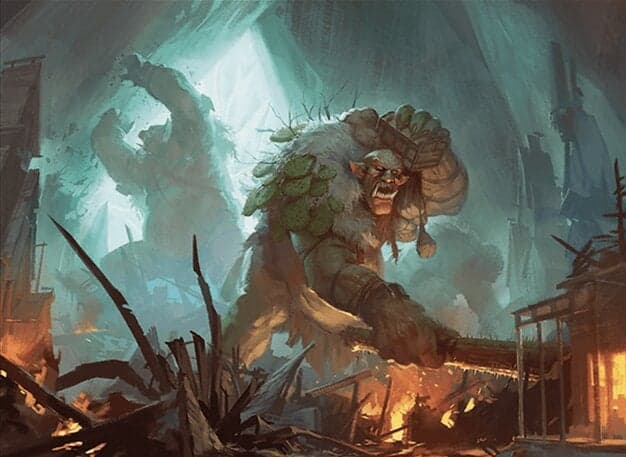
Trash the Town is a spree card from Outlaws of Thunder Junction, and Smith had initially overlooked it himself until he slotted it into his Leatherhead, Swamp Stalker deck and quickly became convinced it has far wider applications. The card's headline mode does something Commander loves: until end of turn, a target creature gains "Whenever this creature deals combat damage to a player, draw two cards." That alone would be worth the slot in a combat-oriented deck, but the spree mechanic layers on additional utility. The other modes include granting trample to ensure your creature connects, and adding two +1/+1 counters as a combat trick.
The ceiling on Trash the Town is especially high in the right shell. It's particularly powerful when targeting a double strike creature, or if your deck generates extra attack steps, since the triggered draw fires once for each instance of combat damage dealt. A double striker connecting with a player draws four cards off a single cast. At just two mana, you're rarely casting this and getting nothing; even grabbing a single mode on a key attacker represents a positive exchange. For +1/+1 counter decks, aggro builds, or any commander that wants to reward connecting with players, this is the kind of modal flexibility that earns its spot in the 99 on value alone.
Yedora, Grave Gardener: Graveyard Insurance That Doubles as Ramp
Yedora, Grave Gardener was never an expensive card even when originally printed as a rare, but its downshift to uncommon makes it a perfect time to highlight just how strong the ability is. The effect is deceptively powerful: when a nontoken creature you control dies, it returns to the battlefield face-down as a Forest land. At first glance that reads as a consolation prize. In practice, it's a resilience engine that changes how your opponents have to evaluate board wipes.
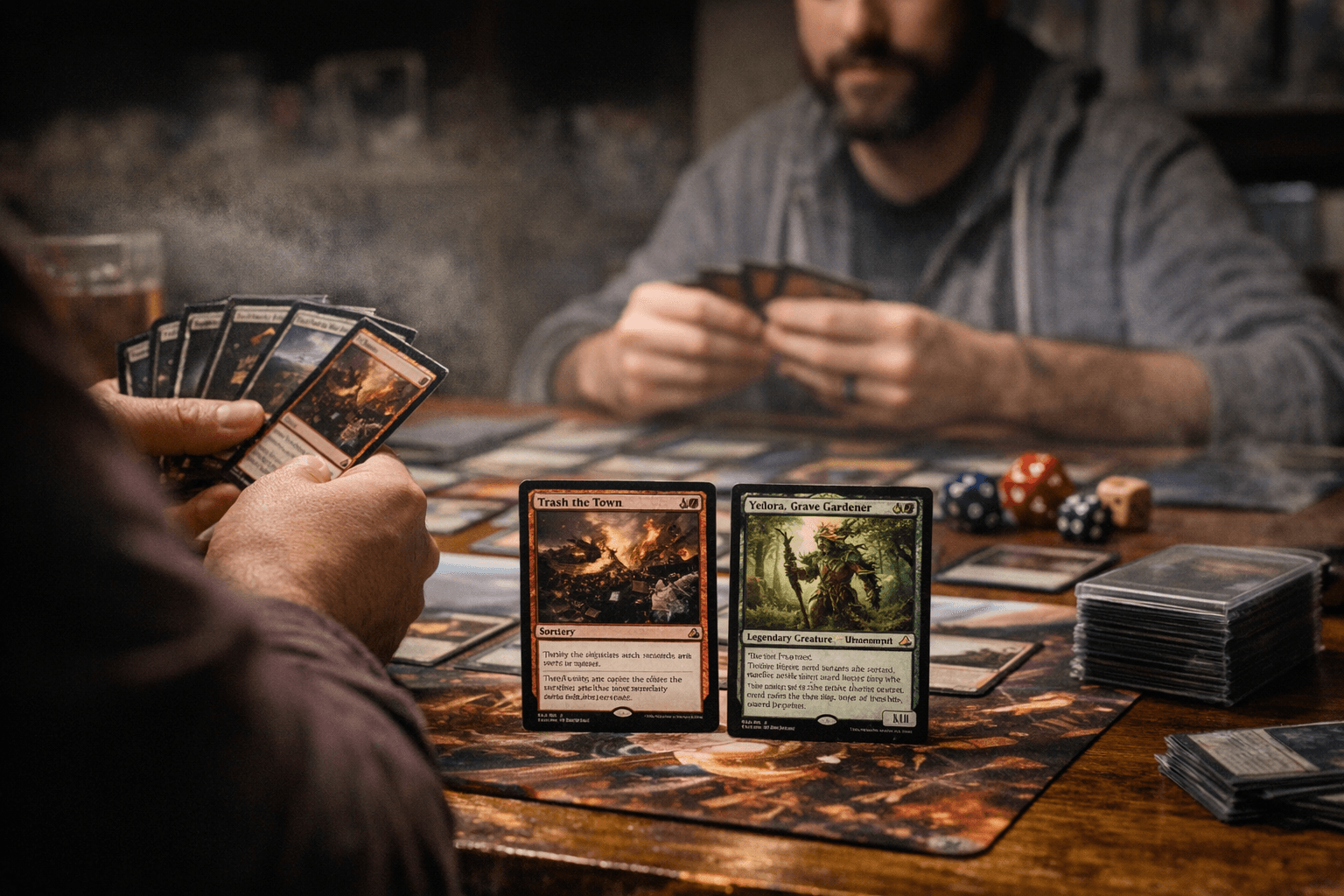
If your commander carries a high mana value, you'll especially appreciate Yedora converting your fallen creatures into Forests after a sweeper, keeping your land count growing when the board gets wiped. The interaction with sacrifice outlets adds another layer: if your deck is running sacrifice outlets, you can time the sacrifice precisely when you need an extra mana, turning every creature in your graveyard into on-demand ramp. But the most underappreciated element is the recursion potential waiting on the back end. There are numerous ways to return lands to your hand in green, including Multani, Yavimaya's Avatar, Golgari Rot Farm, and Mina and Denn, Wildborn, all of which can pick up those face-down creatures and return them to your hand to be recast. What looked like a death trigger becomes a full reanimation loop when you build around it deliberately.
The Case for Uncommons Across All Archetypes
The through-line connecting Smith's picks isn't just budget efficiency, though that matters: these are genuinely sub-$5 cards that compete with, and sometimes outperform, five-dollar rares in the same role. The deeper argument is about how uncommons behave in multiplayer. They fly under the political radar. Opponents don't prioritize removing a two-mana instant or a support creature the same way they target a Rhystic Study or a Cyclonic Rift. That relative invisibility compounds over a long game, especially in the archetypes Smith highlights: token strategies that reward small, stacking bonuses; sacrifice engines that turn every creature death into a resource; +1/+1 counter synergies that benefit from cheap combat tricks on key turns.
For players upgrading precon decks on a limited budget, the practical payoff is immediate. Swapping an underperforming rare for a tightly-fitting uncommon doesn't just save money; it often improves the consistency of the mana curve and reduces the number of "dead draw" scenarios where a card is only good in specific situations. EDHREC's data bears this out historically: when the site spotlights specific overlooked cards, inclusion rates in user-submitted lists climb noticeably in the following weeks as deckbuilders integrate the recommendations into existing builds.
Rarity is a printing decision, not a power ceiling. The best reason to build around that fact is sitting in your bulk box right now.
- Bennie Smith, "Uncommons You're Not Playing in Commander, but Should Be!", EDHREC, March 30, 2026.
- Bennie Smith, "The 10 Best Uncommons in Commander", EDHREC, March 23, 2026.
Sources:
This article was produced by Prism’s automated news system from verified source data, official records, and press releases, then run through automated quality and moderation checks before publishing. The system is built and supervised by the people who set the standards it runs under. Read our full AI policy.
Did this article answer your question?