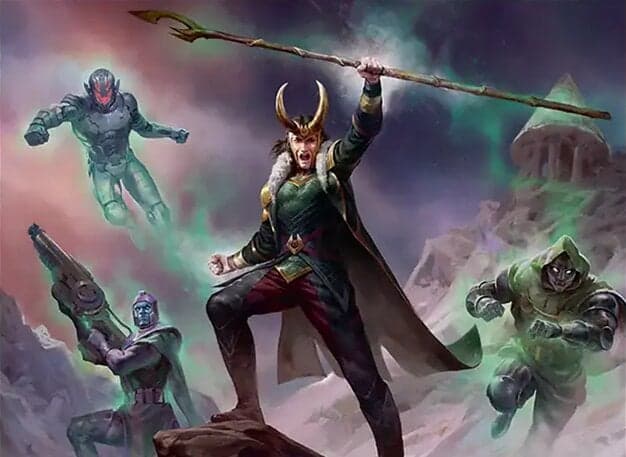
Paige Smith Breaks Down High Perfect Morcant Lorwyn Elf Commander Deck
Paige Smith’s CoolStuffInc guide (Feb 23, 2026) turns High Perfect Morcant into a practical Lorwyn‑themed elf commander deck, showing how Lorwyn Eclipsed cards make elf tribal playable at multiplayer tables.

Paige Smith’s CoolStuffInc deck breakdown, published February 23, 2026, walks readers step‑by‑step through a Lorwyn‑themed elf Commander built around High Perfect Morcant and a selection of Lorwyn Eclipsed cards, and positions the build as a practical, playable Commander list for multiplayer tables. The article is explicitly a how‑to: construction, play patterns, and where Lorwyn’s Eclipsed pieces slot into the tribal skeleton.
1. The article and intent
Paige Smith wrote the CoolStuffInc piece as a practical deckbuilding walkthrough aimed at players who want a ready‑to‑pilot elf commander rather than an aspirational or spiky brew. She frames the article as both a full 100‑card list and a teaching tool, breaking choices into categories: ramp, threats, interaction, and thematic Lorwyn pieces. The intent is clear from the presentation: make a new era of Lorwyn cards accessible to regular Commander tables rather than relegated to curiosities.
2. Why High Perfect Morcant is the anchor
High Perfect Morcant is presented as the deck’s centerpiece and axis around which Lorwyn‑flavored elf synergies turn; Paige builds the 99 to support whatever identity Morcant provides and to exploit the set’s tribal hooks. The write‑up treats Morcant as the most consequential single inclusion: the card’s presence dictates curve decisions, the balance between token production and anthem effects, and which Lorwyn Eclipsed cards make the final cut. In Paige’s frame, Morcant is what makes otherwise niche Lorwyn pieces worth packaging into a consistent multiplayer strategy.
3. How Lorwyn Eclipsed cards are integrated
Paige explicitly highlights multiple Lorwyn Eclipsed cards as the thematic backbone, using them for tribal support and to open novel lines of play that old Lorwyn lists didn’t have. Rather than dumping every new print into the 99, the article shows selective inclusion: pick Eclipsed cards that backup your commander’s plan, shore up weaknesses in early turns, or give recurring value in long multiplayer games. The effect Paige describes is twofold: you get the flavor payoff of a Lorwyn‑style elf horde and the practical payoffs that keep the deck competitive.
4. Deck skeleton and construction priorities
The CoolStuffInc guide organizes the deck into clear buckets, ramp, mana fixing, early board presence, fight/interaction, late game finishers, and Lorwyn Eclipsed pieces, and gives exact priorities for card slots rather than vague lists. Paige emphasizes putting reliable ramp and acceleration into the early 30–40 percent of the deck to ensure Morcant and the Eclipsed enablers land on time; she frames this as the single most consistent way to convert Lorwyn flavor into real board tempo. The article’s 100‑card list is presented as a tuned compromise: enough interaction to survive multiplayer, enough payoff cards to close once the table is pressured.
5. Pilot plan and sequencing
Paige walks through opening hands and midgame sequencing focused on establishing early elf presence, protecting key pieces, and scaling into Morcant’s role as the pivot of the deck. Her play guidance stresses incremental advantage rather than an all‑in combo, she writes about steady board growth and selective tempo plays so the deck can survive table politics and sweepers. The practical takeaway is that, per her guide, you should prioritize board presence and redundancy so Lorwyn Eclipsed tools keep producing value over several turns.
6. Key synergies and common lines
Rather than listing abstract synergies, the article points to concrete lines where High Perfect Morcant and the Eclipsed inclusions interact to convert small‑time advantage into game‑ending pressure. Paige breaks down repeatable plays across early, mid, and late game stages and identifies which Lorwyn pieces act as glue versus which are finishers. The emphasis is on resilient engines, cards and combos that survive answers, because that’s the difference between a fun tribal deck and a consistently playable Commander.
7. Card choice philosophy and substitutions
Paige’s philosophy for card choice is explicit: include Lorwyn Eclipsed cards that reinforce the deck’s primary axis, then replace pricier or less relevant slots with budget or meta‑specific substitutes. The guide offers substitution logic, if a player lacks a particular Eclipsed piece, swap in an elf that serves the same functional role (ramp, tutor, blocker) rather than trying to replicate flavor exactly. That orientation keeps the deck accessible: CoolStuffInc’s format here is practical, aimed at players who want to build now and upgrade later.
8. Mana base and ramp considerations
Paige anchors the mana discussion around ensuring green access for early elf drops while supporting any secondary colors Morcant requires; the guide recommends prioritizing basic ramp and consistent land drops to avoid stalling the tribal curve. She advises front‑loading acceleration and keeping the mana base tuned for the Eclipsed cards that expect a particular color density. The practical note is that Lorwyn flavor is memorable only if the deck reliably plays out its first three turns, which is where most Commander games are decided.
9. Meta fit and expected table behavior
The guide frames this Morcant Lorwyn build as a table‑friendly but competitive option: it survives common sweepers, pressures opponents steadily, and rewards interactive play rather than abrupt lockdown. Paige positions the deck to perform well in pod metas that allow for incremental advantage and tribal value engines, not necessarily in ultra‑competitive free‑for‑alls that punish slow starts. The article thus helps readers judge whether their local table is the right venue to deploy this build.
10. Why this matters for Lorwyn cards and Commander
By giving Lorwyn Eclipsed cards a curated, playable home, Paige’s CoolStuffInc article elevates a set piece from novelty into ongoing Commander material, an important step for players who collect Lorwyn flavor and want to use it outside draft or standard. The piece signals to the community that these cards can be incorporated into functional league‑ and kitchen‑table decks, not just theorycraft. That practical reframing is the story’s core: it’s less about novelty and more about turning set identity into sustained multiplayer impact.
Paige Smith’s walkthrough reads like a seat‑at‑the‑table primer: detailed enough to build and pilot immediately, focused enough to survive the chaotic reality of Commander multiplayer, and explicit in why High Perfect Morcant and Lorwyn Eclipsed cards are worth your 100 slots. The final note in the guide is forward‑looking, Paige presents this as a living list meant to be tuned to local metas, and she leaves the Lorwyn theme in a place where flavor and function meet at the table.
This article was produced by Prism’s automated news system from verified source data, official records, and press releases, then run through automated quality and moderation checks before publishing. The system is built and supervised by the people who set the standards it runs under. Read our full AI policy.
Did this article answer your question?