Ramos, Dragon Engine powers an Archaic-themed Commander brew
Ramos turns a strange Archaic name-chasing brew into a real five-color engine, letting color-heavy legends and copy tricks actually keep pace.
A weird tribe needs a real engine
Stephen Johnson’s latest Commander build works because it commits to the joke and then gives the joke a chassis. Instead of leaning on the obvious Strixhaven school themes, he builds around Archaics, a narrow and under-supported hook that becomes much more interesting once Ramos, Dragon Engine enters the picture. That matters in a set where Wizards of the Coast says Secrets of Strixhaven released on April 24, 2026 and brought 35 new legendary creatures to Commander, plus five preconstructed decks: Silverquill Influence, Prismari Artistry, Witherbloom Pestilence, Lorehold Spirit, and Quandrix Unlimited.

The novelty here is not just that the deck is themed. It is that the theme is weird in a way Commander actually rewards. Archaic cards tend to be colorless or color-intensive, which sounds awkward until you remember that Ramos is one of the cleanest five-color glue pieces in the format. Stephen’s point is simple: if you are going to make an Archaic brew function, you need a commander that turns scattered, expensive, splashy cards into a coherent mana engine.
Why Ramos is the right kind of absurd
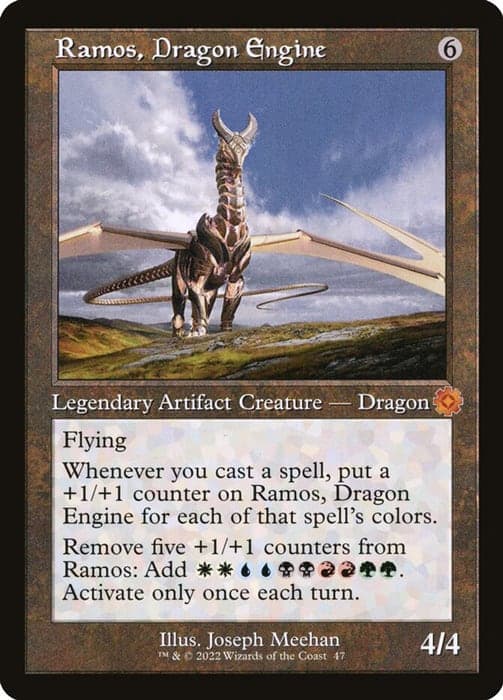
Ramos, Dragon Engine does exactly what a theme deck like this wants. His oracle text puts a +1/+1 counter on him for each color of a spell you cast, and then he can cash in five counters for a burst of mana once each turn. The important detail is that Ramos cares about the number of colors a spell has, not the colored mana symbols in its cost and not the mana you actually spent to cast it. That makes multicolor spells the premium fuel in this shell, because they stack counters fast and turn Ramos from a chunky artifact dragon into a real accelerator.
There is another wrinkle that makes him even better here: colorless spells still trigger Ramos, even though they do not give him counters. That means the deck is not punished for leaning into the Archaic name-club just because some of the cards are colorless. Commander deck construction also follows color identity, which means cards may only use mana symbols that appear in the commander’s color identity. Ramos’s five-color identity opens the door to almost anything the deck wants to do, from multicolor support spells to the large, off-kilter finishers that a theme deck like this needs.
Archaics are more than one card
The deck’s identity does not rest on Wandering Archaic alone, but that card is the cleanest demonstration of why the theme works. Wandering Archaic is a 4/4 Avatar that taxes every opposing instant and sorcery by asking its controller to pay {2}; if they do not, you copy the spell. In practice, that turns cards like an overloaded Cyclonic Rift into something far more awkward for the table, because now the whole spell stack comes with an added question: do you pay extra, or do you let the Archaic player get paid?
Abstruse Archaic pushes the theme in a different direction and shows that this is not just a copy-of-a-copy gimmick. It can copy activated and triggered abilities you control from a colorless source, which opens up a much broader lane than spell copying alone. Official rulings note that it can even copy abilities associated with dungeons, emblems, planes, and phenomenons, which gives the card a delightfully weird ceiling and makes it feel like part of a larger Arcavios-adjacent magic trick rather than a one-note build-around.
What the deck is actually trying to do
This is where the list stops being a novelty and starts being a strategy. Ramos wants you to cast spells with multiple colors, so the deck has a built-in reason to include the strongest multicolor cards available while still respecting the Archaic theme. Those spells feed counters, the counters become mana, and that mana lets you deploy the expensive, splashy Archaics and other high-end threats that a colorless subtheme normally would struggle to support.
That loop is what makes the deck feel coherent at the table. You are not simply jamming every card with Archaic in the name and hoping the table respects your flavor win. You are using Ramos as the mechanical glue that lets a pile of oddball legends, copy effects, and big turns behave like a real five-color engine. Stephen frames the build as casual and full of tuning options, which is exactly right for a Commander deck that wants to be clever without becoming brittle.
A practical way to think about the list is this:
- Cast multicolor spells early to start loading Ramos with counters.
- Use Ramos’s mana burst once per turn to jump from setup into the expensive part of the curve.
- Lean on colorless Archaics and other colorless support cards as triggers and value pieces, not as your only source of pressure.
- Let Wandering Archaic and Abstruse Archaic do different jobs, one policing spells and the other bending abilities.
That structure keeps the deck from collapsing into pure novelty. The Archaic names give it flavor, but the five-color commander gives it function.
Why this matters for Commander deckbuilding
There is a broader lesson buried inside Stephen’s brew. Commander players love tribe-adjacent builds, odd card-name themes, and underexplored hooks, but those decks fail when the commander cannot convert theme into gameplay. Ramos is valuable here because he does not care whether the table thinks Archaics are a real tribe. He rewards color variety, scales with the spell you cast, and turns the deck’s biggest liabilities, expensive cards and awkward color demands, into advantages.
That is also why the Secrets of Strixhaven context matters. Wizards clearly leaned hard into legends, spellcasting, and “plane-shaping archaics” in the set’s lore, and that gives deckbuilders room to get creative. Stephen takes that invitation and chooses a lane that is stranger than the obvious school decks, but still anchored by real game text and real Commander incentives. The result is not a solved list, and that is part of the appeal. It is a blueprint for how to make a weird theme function without sanding off the weirdness.
The punchline
Ramos, Dragon Engine is doing the job a good Commander commander should do: he makes the gimmick playable. In this brew, he turns a scattered Archaic hook into a five-color value engine, and that single choice gives the deck enough power to stand up at an actual table instead of just looking clever in a decklist.
This article was produced by Prism’s automated news system from verified source data, official records, and press releases, then run through automated quality and moderation checks before publishing. The system is built and supervised by the people who set the standards it runs under. Read our full AI policy.
Did this article answer your question?