Sol Ring in Commander: Beloved Staple or Banned-Worthy Problem?
Sol Ring appears in 84% of Commander decks, yet it's banned in Legacy and restricted in Vintage. EDHREC's Cas Hinds asks whether it's time to treat Commander's mascot card with real scrutiny.
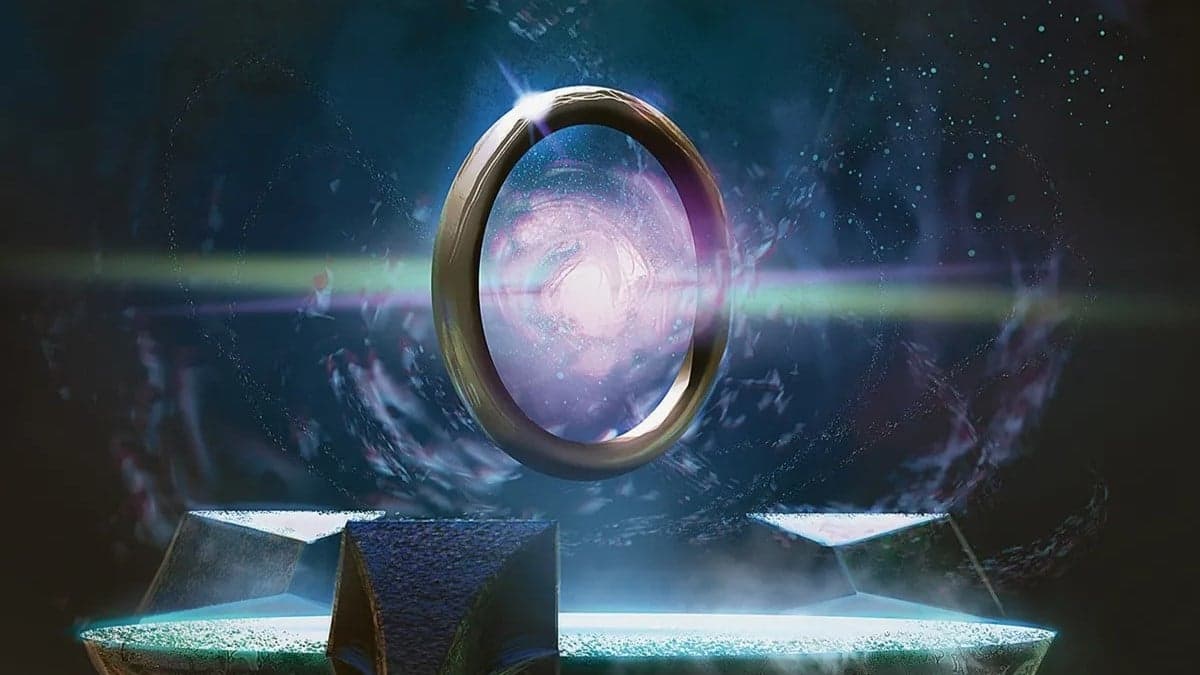
Sol Ring sits in roughly 84% of Commander decks according to EDHREC's top cards data, making it the single most-played card in the entire format. That number isn't a quirk of popularity or nostalgia. It's a signal. Its power level puts it in the same space as Black Lotus and the Moxen: banned in Legacy and restricted in Vintage. And yet, every Saturday night at Commander tables everywhere, four players slam it down on turn one and nobody blinks. EDHREC writer Cas Hinds has posed the question the community keeps circling back to: does Sol Ring deserve the free pass it's always gotten, or has Commander's favorite card quietly become its biggest problem?
A Card Born Before the Format Existed
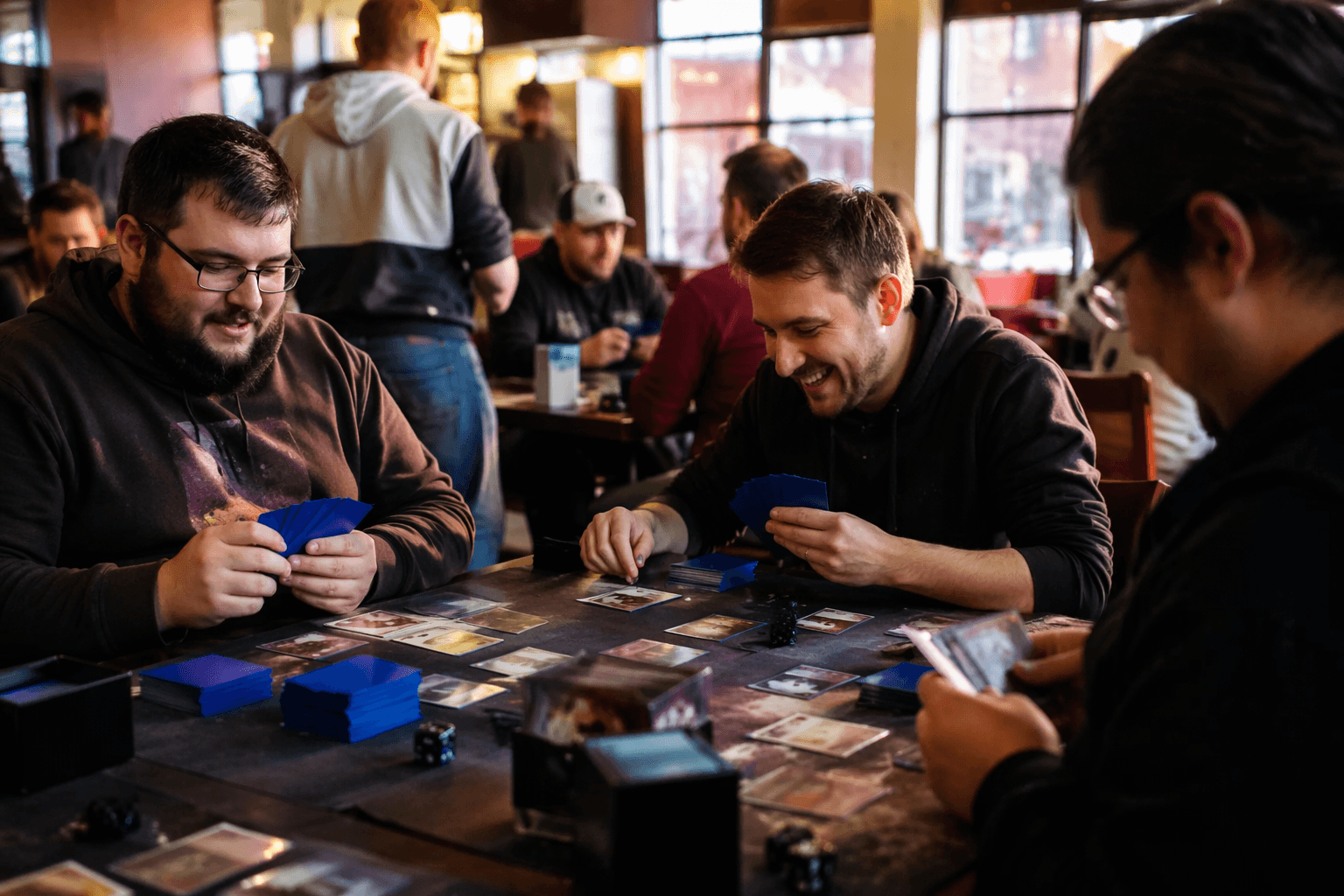
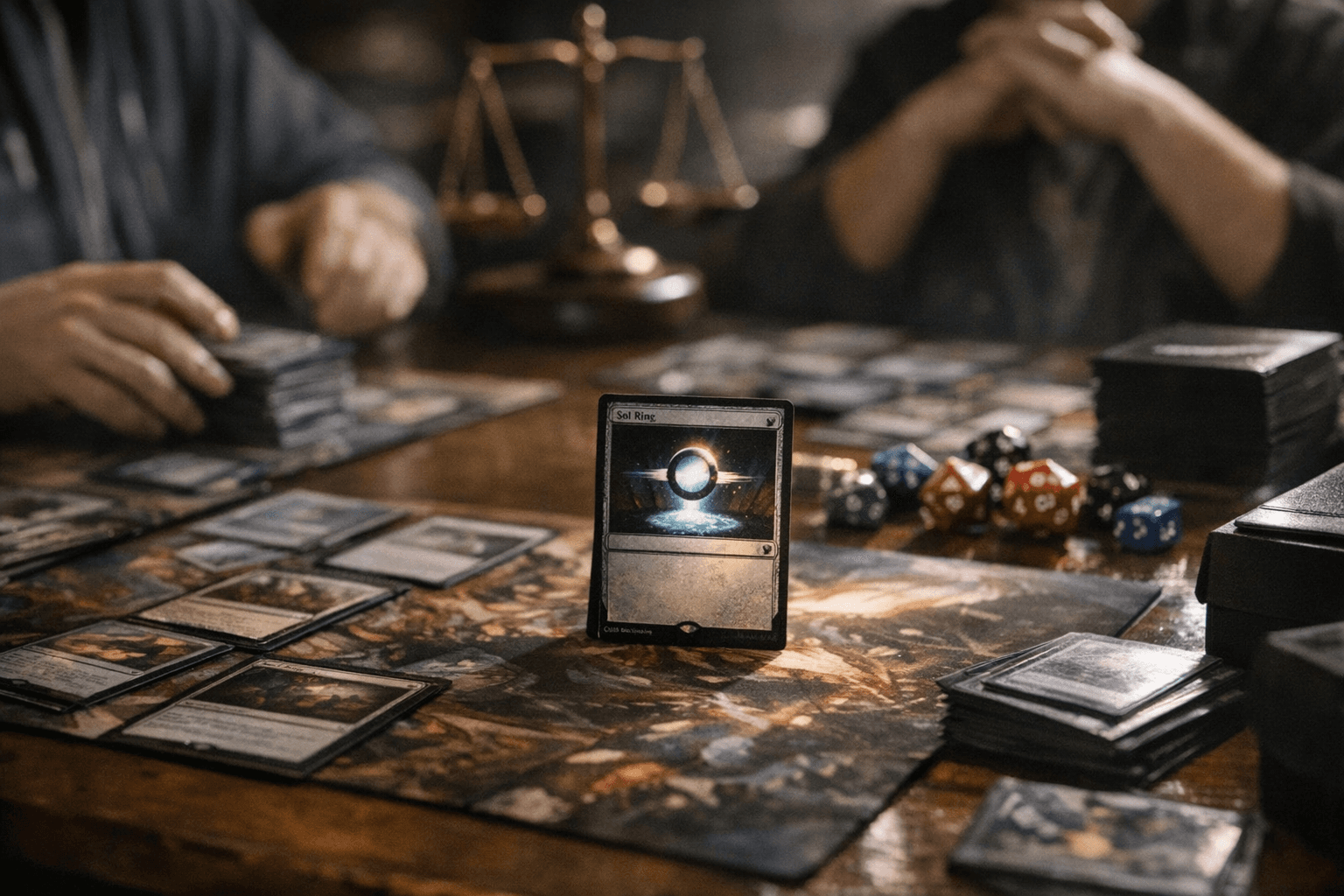
Sol Ring was printed in Alpha in 1993, which means it predates Commander by well over a decade. When Elder Dragon Highlander began to grow in popularity, players were able to dig through old binders and dust off their copies of Sol Ring. Something about playing with that iconic one-mana card with the flaming ring on it just felt like going home. That emotional connection is real, and it matters when you're talking about a social format built on shared experience. Sol Ring is part of Commander's identity, and identity matters in a social format.
It comes in every preconstructed Commander deck, and is often the first card players grab when building something new. It's emblazoned on playmats, sleeves, promo cards, and is even the avatar for r/EDH. Wizards of the Coast has done everything short of legally requiring it in your 99. Banning Sol Ring wouldn't just remove a card; it would strip the format of something that functions almost like a mascot.
The Case for the Prosecution
Set sentiment aside for a moment and look at what the card actually does. If you're evaluating Sol Ring like a normal Magic card, the arguments write themselves: one player gets to play turn-3 Magic on turn 1. The cascading effect from there is where things get genuinely uncomfortable.
Land into Sol Ring into Arcane Signet is four total mana on turn one. Turn two, that same player can chain into Thran Dynamo and a land fetch spell, accessing 11 mana with all of it available again next turn. Yes, it's the nth degree of ramp, but that's the cascading effect Sol Ring enables.
The EDHREC article referencing Cas Hinds's work on powerful cards we take for granted makes a compelling point: this is where Sol Ring's biggest negative influence is found. Commander is actively being designed around a single card that WotC knows and expects to be played in the vast majority of decks. Every new card seeks to inch closer and closer to Sol Ring's status, which leads players toward upgrading their decks more thoroughly and Commander decks toward stagnation.
There's also the deckbuilding angle. Some argue Sol Ring should be banned not because of its power but because of what it does to deckbuilding. With the exception of a very few commanders, Sol Ring will be in every deck, so instead of this being a 100-card format, it becomes a 99-card format. Your singleton format's promise of diversity quietly evaporates one auto-include at a time.
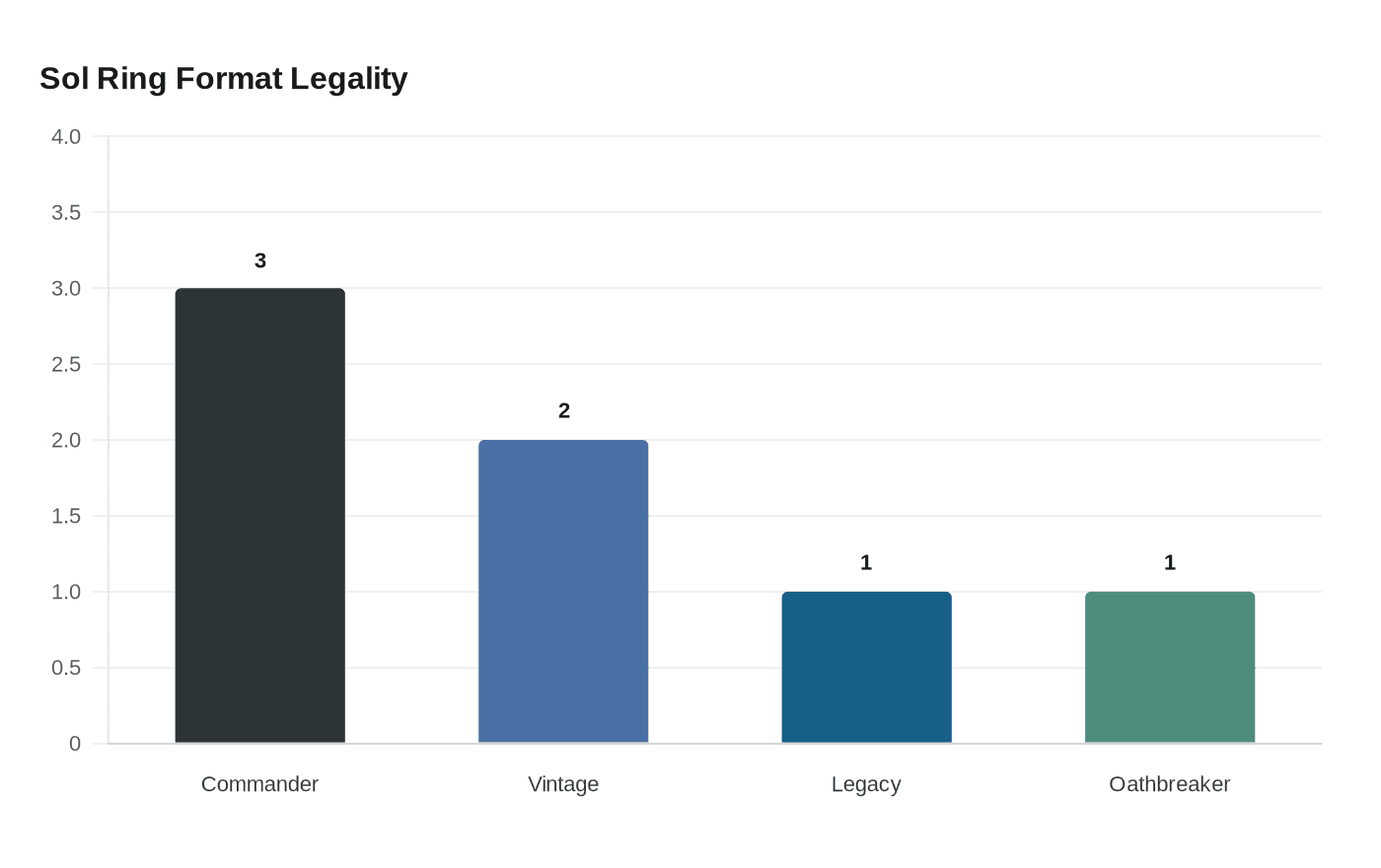
Sol Ring is only really fully legal in Commander. It's restricted in Vintage and banned in Legacy and Oathbreaker. That's a striking fact to sit with. The card is too dangerous for every other Constructed format, but Commander gets a free pass. The argument that it's "fine in a 100-card singleton" starts to look thinner when you list those restrictions side by side.
The Case for the Defense
The counterargument is also legitimate, and it starts with multiplayer math. While Sol Ring is a very powerful mana rock during the early turns of the game, it is still only one card out of 99, and doesn't break the kinds of decks the Rules Committee encourages through their philosophy for the format.
The former Rules Committee was explicit about where it drew the line on fast mana. Their position, stated directly, was that "too much mana" means six, not two. Sol Ring never produces more than 2 mana. The power of Sol Ring is way lower in the kind of social decks the format tries to foster. You get to do splashy plays a little earlier, not broken ones, and those are much easier to handle in a 4-player game.
The multiplayer table is also its own corrective mechanism. Sol Ring is only really powerful in the early game, and as the game progresses the card becomes less and less powerful. Whoever plays Sol Ring first, the entire table often gangs up on that person, either targeting Sol Ring or taking the player out of the game. Three opponents coordinating against the mana-advantaged player is a real thing. It happens constantly at casual tables.
There's also the color equity argument worth taking seriously. Non-green decks have the most to gain from fast mana like Sol Ring. While non-green decks can't put lands on the table as fast as green, mana rocks can overcome that. Fast mana in non-green decks allows them to get a foothold early, to disrupt the methodical ramp power of a green deck. Remove Sol Ring, and you don't level the playing field; you tilt it further toward green, which is already the dominant color in the format.
The "Auto-Include" Problem Is Bigger Than One Card
This isn't necessarily an argument to ban Sol Ring or all auto-includes like Arcane Signet or Commander Tower. Yes, they take away from the format's social intent and a deck's personality, but banning is not the way to go. That perspective from EDHREC's own writers is telling: the issue isn't the card in isolation; it's the broader culture of auto-includes that Sol Ring sits at the top of.
The reality is that Sol Ring and other generically powerful cards that are comfortable in the vast majority of Commander decks will always be around in some form or another. Even if Sol Ring fell off the face of the earth tomorrow, a new card would take its place, and the same discussion would happen until enough people agreed on what ought to be the strongest a single card can be.
That's the uncomfortable truth at the center of this debate. Sol Ring is a symptom as much as it is a cause.
What You Can Actually Do About It
If you're playing in a pod where a turn-one Sol Ring genuinely warps games and kills the fun, you have real options that don't require waiting for the Commander Format Panel to act:
- Run more artifact removal. Sol Ring being so ubiquitous in the format means it's rarely going to be a bad idea to run dedicated artifact kill. Nature's Claim, Generous Gift, and Vandalblast all do serious work.
- Target it deliberately. Ask yourself how close the Sol Ring player is to casting their commander. Does destroying it set them back one turn or two? It might be worth it against a Kiora, Sovereign of the Deep deck, where the extra mana puts the commander two turns earlier on the table and the commander is hard to remove later.
- Have the pregame conversation. If your playgroup skews casual, a simple house rule excluding Sol Ring is a legitimate call. Sol Ring is broken in competitive games and a popular, non-problem card in casual ones. If you want to play Commander competitively and not do broken things, you'll need to modify the banlist yourself.
- Consider the bracket context. A Sol Ring in a Bracket 2 goodstuff deck is a very different proposition than one in a Bracket 4 storm list. A turn-one Sol Ring can elevate an otherwise Bracket 3 deck to certified Bracket 4 territory. One small mana rock at the start of the game and the entire strategy and power of the deck can evolve.
The Verdict
The ban isn't coming. Wizards prints Sol Ring constantly, and it's in a massive number of Commander precons. That keeps the card accessible, which matters a lot in any "should it be banned?" conversation. Pulling Sol Ring off the shelves and out of precons would be a financial and logistical decision as much as a gameplay one, and there's no appetite for it.
But Cas Hinds's question is still worth sitting with. What we can take away from the debate is that we should consider more thoroughly what we auto-include in our decks. Sol Ring isn't going anywhere; how you respond to it at your table is entirely up to you.
This article was produced by Prism’s automated news system from verified source data, official records, and press releases, then run through automated quality and moderation checks before publishing. The system is built and supervised by the people who set the standards it runs under. Read our full AI policy.
Did this article answer your question?