The Fantastic Four deck gives Commander players six legends to choose from
The Fantastic Four precon is really a six-legend puzzle, and the cleanest day-one lead is the one that turns every noncreature spell into cards and trigger value.
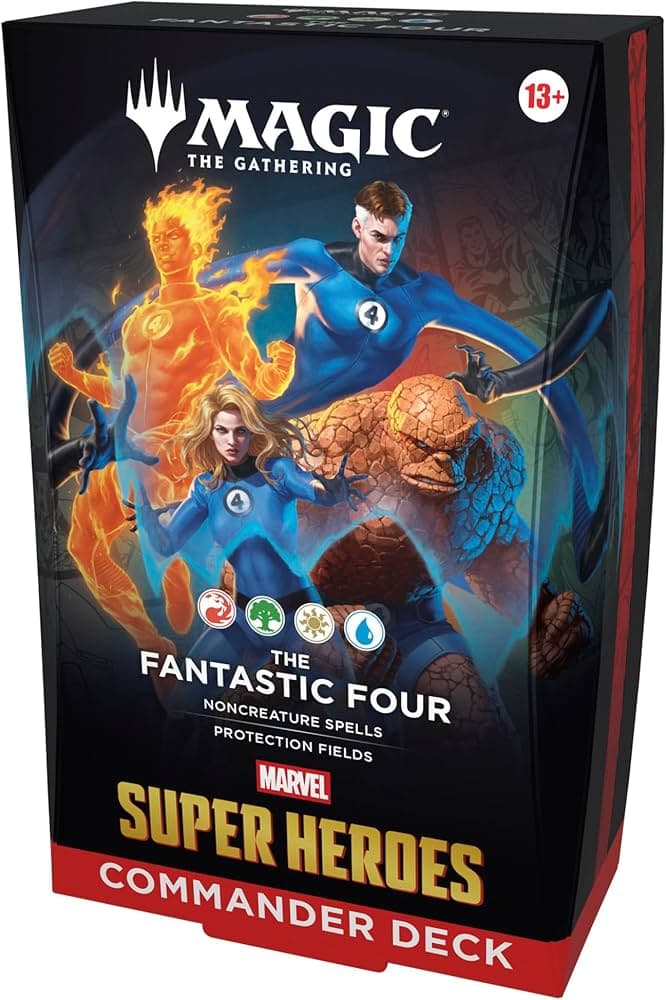
The Fantastic Four Commander deck does not hand you one obvious boss monster and call it a day. It ships as one of four ready-to-play Magic: The Gathering | Marvel Super Heroes decks, with four traditional foil face commanders, 96 non-foil cards, 10 non-foil double-sided tokens, and 26 new-to-Magic cards, all landing on June 26, 2026 in a red-green-white-blue shell. That makes this a buyer’s guide more than a lore exercise: the real question is not whether you want to play Fantastic Four, but which legend you want to trust with your first games.
Invisible Woman
Invisible Woman is the cleanest example of what this deck is trying to do when it leans into spell density and board development. She makes 0/3 wall tokens with defender and reach whenever you cast a noncreature spell, then later turns mana into evasion by making a creature unblockable and boosting it based on the size of your board. That gives her a real table role as a setup commander, one that rewards you for building a wide battlefield before you cash in on a single attack.
For a day-one buyer, the catch is mana-base strain. A four-color commander already asks for real fixing, and Invisible Woman wants you to keep chaining noncreature spells while also leaving up activation mana, which is where precon hands often get awkward. If you lead here, the easiest upgrades are the boring good ones: cheaper interaction, more one-mana setup, and smooth mana so you can actually make the wall tokens and still pressure life totals.
Mister Fantastic
Mister Fantastic is the easiest card in the deck to respect from across the table because he does something Commander players always want: he turns your normal game actions into resources. He draws you cards at the beginning of combat if you cast a noncreature spell, then can pay mana to copy a triggered ability you control twice. That is exactly the kind of command-zone engine that makes a precon feel less like a pile of cards and more like a deck with momentum.
If you are opening the box and looking for the most natural first commander, this is the one I would sleeve first. He plays the best with the deck’s four-color identity because he does not force a narrow combat line before you are ready, and his ability to amplify triggers gives you room to upgrade in almost any direction. Any extra card draw, enter-the-battlefield value, or repeatable trigger becomes better when Mister Fantastic is on the field, which makes him the smoothest path from stock list to tuned list.
Human Torch
Human Torch is the aggressive option, and he feels like the commander you pick when you want your crossover deck to actually end games instead of just demonstrating synergy. He rewards noncreature-spell turns with flying, double strike, and haste, which is a brutal sentence to put on a creature if you are trying to punish the table for tapping out. In the right draw, he can make the deck look much faster than a typical precon.
The downside is obvious: he is the most removal-prone of the bunch. A commander that telegraphs combat damage so clearly tends to eat removal on sight, and in a four-color shell that already wants strong fixing, losing your threat on curve can set you back hard. If you build around him, the easiest upgrades are protection, cheap cantrips, and a tighter spell package that lets him turn on as often as possible without overcommitting into sweepers.

The Thing
The Thing is the face commander that reminds you this deck is not only about spell chains and clever trigger math. Even without leaning on the flashiest line, he matters because he gives the deck a harder edge and keeps the whole product from reading like a pure value puzzle. That is important in a Marvel crossover precon, where a lot of players will open the box wanting one sturdy lead they can understand immediately.
From a table-role perspective, The Thing is the commander you choose when you want the deck to feel the most grounded. He is the kind of lead that fits a midrange posture, where you care less about fancy sequencing and more about presenting real pressure every turn. If you want the easiest path from sealed product to actual games, that straightforward combat identity is a feature, and it is also the easiest to reinforce with simple upgrades like better curve-toppers and cleaner mana.
The two other legends
The two other multicolor legends matter because they underline the whole design philosophy of the product. Wizards has been clear that any member of Marvel’s First Family can helm The Fantastic Four Commander deck, which means the deck is built as a customizable entry point rather than a fixed script. In practice, that makes the non-face legends feel less like extras and more like alternate command-zone engines that can steer the same 99 in a different direction.
That flexibility is why the deck is more interesting than a standard precon. If one lead pushes tokens, another pushes trigger copying, another pushes combat, and the supporting legends offer yet more angles, you are not buying a linear tribal list. You are buying a four-color toolbox that can be tuned toward draw, pressure, board-building, or a more value-heavy midrange plan, and that matters right away for anyone who likes to change their commander to match the pod.
The day-one choice
If I were leading this deck out of the box, I would start with Mister Fantastic, because he gives the cleanest blend of card advantage, trigger value, and upgrade flexibility. Invisible Woman is elegant, Human Torch is explosive, and The Thing gives the deck a sturdy combat identity, but Mister Fantastic is the one most likely to make the precon feel immediately functional without asking you to solve the mana base before you get to play Magic. That is the real hook of this product: the best commander is not just the coolest Marvel name, but the one that makes your first games better right away.
The Fantastic Four deck works because Wizards built it like a choice, not a commandment. On June 26, 2026, you are not just buying a precon, you are choosing which member of Marvel’s First Family gets to define the way your first four-color games unfold.
This article was produced by Prism’s automated news system from verified source data, official records, and press releases, then run through automated quality and moderation checks before publishing. The system is built and supervised by the people who set the standards it runs under. Read our full AI policy.
Know something we missed? Have a correction or additional information?
Submit a Tip