The Spike Feeders Team Up With GLHFCommander for a Casual Session
Meghan Wolff and Maria Bartholdi of GLHFCommander join The Spike Feeders at Camp Cardboard for a casual session with full, copy-ready decklists.

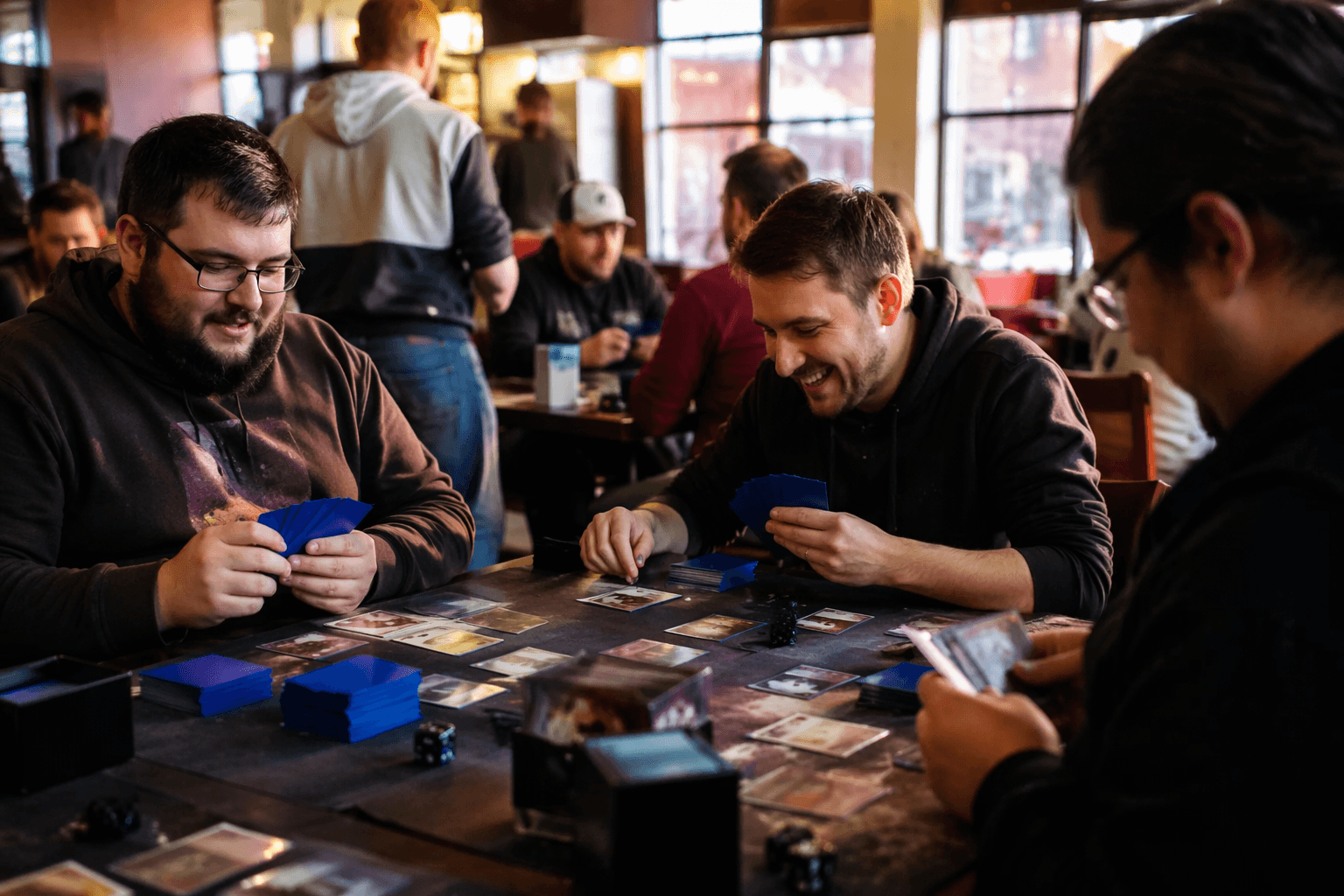
The crossover Commander community has been waiting for landed at Camp Cardboard in Victoria: Meghan Wolff and Maria Bartholdi of GLHFCommander sat down across the table from The Spike Feeders for a full casual session, with the complete writeup and every decklist published through StarCityGames. If you've ever wanted to steal a ready-to-play list from two beloved creator crews in one sitting, this episode hands you several.
The Crossover and Why It Works
"This time The Spikes are joined by Meghan and Maria from GLHFCommander!" is how the article announces the collaboration, and that single line carries a lot of weight in the current content landscape. Meghan Wolff and Maria Bartholdi built their following through Good Luck High Five, one of Magic's longest-running podcasts, before expanding into GLHFCommander as a dedicated channel for Commander gameplay and discussion. The Spike Feeders, meanwhile, have built their reputation on a mix of competitive EDH analysis and casual games that treat every pod as worth dissecting. Bringing both crews together at Camp Cardboard in Victoria isn't just a fun novelty; it's a genuine intersection of two distinct Commander audiences, casual kitchen-table players and format-savvy builders who want to understand why a deck does what it does.
The Camp Cardboard setting matters here. It's a recurring backdrop for The Spike Feeders' collaborative episodes, and the atmosphere filters into the content itself: the play is looser, the card choices are more personal, and the conversations during the episode tend to surface the kinds of reasoning that gets edited out of tighter competitive coverage.
The Decklists in Detail
The StarCityGames article publishes the full, card-by-card lists for every deck that appeared in the episode, annotated with the authorship and date of playtests. Two configurations stand out as the most immediately usable for anyone looking to build something new.
The first is an Izzet spells-and-grind deck that runs 51 spells against a 36-land base. That ratio puts it firmly in the camp of decks that want to chain card draw and interaction every turn rather than rely on a single gamewinning permanent. The land count is lean for a 100-card singleton format, which signals that the build is designed to operate on three to four lands and cantrip its way through the rest of the game. The meta notes in the article flag heavy artifact support as a deliberate inclusion, which gives the deck additional redundancy in finding its key spells while also leaning into synergies with cards that care about noncreature spells hitting the stack.
The second featured list is a green-white tokens-and-anthems deck, also running a 36-card land base. Where the Izzet list grinds laterally through a stack of instants and sorceries, this one is building a board state and then making it exponentially larger. The article's build notes mention extra redundancy for certain archetypes, which in the context of a token strategy means multiple effects that generate creatures, multiple anthem effects, and likely backup paths to the same win condition so that removing one piece doesn't dismantle the whole plan. The tech inclusions specifically called out for local metagame threats suggest this list was tuned against something specific in the Victoria play environment, probably a wraths-heavy or spot-removal-heavy table.
How to Actually Use These Lists
The practical value of a published decklist lives or dies on whether the build notes explain the choices rather than just dump 100 card names on a page. This episode does the former. Understanding that the Izzet list's artifact support is there to amplify spell redundancy tells you exactly where to start when you want to adapt it: if your local meta punishes artifacts hard, you can redistribute those slots without losing the core engine. Similarly, knowing the green-white list made specific tech inclusions for local threats gives you a framework for evaluating your own metagame and making equivalent adjustments.

Both lists are complete and dated, which means they're immediately playable without guesswork about missing cards. The annotation format The Spike Feeders use in their StarCityGames articles is particularly useful here because it distinguishes between cards that are load-bearing to the strategy and cards that are meta-dependent swaps. For anyone coming to the lists fresh, that context is the difference between copying a deck and understanding one.
- The Izzet list's 51-spell count means interaction slots and card draw are baked into the same cards wherever possible.
- The green-white list's redundancy-first philosophy makes it resilient to targeted removal without sacrificing consistency.
- Both lists were played and annotated in an actual game environment rather than theorycrafted in a vacuum, which matters when you're evaluating whether a curve is realistic.
The Creator Collaboration Template
Beyond the decks themselves, this episode models something worth paying attention to for anyone running Commander content or organizing local play. The rotating guest creator format that The Spike Feeders use in their casual episodes is one of the most sustainable ways to generate cross-community engagement in a format as broad as Commander. Bringing in Meghan and Maria exposes The Spike Feeders' audience to GLHFCommander's approach to the format, and vice versa, without either crew having to compromise their identity or production style. The episode works because both sides are playing casually and the lists reflect actual preferences rather than optimized showcase builds.
For store owners, the template translates directly: pairing a local content creator or regular streamer with a game night at a store gives regulars a reason to show up and gives newer players a recognizable entry point into the community. The full decklist dump that StarCityGames includes with each Spike Feeders episode serves the same function a store demo deck does, something concrete and replicable that a player can take home and build from.
The short-term adoption wave for both featured lists is predictable; complete, explained decklists with creator credibility behind them tend to move quickly through playgroups. What lasts longer is the model itself. Casual episodes built around meaningful crossovers, real decklists, and transparent build reasoning are exactly what the Commander community rewards with attention, and this episode gives a clear blueprint for why that works.
This article was produced by Prism’s automated news system from verified source data, official records, and press releases, then run through automated quality and moderation checks before publishing. The system is built and supervised by the people who set the standards it runs under. Read our full AI policy.
Did this article answer your question?