The Ur-Dragon’s top cards reveal how Dragon decks are changing
The Ur-Dragon is Commander’s biggest Dragon deck by a mile, and the numbers say its best lists are leaning harder into support engines than pure haymakers.
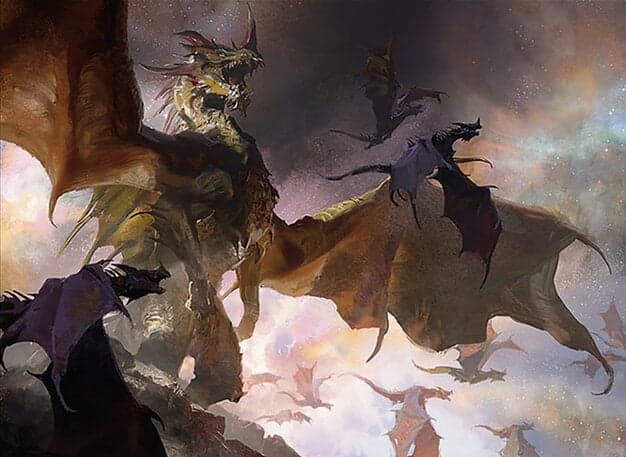
The Ur-Dragon isn’t just popular, it is the benchmark
At 46,885 decks on EDHREC, The Ur-Dragon sits at Rank #1 and towers over the rest of Commander’s leaderboard. That scale matters because it turns the deck from a pet tribe into a living data set, and the data says Dragon pilots are no longer just jamming the fattest flyers they can find. They are building around engines that make every attack hurt, every Dragon matter, and every turn cycle more explosive than the last.
The spread across deck tiers tells the same story. EDHREC shows 3,104 optimized lists, 309 expensive-optimized lists, and 161 cEDH lists, so this is not just a kitchen-table monster that disappears when the power level rises. The Ur-Dragon has real gravity across casual and higher-powered tables, which is exactly why its card choices are worth studying instead of hand-waving away as obvious tribal filler.
What The Ur-Dragon actually does when the deck is built well
The commander’s text is the whole reason the archetype works. Its Eminence ability functions while The Ur-Dragon is in the command zone or on the battlefield, which means the deck starts doing unfair things before you even resolve the commander. That cost reduction is the quiet engine of the deck, and in practice it lets Dragon spells hit the table earlier than they should.
Its attack trigger is the other half of the machine. When one or more Dragons you control attack, you draw that many cards and may put a permanent card from your hand onto the battlefield. That is not just value, it is momentum. A single combat step can refill your hand and cheat a permanent into play, which is why some lists barely need to cast The Ur-Dragon at all for the deck to hum.
That design creates the real deckbuilding puzzle. The question is not whether you can cast enormous Dragons. The question is which support pieces turn those Dragons into a coherent game plan instead of a pile of expensive threats.
The cards the archetype still leans on
The current shape of the tribe still points to a familiar core, but the reason those cards remain so common is practical, not nostalgic. The strongest Ur-Dragon shells keep stacking effects that either multiply board presence, convert combat into damage, or reset the table when things get away from you.
- Miirym, Sentinel Wyrm gives the deck the kind of copy pressure Dragon tribal loves. One Dragon becomes two, and suddenly the cost reduction from The Ur-Dragon starts snowballing into a board state that is hard to contain.
- Dragon Tempest is exactly the sort of card this commander wants. It turns the act of deploying Dragons into immediate damage, which means your board presence starts paying you before combat even finishes.
- Crux of Fate fills the emergency-reset role that big tribal decks still need. It gives Dragon lists a way to clear away problem boards without abandoning their own creature plan.
Those are not flashy inclusions. They are the glue. The fact that they keep appearing around The Ur-Dragon tells you what the tribe has learned: if your deck only aims to slam seven-mana Dragons, you are building for the dream draw, not the average game.
What Dragon players are getting right
The healthiest Ur-Dragon lists are built around layered advantages. The commander’s cost reduction gets the first Dragon onto the battlefield sooner, then the attack trigger turns that lead into cards and free permanents, and the support package turns that board into pressure. That is why the archetype still feels powerful even when the pilot never assembles a dedicated combo kill.
The best builds also respect the fact that The Ur-Dragon does not need to be the only engine in the deck. The commander can sit in the command zone and still do work, which frees the list to focus on cards that function well on their own. That is a big reason the archetype has stayed relevant for years instead of collapsing into a one-note pile of haymakers.
What is still lagging behind
The sacred cow that continues to lag is the old instinct to overvalue raw size. A Dragon that costs eight mana and does nothing the turn it arrives can still be impressive, but impressive is not the same as efficient. At The Ur-Dragon scale, the decks that perform better are the ones that make every Dragon do at least two jobs, usually more.
That is the real adjustment point for players tuning their list today. If a Dragon only attacks for a big number, it has to justify its slot with the rest of the shell. If it copies something, draws cards, burns the table, protects the board, or resets the game, it is doing work that matters every time the deck functions the way it wants to.
Why the card’s history still matters
The Ur-Dragon first appeared in Commander 2017 on August 25, 2017, and later got a Commander Masters reprint. That combination matters because it kept the commander visible, accessible, and continuously relevant as Dragon tribal kept evolving. A card does not stay at the top of Commander for this long by accident, and it does not stay there because players are all building the same list either.
The numbers make the lesson pretty clear. A commander with 46,885 decks does not just represent popularity, it sets the template for how a tribe is supposed to function. The Ur-Dragon’s best builds are not chasing the biggest possible battlefield in a vacuum. They are building a machine where every Dragon is a threat, a resource, and, often, the start of the endgame.
This article was produced by Prism’s automated news system from verified source data, official records, and press releases, then run through automated quality and moderation checks before publishing. The system is built and supervised by the people who set the standards it runs under. Read our full AI policy.
Did this article answer your question?