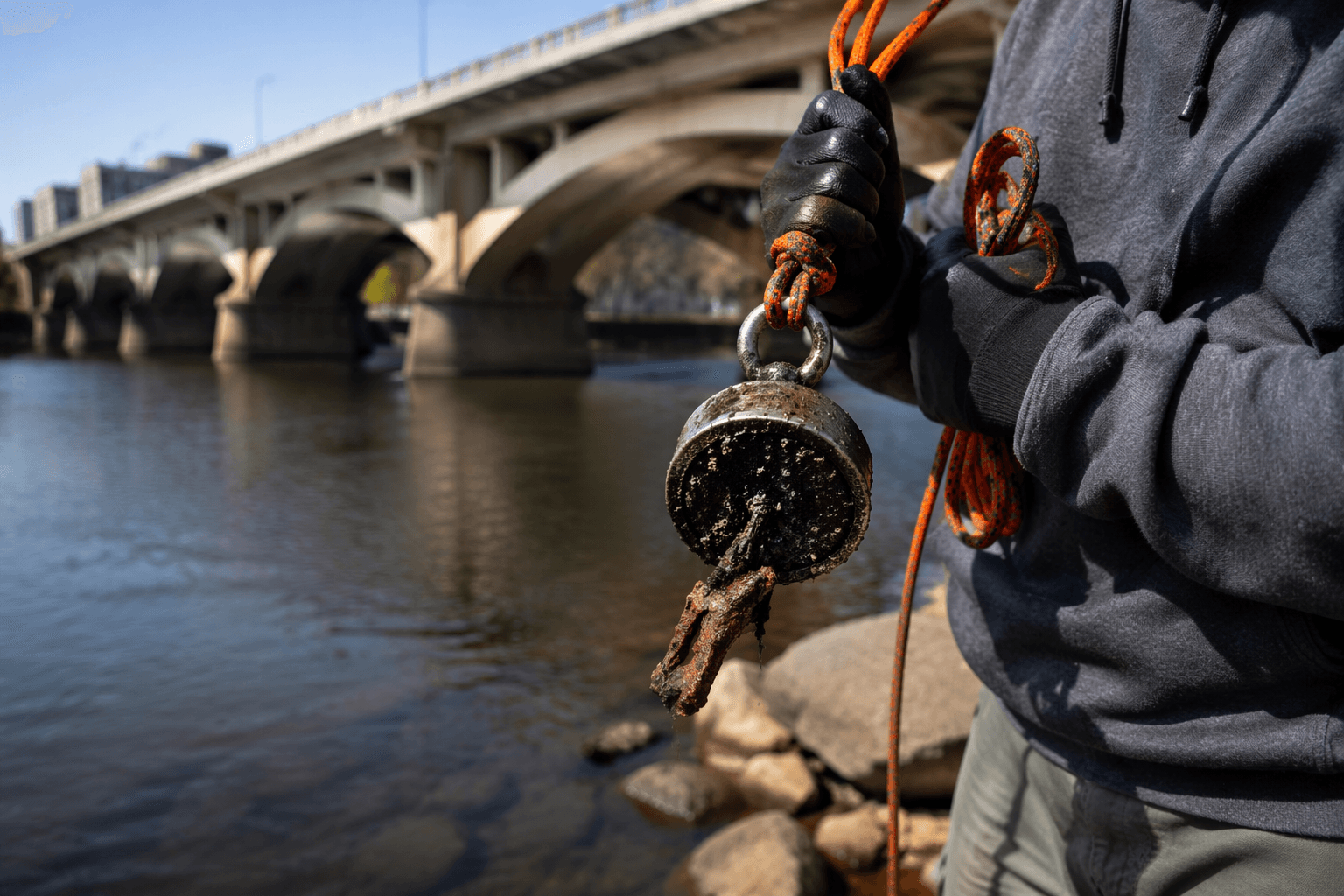
Magnet fishing cleanup turns into a police investigation after a suspicious find
A cleanup pull turned a riverbank into a police scene when the magnet hauled up something officers treated as a felony, not scrap.

One throw of the magnet changed everything. A routine cleanup turned into flashing lights, and the sharp lesson was immediate: if the pull looks suspicious, stop treating it like a bucket full of scrap and start treating it like a possible crime scene.
The first move is simple. Stop reeling, leave the item where it landed if it is still safely in place, and back away. Do not drag it onto the bank, do not toss it in a trunk, and do not try to clean off mud, rust, or debris to see what it is. A suspicious find can be evidence, stolen property, or a weapon, and once it is handled casually, the scene can be compromised before police or another authority has a chance to assess it.
If the object looks like a firearm, ammunition, a knife, or anything that could be tied to a crime, call police right away. A recent legal explainer said a firearm recovered while magnet fishing should be treated as dangerous and reported rather than kept. That is the line magnet fishers cannot afford to blur. The instinct to call it scrap may feel harmless in the moment, but that label can create legal trouble when the object belongs in an evidence locker instead of a garage workbench.
The rules around magnet fishing already show how quickly the hobby crosses into regulated territory. The Canal & River Trust says magnet fishing can be dangerous and does not allow it on its waterways. In Indiana, the Department of Natural Resources says a free magnet fishing permit applies only to properties owned, managed, or leased by Indiana DNR. In Scotland, Scottish Canals requires permission from Scottish Canals and Scheduled Monument Consent from Historic Environment Scotland before anyone magnet fishes on its waterways. Historic Environment Scotland also provides a short guide for magnet fishing on Scotland’s scheduled canals and protected waters.
That is why the moment a normal cleanup pull turns into flashing lights matters so much. The hobby is built on surprise, but the responsible move is knowing when the surprise stops being yours. The right call is to freeze the scene, let the authorities take over, and keep one bad pull from becoming a bigger problem.
This article was produced by Prism’s automated news system from verified source data, official records, and press releases, then run through automated quality and moderation checks before publishing. The system is built and supervised by the people who set the standards it runs under. Read our full AI policy.
Know something we missed? Have a correction or additional information?
Submit a Tip