Why magnet fishing pulls steel, not gold or copper
Magnet fishing is a steel hunt, not a gold rush. Once you understand what ferromagnets grab, better spots and safer gear choices fall into place.
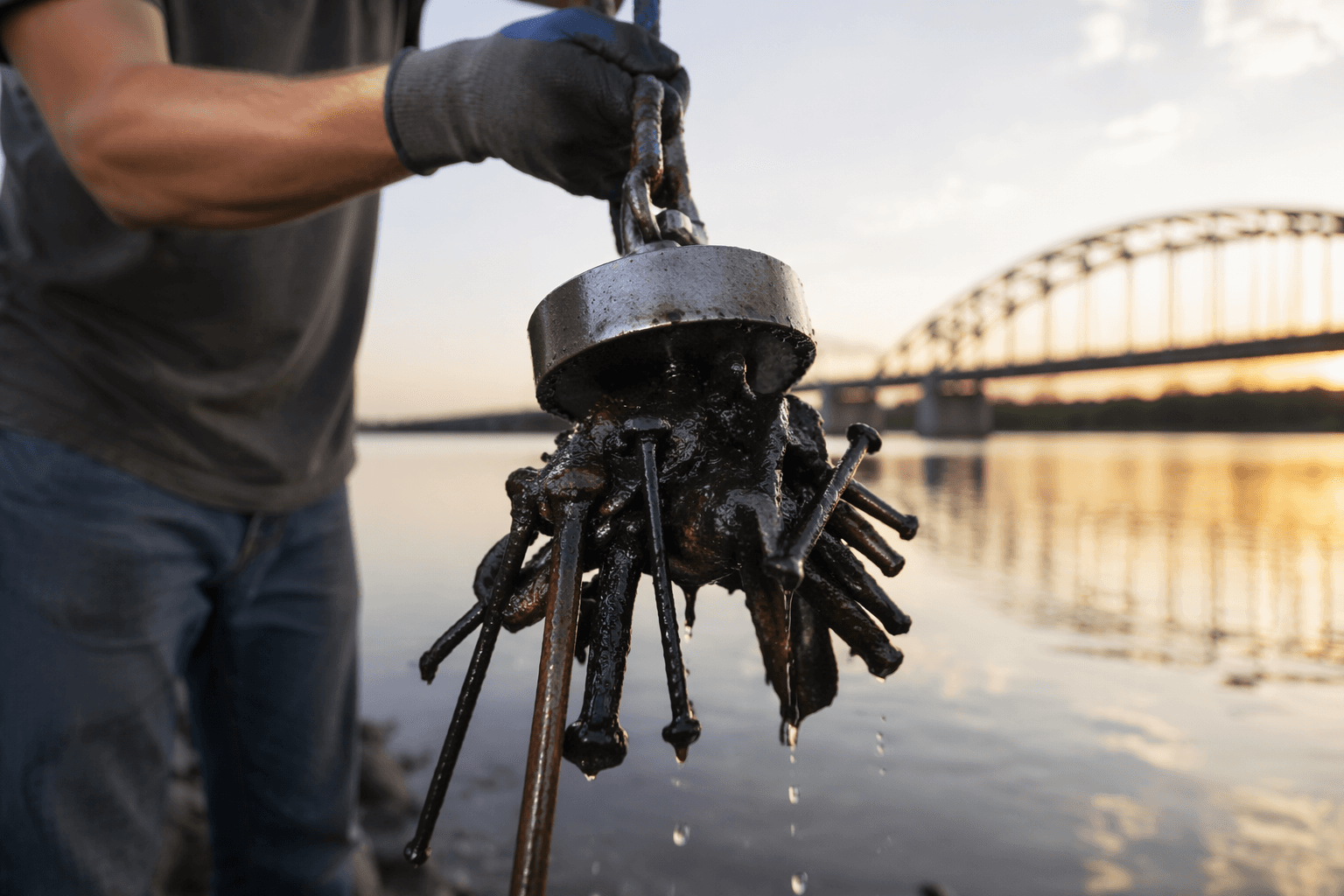
A steel wrench, bike frame, or chain can come up fast on a magnet line, while a copper fitting, gold ring, or brass piece can sit untouched on the bottom. A magnet pulls hardest on ferromagnetic metals like iron, cobalt, and nickel. Once that science clicks, the hobby makes more sense as a hunt for iron and steel debris, with the occasional historically interesting object, than as a shortcut to valuables.
What the magnet is really chasing
The physics is straightforward. Materials with strong magnetic response move well into a fishing magnet’s field; common non-ferromagnetic metals such as aluminum, copper, brass, gold, silver, and most stainless steel do not. That is why a rusted iron object can cling harder than a shiny modern alloy: the outer finish may look impressive, but the underlying composition decides whether the magnet bites.
If you are sweeping a canal edge or dragging along a bridge piling, the realistic haul is usually scrap, hardware, tools, rebar, keys, chains, and the kind of forgotten steel that collects where people have worked, crossed, loaded, or dumped metal for decades.
Why gold, copper, and most jewelry stay invisible
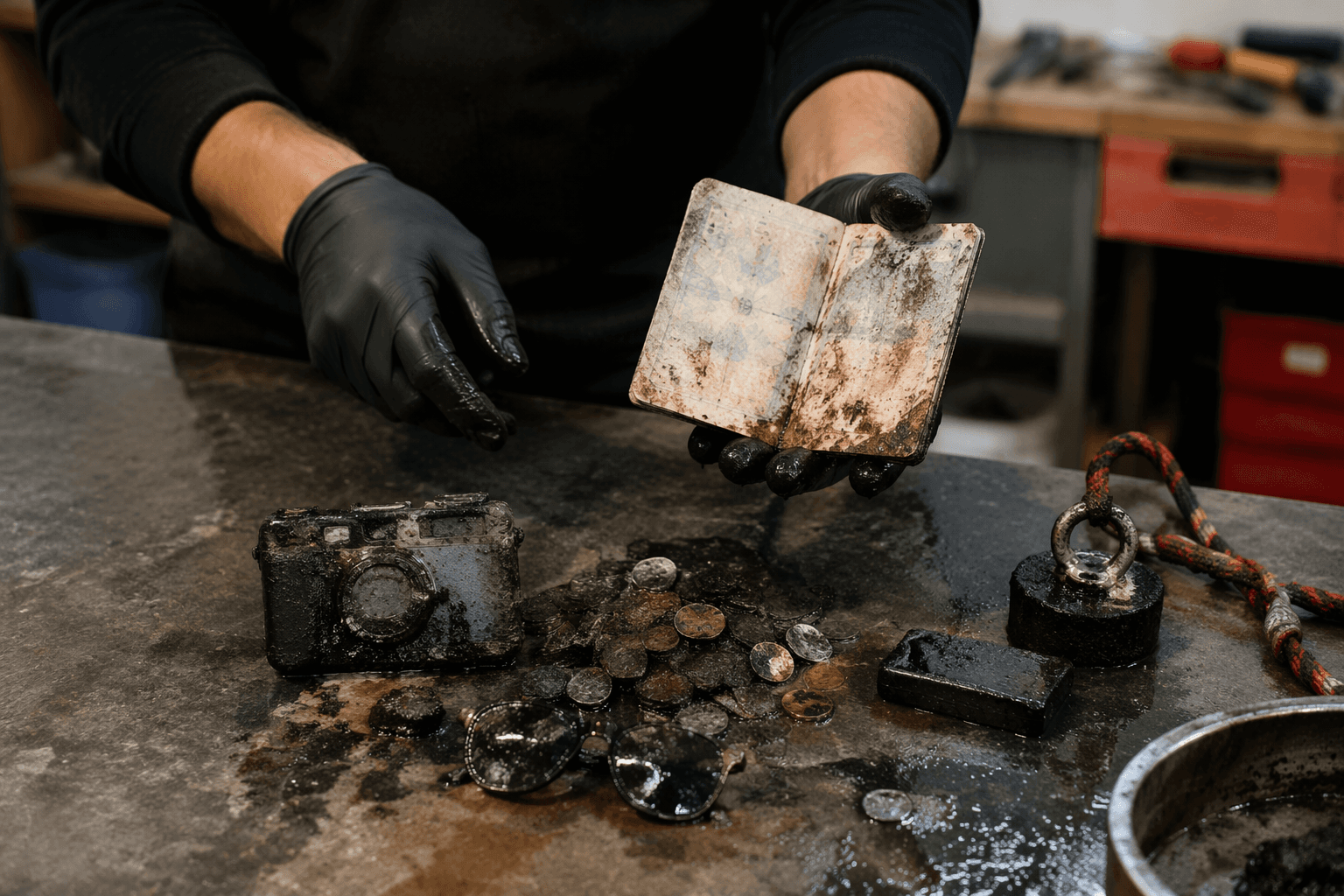
This is the biggest myth to clear away early: magnet fishing is not a gold hunt. Gold, copper, silver, and brass are poor targets because they are not ferromagnetic, so the magnet simply has nothing to latch onto. A copper pipe fitting or a gold chain can be sitting right in the search lane and still remain invisible to the magnet.
That also explains why some “valuable” items never show up even when they are nearby. If a piece is made from a nonmagnetic alloy, plated in a thin decorative layer, or built from mixed materials with too little iron content to matter, the magnet will not behave like a treasure sweep.
The gear that fits the job
Beginner magnet fishers usually reach for neodymium magnets, and that makes sense: they are the standard tool because they offer strong pull in a compact package. Magnets in the 500 to 3,000-plus pound pull-force range are typical, though the exact choice depends on what you want to lift and how much mud, drag, or snag risk is on the object.
The rest of the setup matters just as much as the magnet. A strong rope, a secure knot, and a method for landing heavy metal without slipping are part of the basic kit, because a magnet that can yank up a chain or bike frame can also be hard to control once it hooks something awkward. Match the setup to your target waters and your tolerance for weight, drag, and debris.
Where the finds actually are
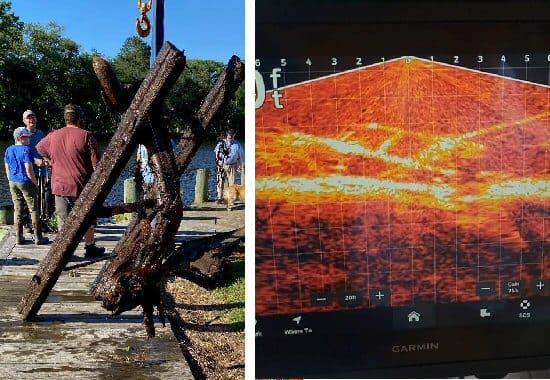
The smart spots are the ones shaped by human use, not fantasy. Old bridges, docks, canals, ponds, rivers, and urban shorelines are prime because decades of traffic, repairs, dumping, and flood movement leave behind tools, hardware, and other ferrous junk. That is where the hobby’s “treasure” usually lives: in places where iron and steel have been lost, tossed, or buried in silt.
Magnet fishing uses high-powered magnets attached to rope to retrieve metal objects from waterways. The Broads Authority warns that sharp pieces of metal on the bank can pose danger to visitors and dogs. If you want cleaner pulls and fewer surprises, pick water where metal has had time to settle and where you can work without fighting steep, tangled, or unstable edges.
Cleanup, curiosity, and the heritage line
Magnet fishing often sits at the crossroads of cleanup and archaeology. The Broads Authority warns about hazards including trip risks, weapons or ordnance, and cuts or infection from rusty objects, while also advising life jackets because the size, weight, and power of the magnets can pull users toward the water. The Health and Safety Executive treats magnetic lifting devices as a genuine hazard when they are not handled carefully, and the UK’s 2021 safety alert and guidance around small, high-powered magnets underline the ingestion risk those magnets pose if they are misused.
Archaeology depends on careful recording and context, with detailed notebooks, photos, and drawings capturing not only what was found but exactly where it was found. In the River Tyne, rare Roman objects recovered from mud were prepared for display at Corbridge Roman Town in 2026.
When a magnet pull becomes a heritage issue
A pull from the water can turn into a preservation question fast. A 1,100-year-old Viking sword pulled from an English river became a case of reporting, museum transfer, and legal ownership rather than private keeping.
On land Portsmouth City Council owns, manages, or tenancies cover, magnet fishing is generally not permitted unless it is part of an appropriate research program, and the council reserves ownership of archaeological objects for its historic collections. In Scotland, Treasure Trove rules can require historical finds to be reported, while canal-network waters are generally restricted and may be off-limits without permission. Before you cast, know who owns the water and what happens if the pull is older than the hobby.
Safer, smarter expectations
Treat magnet fishing as controlled curiosity. Bring the magnet that fits your rope and your lifting comfort, choose places where ferromagnetic debris is likely, and expect iron and steel more often than anything shiny or precious.
This article was produced by Prism’s automated news system from verified source data, official records, and press releases, then run through automated quality and moderation checks before publishing. The system is built and supervised by the people who set the standards it runs under. Read our full AI policy.
Know something we missed? Have a correction or additional information?
Submit a Tip