Bee Write Back, Raspberry Pi writerdeck pairs 47-switch mechanical keyboard with AMOLED display
Simon’s Bee Write Back turns a 47-switch mechanical keyboard, Raspberry Pi Zero 2 W, and 5.5-inch AMOLED into a distraction-free bedside writing rig.
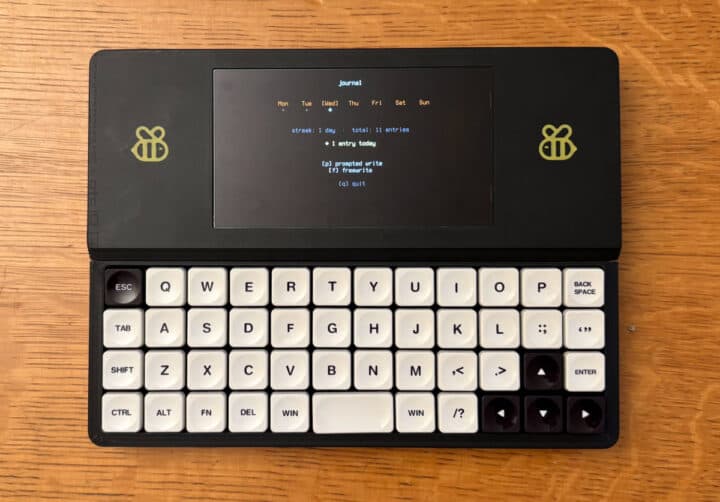
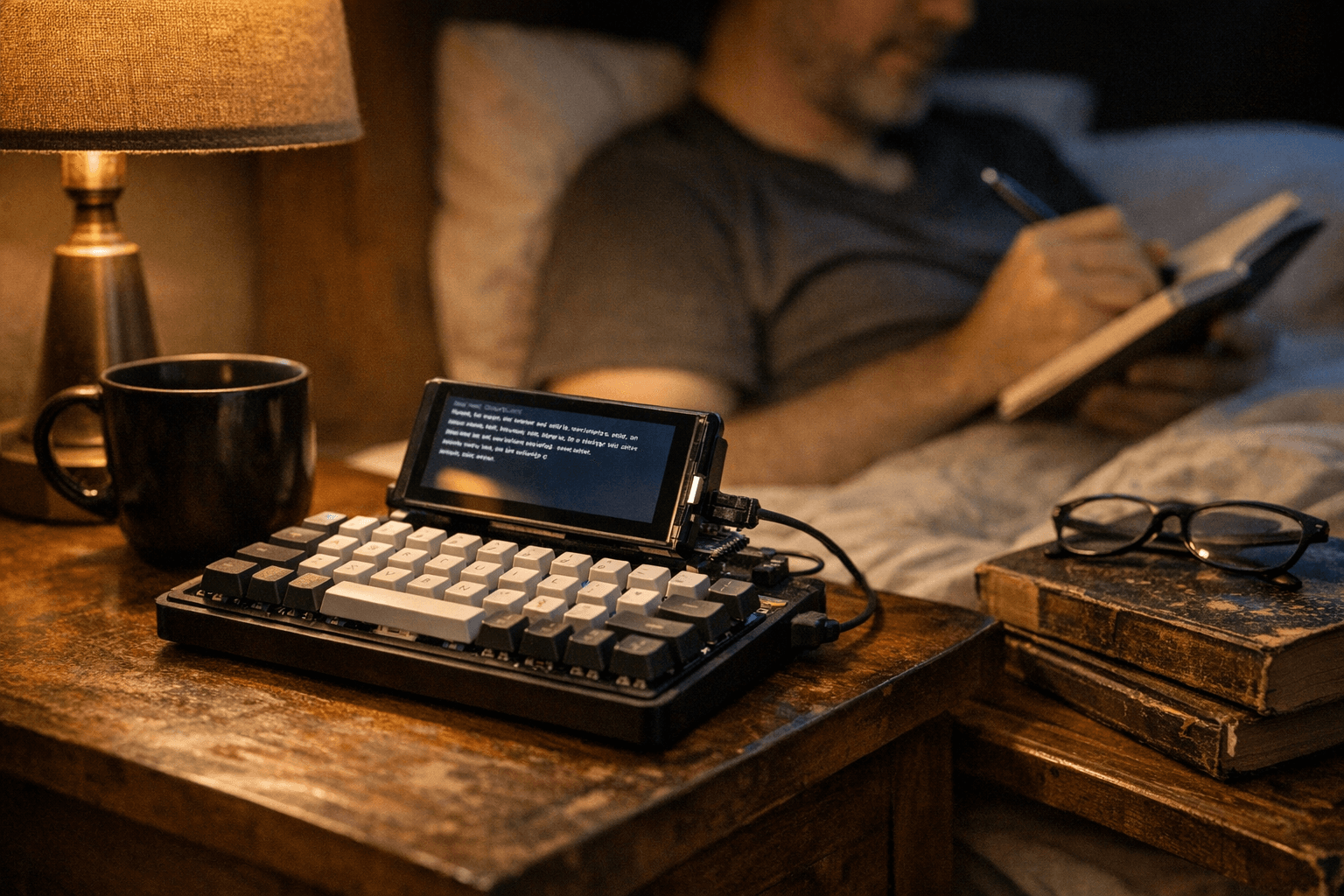
Bee Write Back starts with a problem many makers know well: Simon found that journaling helped him sleep better, but he did not enjoy doing it in a traditional notebook. The result is a compact writerdeck that turns a familiar keyboard-build skill set into a focused writing appliance, with a 47-switch mechanical keyboard at its center and a 5.5-inch AMOLED display above it.
The build runs on a Raspberry Pi Zero 2 W and uses a 1280 x 720 panel, all housed in a 3D-printed enclosure. Simon kept the parts list deliberately practical, relying on off-the-shelf components rather than custom hardware. The build includes a YMDK Air40 keyboard PCB and a Seengreat Pi Zero UPS USB hub with an 18650 battery holder, and the total bill of materials comes to about $200 before shipping and printing costs.
That hardware choice is what makes Bee Write Back resonate beyond the usual Raspberry Pi project crowd. The 47-switch layout is not trying to replace a full desktop keyboard or mimic a mainstream laptop. It is intentionally narrow in scope, built to make typing feel deliberate and to strip away the temptation to drift into other tasks. The small screen and the potential noise of mechanical switches are part of that tradeoff, but the project leans into the constraint rather than apologizing for it.
Simon also made the build reproducible. Complete assembly instructions are available alongside two Python scripts, one for the writing interface and another for a pager-style chat client. That combination pushes Bee Write Back past the level of a one-off gadget and into the territory of a personal productivity machine that other builders can copy, modify, or shrink into a different use case.
For mechanical keyboard readers, the appeal is bigger than the switch count or the display spec. Bee Write Back shows how the hobby can extend into a complete workflow object, where keycaps, battery life, software, and enclosure design all serve one purpose: fewer distractions and more deliberate writing. In a community that loves measuring feel, travel, and layout, this project adds another metric that matters just as much, whether the machine is used for journaling, focus, or late-night offline drafting.
This article was produced by Prism’s automated news system from verified source data, official records, and press releases, then run through automated quality and moderation checks before publishing. The system is built and supervised by the people who set the standards it runs under. Read our full AI policy.
Did this article answer your question?