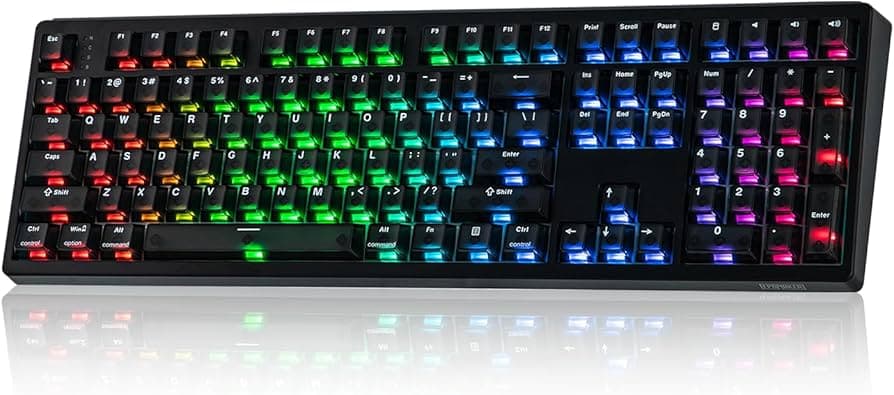
CHERRY XTRFY K63W Pro debuts as first LE-UWB gaming keyboard
CHERRY XTRFY’s K63W Pro brings LE-UWB, 8,000 Hz wireless polling, and a 6,000 mAh battery to a compact 70% board.

The real question behind the K63W Pro is not the headline polling rate. It is whether LE-UWB changes anything gamers can actually feel versus a strong 2.4GHz board, in latency, stability, or battery life, without turning wireless into a compromise again.
CHERRY XTRFY says the K63W Pro is the first gaming keyboard to use Low Energy Ultra-Wideband, or LE-UWB, and SPARK Microsystems says it is the world’s first keyboard with that wireless stack. The pitch is straightforward: true 8,000 Hz wireless polling, or up to eight reports every millisecond, while using short data bursts across a wider spectrum to reduce interference in crowded wireless environments. That is the part competitive players will judge hardest, because high-end keyboard buyers already compare more than raw latency. Wireless reliability, tuning software, and battery endurance matter just as much once the novelty wears off.
The hardware matches the ambition. The K63W Pro is a compact 70% board with a low-profile gasket design and CHERRY’s MX Low Profile 2.0 mechanical switches. CHERRY XTRFY also built in a 6,000 mAh battery, and SPARK says it can run for up to 1,100 hours between charges. CHERRY keeps a wired option on the board as well, which gives users a fallback for charging, desk use, or tournament play where a cable still feels safer than any wireless claim.

CHERRY XTRFY debuted the K63W Pro at COMPUTEX 2026 in Taipei, and the company says it will go on sale on July 2, 2026. In the U.S., the keyboard is listed for August at $169.99, putting it squarely in the premium wireless category rather than the experimental one. CHERRY says the board reports to the computer up to eight times every millisecond in both wired and wireless modes, which puts the wireless headline on the same level as the spec sheet’s most familiar bragging rights.
That is why LE-UWB matters here. If the K63W Pro feels meaningfully better than today’s best 2.4GHz keyboards in real crowded-wireless use, it becomes more than a marketing milestone. If it does not, the breakthrough stays on paper and the familiar dongle remains the standard the community keeps measuring against.
This article was produced by Prism’s automated news system from verified source data, official records, and press releases, then run through automated quality and moderation checks before publishing. The system is built and supervised by the people who set the standards it runs under. Read our full AI policy.
Did this article answer your question?