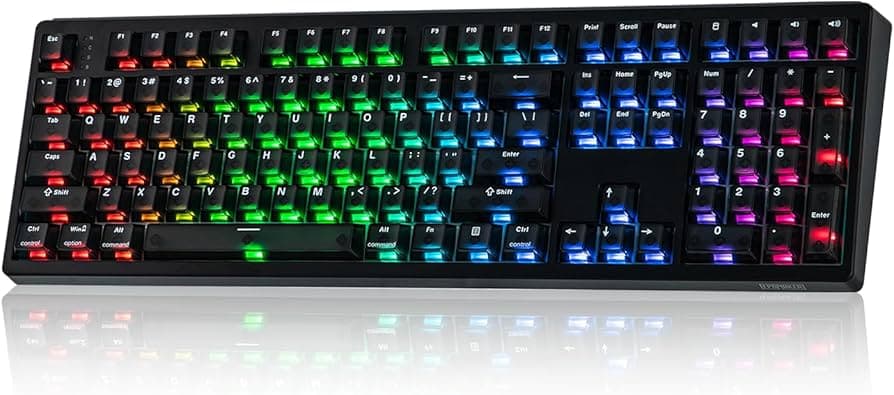
Epomaker launches two HE75 V2 keyboards for different typing priorities
Epomaker split the HE75 V2 into a Hall Effect model for speed and sound tuning, and a TMR model for hybrid switch flexibility.

Epomaker has turned the HE75 V2 name into two different answers to the same question: what does a magnetic keyboard need to solve right now? The company announced the HE75 V2 and HE75 V2 TMR on June 27, 2026, and said both boards were shaped by community discussion and hands-on feedback rather than a one-spec-fits-all brief.
The standard HE75 V2 is the cleaner fit for competitive gaming and mixed work-play use. Epomaker lists it as an 8000Hz wireless 75% board with a 128KHz full-board scan rate, 0.005mm adjustable rapid triggering, SOCD support and a swappable knob. It also uses a gasket mount, hot-swap magnetic switches and five layers of sound dampening, which pushes the board toward a softer, less hollow acoustic profile than the usual hard-edged rapid-trigger board. Epomaker’s Creamy Jade switch set, which the company highlights with the HE75 V2, is rated at 45±5gf actuation force and 50±5gf bottom-out force, with a POK stem, PC upper housing and PA66 bottom housing.
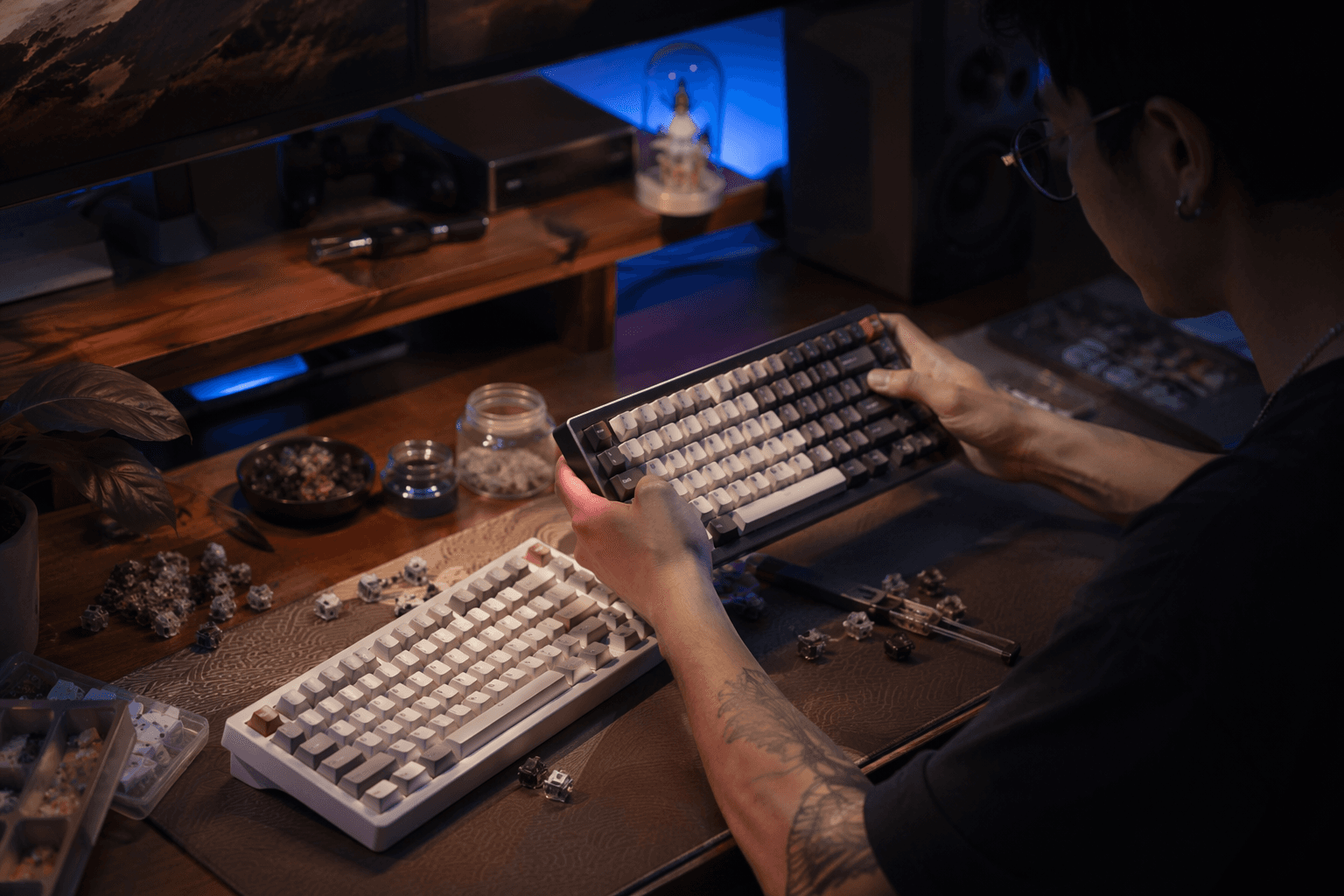
That makes the HE75 V2 the obvious choice for buyers who want Hall Effect performance without turning the desk into a science project. The appeal is speed plus presentation: rapid trigger for game inputs, SOCD support for movement-heavy titles, and enough acoustic treatment to keep the board from sounding like a bare gaming shell. In other words, it solves the problem of wanting magnetic switch behavior without sacrificing typing feel.
The HE75 V2 TMR is aimed at a different crowd. Epomaker lists 8000Hz polling, 0.01mm rapid-trigger precision, an advanced TMR PCB and hot-swap support for both magnetic switches and 3/5-pin mechanical switches. It also carries an 8000mAh battery. Epomaker had already published a TMR driver page on June 5 and updated it on June 18, which shows the software stack was in motion before the public launch.
TMR is the more experimental path because it keeps the magnetic advantages while opening the door to mechanical switch experimentation. Cherry describes TMR as a contactless magnetic sensor technology that measures key movement through changes in magnetic fields and resistance, and that higher-resolution sensing is exactly what gives the HE75 V2 TMR its pitch. Buyers who want future-proofing, switch swapping and a board that behaves more like a platform than a fixed configuration will get more out of that model than out of the Hall Effect version.
Epomaker’s split here is the useful part. The HE75 V2 is for users who want a tuned Hall Effect board that prioritizes speed, feel and acoustics. The HE75 V2 TMR is for users who want magnetic sensing with a wider hardware horizon, especially if they plan to move between magnetic and mechanical switches instead of locking into one lane.
This article was produced by Prism’s automated news system from verified source data, official records, and press releases, then run through automated quality and moderation checks before publishing. The system is built and supervised by the people who set the standards it runs under. Read our full AI policy.
Did this article answer your question?