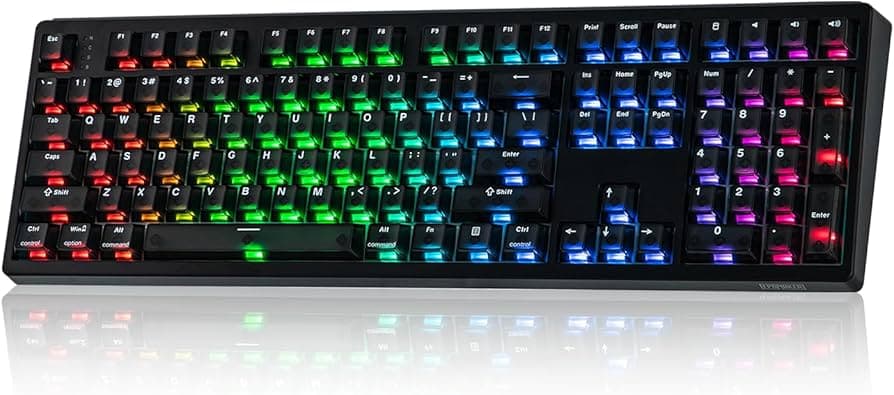
EPOMAKER TH80 V2 review praises a versatile 75-percent keyboard
The TH80 V2 looks like a rare 75-percent board that feels ready on day one, with tri-mode wireless, a 79-key layout, and an 8000mAh battery.
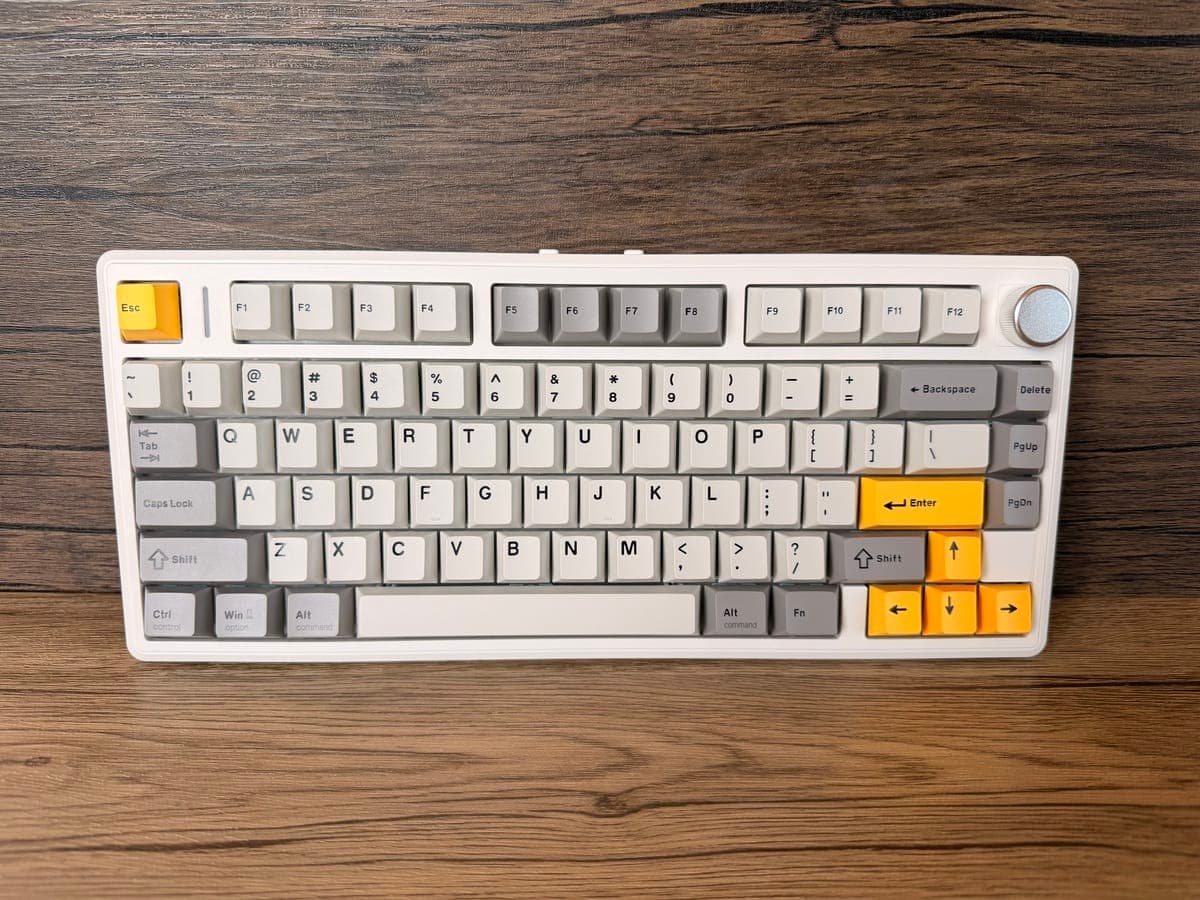
The TH80 V2 makes a strong case for being one of the few 75-percent boards that feels finished before the modding starts. With a 79-key layout, a programmable rotary knob, tri-mode connectivity, and an 8000mAh battery, it is built to serve as a real daily driver rather than a project board.
A 75-percent board that does not feel stripped down
The appeal here starts with the format itself. A 75-percent layout keeps the footprint compact, but it still gives you the function-row habit and navigation comfort that many smaller boards drop, and the TH80 V2 adds a knob on top for volume or whatever else you map it to. That combination matters if you want a board that can slide between work, gaming, and general desktop use without making you rethink your muscle memory.
The review unit used Sea Salt Silent V2 switches, which pushes the TH80 V2 toward a quieter, more office-friendly first impression. More importantly, the board is hot-swappable for both 3-pin and 5-pin mechanical switches, so the stock experience does not lock you in. If you like the case, the layout, and the tuning, you can keep it stock. If you want more tactility, heavier springs, or a different sound signature later, the board gives you that path.
The out-of-box tuning is the real story
What separates the TH80 V2 from a lot of budget-friendly 75-percent boards is how much of the sound and feel work appears to be handled before it reaches your desk. The board uses a gasket-mounted structure, a flex-cut PC plate and PCB, and a five-layer sound-optimizing stack. EPOMAKER also lists PORON, IXPE, latex, and silicone among the dampening materials, which is exactly the sort of layered approach enthusiasts usually associate with a more heavily customized build.
That matters because out-of-box acoustics are where many compact boards stumble. Here, the TH80 V2 is clearly trying to deliver a more controlled, less hollow sound without demanding that you immediately open the case and start adding foam. Double-shot PBT keycaps help finish the package, and south-facing RGB keeps lighting compatibility practical while side lighting adds a little extra visual punch. In other words, it is not just a spec sheet full of parts, it is a board that looks like it was assembled with a specific typing sound in mind.
Wireless practicality is built in, not bolted on
The TH80 V2 is also trying to be a useful desk board, not just a typing toy. It supports Bluetooth, 2.4G wireless, and wired modes, and it can remember up to five devices at once. That makes it easier to bounce between a main PC, a laptop, a tablet, or a phone without constantly re-pairing, which is the kind of convenience that matters once a keyboard becomes part of your everyday routine.
Battery life is another big part of that story. EPOMAKER says the 8000mAh battery can deliver 200-plus hours of wireless use, and the review notes up to 200 hours with RGB off and around 40 hours with RGB on. That is a meaningful spread, because it tells you exactly where the tradeoff sits: if you want the lighting on all the time, you give up runtime, but if you are happy to keep RGB restrained, the board can behave like a long-haul wireless daily driver.

The platform support also helps the ownership case. The TH80 V2 is positioned for Mac, Windows, and Android use, so it is not locked into one ecosystem. For anyone who wants one board to live across a desktop setup, a laptop, and a mobile device, that broad compatibility removes a lot of friction.
Value depends on whether you want to build or just use
The price question is where the TH80 V2 becomes especially interesting. EPOMAKER lists it at $68.99, with a sale price of $62.09 at the time of capture. At that level, the keyboard is competing not just on affordability, but on how much of a custom-style experience it delivers before any aftermarket spending begins.
That is where the TH80 V2 stands out most clearly. You are getting a compact 75-percent board, a rotary knob, tri-mode connectivity, a large battery, hot-swap support, and a layered acoustic package in one purchase. If you are the kind of builder who enjoys changing switches later, the board leaves room for that. If you simply want a polished board that already sounds and behaves like someone thought through the basics, the TH80 V2 makes a convincing case on its own.
Part of a line that has been moving in this direction for a while
The TH80 V2 also makes more sense when you look at the broader TH80 family. EPOMAKER previously described the TH80-X as a 75-percent keyboard with a rotary knob, triple-mode connection, and an 8000mAh battery, so the V2 is not a random one-off design. It reads like an iteration on a familiar formula, one that keeps the compact layout and wireless flexibility while refining the execution.
There is also a TH80 V2 PRO variant with an interactive LCD screen, web-based customization, and a 10,000mAh battery. That matters because it shows EPOMAKER is actively building out this platform for different levels of feature demand, from the standard V2’s practical, no-nonsense setup to the PRO model’s more feature-heavy direction. The TH80 V2 itself sits in the sweet spot between the two: enough features to feel modern, not so many that the board starts to feel overbuilt.
That is the real case for the TH80 V2. It looks like a 75-percent keyboard that can live on a desk as-is, with stock switches, solid acoustics, and enough connectivity to serve both work and play. For a lot of buyers, that is exactly the test that matters most.
This article was produced by Prism’s automated news system from verified source data, official records, and press releases, then run through automated quality and moderation checks before publishing. The system is built and supervised by the people who set the standards it runs under. Read our full AI policy.
Did this article answer your question?