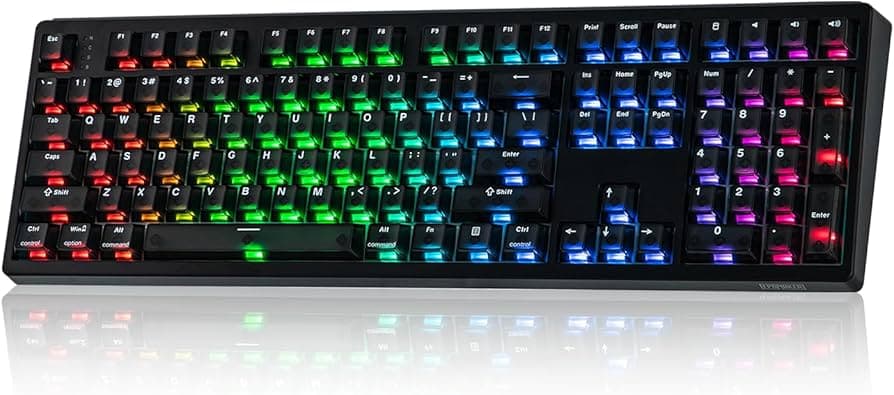
GravaStar Mercury V60 Pro impresses with sound, feel, and speed
The V60 Pro sounds and types like a flagship, but $219.95, softer software polish, and compact-board compromises decide whether it stays on your desk.

A compact board can win the desk-photo contest in seconds, but only a few survive the first hundred words typed. The GravaStar Mercury V60 Pro is one of the rare ones that gets the fun parts right: the sound is satisfying, the typing feel is convincing, and the speed numbers are loud enough to make an enthusiast stop scrolling. The catch is that three stubborn details decide whether it becomes a daily driver or just a very cool object on the desk.
What GravaStar is aiming for
GravaStar is not pitching the V60 Pro as another anonymous rapid-trigger slab. The company positions it as a 60 percent magnetic-switch keyboard for the enthusiast-gaming crossover crowd, complete with dual-zone RGB, web-based customization, hot-swappable support, and a full aluminum alloy body. That combination matters because this corner of the hobby has grown past raw actuation bragging rights. By 2026, a board has to sound good, feel good, look distinctive, and still behave like a serious tool once the novelty wears off.
The launch story backs that up. GravaStar unveiled the V60 Pro on November 6, 2025, set the price at $219.95, opened pre-orders the same day, and promised shipping before December 15, 2025. Early buyers were also promised a full set of keycaps, a GravaStar sticker, and four extra UFO switches, which is exactly the sort of launch bundle that tells you the company wants this keyboard to feel like an object with a little event energy around it.
Why the sound and feel stand out
The strongest praise around the Mercury V60 Pro comes from the sensory side, which is where a lot of performance keyboards quietly fall apart. A recent Tom’s Guide review described genuine surprise at the acoustics and typing feel, and that is the right place to start with this board. Magnetic switches and fast polling rates matter, but if the chassis rings, the stabilizers wobble, or the key feel turns plasticky after ten minutes, the rest of the spec sheet stops mattering pretty quickly.
GravaStar’s own feature list explains why this one lands better than many speed-first boards. The keyboard uses 256 kHz key-position scanning and a true 8 kHz polling rate, which the company ties to 0.125 ms latency. It also supports adjustable actuation from 0.005 mm to 3.5 mm, plus Dynamic Rapid Trigger, LKP, and Snap Click behavior. Add in the 5-layer acoustic foam stack and the result is a board that is clearly engineered to be more than just fast on paper.
That balance is what makes the Mercury V60 Pro interesting in the magnetic-switch space. Hall Effect boards are no longer judged like lab equipment. They are being asked to do the full lifestyle-product job, and that means a keyboard has to make your hands happy before the numbers matter. The V60 Pro seems to understand that brief better than most.
The three tests that decide whether it earns permanent desk space
Price in a crowded magnetic field
At $219.95, the V60 Pro is not competing in a vacuum. Trusted Reviews placed it in the same conversation as the Wooting 60HE+, Asus ROG Falchion Ace HFX, SteelSeries Apex Pro Mini Gen 3, and Sony Inzone KBD-H75, which tells you how crowded the premium compact HE market has become. That price puts a burden on everything else the board does, because speed alone is no longer rare enough to justify a buy.
This is the first practical test: if a board costs this much, it needs to offer a real reason to exist beyond actuation tuning. The Mercury V60 Pro’s reason is the combination of acoustics, feel, and sci-fi styling. If your priority is pure tournament functionality, the price will make you compare it very hard to the usual heavy hitters. If your priority is a compact board that also feels like a premium desk object, the math gets easier.
Software that has to disappear
Trusted Reviews called the V60 Pro capable, but also said the software UI could use more polish. That is the kind of criticism that sounds small until you live with it. In a magnetic-switch keyboard, software is not just a setup screen. It is where actuation, rapid trigger behavior, profiles, and day-to-day customization turn from promises into muscle memory.
GravaStar does help itself here with web-based customization and a dedicated onboard profile switch button, which should make the board easier to live with once it is configured. But the software still has to stay out of the way after that first setup session. In a serious setup, a keyboard wins trust when you stop thinking about the utility layer entirely.
Compact convenience versus compact compromise
GravaStar positions the V60 Pro as a 60 percent board, and that compact footprint is part of the appeal. It keeps the desktop clean, gives the board a tight visual profile, and makes the design-forward shell feel more intentional. But compact boards also ask more from the user, because every missing key forces a decision about layers, shortcuts, or workflow habits.
That is where even small labeling inconsistencies matter. One review described the keyboard as a 65 percent model, which is a reminder that compact layouts can blur together in the market and leave buyers sorting out what kind of memory tax they are really signing up for. If a keyboard is going to live on a serious desk, it has to make its size feel like a feature rather than a concession. The V60 Pro’s onboard profile switch, hot-swap support, and dual-zone lighting all reinforce the idea that GravaStar wants this to be a thoughtful compact board, not just a shrunken one.
The brand story behind the hardware
Part of the V60 Pro’s appeal comes from who is making it. GravaStar says the brand was envisioned in 2018 by industrial designer Yong and officially launched in 2019 with the Mars Bluetooth speaker on Indiegogo. The company also says it is headquartered in Sarasota, Florida, while an IFA exhibitor profile describes it as a gaming tech brand founded in 2018 with a presence in over 30 countries.
That background helps explain why the Mercury line feels so design-led. GravaStar is not just chasing the fastest trigger point or the hottest RGB pattern. It is building a family of products that tries to merge industrial design, sci-fi styling, and gamer-grade performance into one object. The V60 Pro sits right in that lane, and the board’s full aluminum body, dual-zone lighting, and UFO magnetic switches all read like part of the same visual language.
The bottom line
The Mercury V60 Pro succeeds because it understands what makes a compact keyboard sticky once the unboxing glow fades. The sound is good, the typing feel is good, and the performance specs are serious enough to satisfy the people who care about 8 kHz polling, 256 kHz scanning, and adjustable actuation down to tiny increments. The question is not whether it impresses in the first five minutes. It does.
The real question is whether the price, the software polish, and the compact-layout tradeoffs leave enough room for it to become a permanent part of a serious setup. That is where this board stops being just another magnetic-switch flex and starts becoming the kind of keyboard you actually live with.
This article was produced by Prism’s automated news system from verified source data, official records, and press releases, then run through automated quality and moderation checks before publishing. The system is built and supervised by the people who set the standards it runs under. Read our full AI policy.
Did this article answer your question?