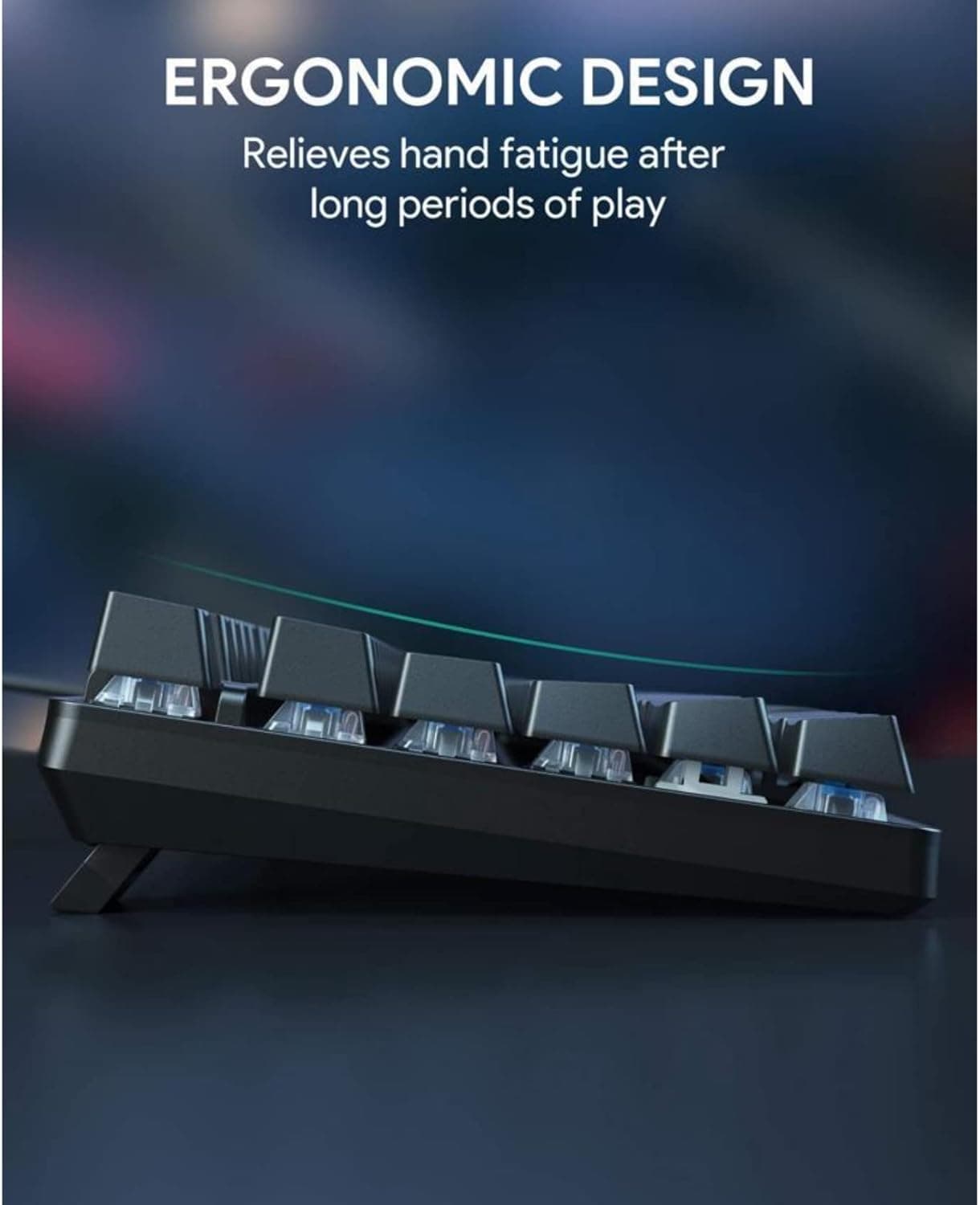
Hall-effect keyboards reshape mechanical typing with adjustable actuation and precise control
Hall-effect is no longer a novelty spec. Adjustable actuation and rapid trigger have turned keyboards into tunable input tools, and the hobby is split over who really benefits.
Hall-effect is changing what a keyboard is supposed to do
Hall-effect keyboards have pushed the mechanical-keyboard hobby into a new argument: not just what a switch feels like, but how a key should behave in motion. Instead of relying on physical contact closure, Hall-effect boards sense changes in a magnetic field, which turns the keypress into something closer to a configurable input system than a fixed mechanical event. That shift is why the category keeps coming up whenever people talk about rapid actuation, adjustable trigger points, and finer control over when a key starts and stops registering.
For a community that once sorted boards mainly by case material, switch feel, layout, and keycap profile, that is a real change in expectations. The sensor has become part of the experience, which means the conversation now includes actuation curves, dead zones, calibration, and the kind of per-key behavior that can feel more like software than simple hardware.
Why the hobby keeps circling back to Hall-effect
The appeal is easy to see once you spend time with the feature set. A Hall-effect board can be tuned to behave one way for typing and another for gaming, macros, or repeated inputs, and that flexibility has made the category a recurring comparison point against conventional MX-style keyboards. It is no longer enough for a board to sound good and feel good out of the box. Enthusiasts are increasingly asking whether it can be shaped to match the task in front of them.
That change matters because it gives the hobby a new center of gravity. The best magnetic boards are not just about the sensor, but about how well the firmware and calibration tools turn that sensor into something usable day after day. A board can promise precision on paper and still disappoint if the software is clumsy or the tuning process feels half-finished. In practice, the winning formula is the combination of sensor precision and polished control.
Wooting made the category feel like a real movement
No brand has done more to make Hall-effect feel like the main event than Wooting. The Wooting 60HE+ uses Lekker L60 switches and supports adjustable actuation in 0.1 mm steps from 0.1 mm to 4.0 mm, which is the kind of granularity that changes how people talk about a keyboard altogether. Wooting also says its rapid trigger feature resets and activates keys the instant you move, and that it pioneered the feature.
That matters because it is not just a spec-sheet flex. Rapid trigger has become one of the defining ideas behind the Hall-effect boom, especially for players who want instant reactivation during fast movement or repeated inputs. Wooting says the 60HE+ can save up to four onboard profiles that load without reopening Wootility, which makes the board feel less like a one-off setup project and more like a tool that can move between use cases without constant reconfiguration.
The company’s broader claim is just as important: it says the feature changed the peripheral landscape. Whether you agree with the marketing or not, the phrasing captures why people keep paying attention. Hall-effect is no longer a niche curiosity tucked inside enthusiast forums. It is now one of the standards by which premium gaming boards are measured.

Razer shows this is bigger than one brand or one sensor
Razer’s lineup helps explain why the debate is wider than Hall-effect alone. The company says its first optical gaming keyboards launched in 2018, and its Tartarus Pro in 2019 brought analog optical switches into the lineup. Then, on April 17, 2024, Razer announced the Huntsman V3 Pro line with second-generation analog optical switches that support rapid trigger with up to 0.1 mm sensitivity and fully adjustable actuation from 0.1 mm to 4.0 mm.
That comparison matters because Razer explicitly distinguishes its optical sensing from Hall-effect magnetic sensing. The two approaches are not the same, even if they are chasing similar ideas: analog-style input, finer control, and actuation that can be tuned rather than accepted as fixed. For readers trying to understand the category, that distinction is useful. Hall-effect is the magnetic route, but it is part of a broader race to make keyboard input more adjustable and more expressive.
In other words, the conversation is not simply mechanical versus non-mechanical. It is about which sensing method gives you the most useful control once the switch itself stops being treated as a binary on and off device.
The real tradeoffs are practical, not theoretical
The Hall-effect pitch sounds obvious until you start using it as a daily driver. That is where the community gets divided, because the benefits are real but not universal. The biggest wins tend to show up in competitive play, where rapid trigger and adjustable actuation can shave friction off movement and repeated presses. For that use case, a highly tunable board can feel immediately transformative.
For everyday typing, the picture is more mixed. The same tuning that gives a gamer razor-thin response can also create more setup work than some people want from a desk keyboard. A board that is highly adjustable can feel deeply personal once configured, but that also means the software, calibration, and profile management become part of the ownership experience.
The main tradeoffs usually come down to:
- Compatibility: not every board or ecosystem offers the same depth of key-by-key tuning or profile handling.
- Tuning complexity: adjustable actuation is powerful, but it asks you to learn what values actually work for your hands and your workflow.
- Daily typing benefit: some users will feel the improvement immediately, while others may find the gains are smaller outside gaming or rapid repeated input.
- Software quality: the sensor only matters if the firmware and calibration tools make it easy to use consistently.
That is why Hall-effect boards divide opinion so cleanly. The people who love them tend to love the precision. The people who stay unconvinced often do so because they do not want another layer of configuration between them and a keyboard.
Why the category feels like the hobby’s next fault line
The most telling part of the Hall-effect rise is that it changes what counts as premium. A few years ago, a top-end keyboard was mostly judged on build, feel, sound, and layout. Now it is also judged on sensing method, actuation control, and how much the board can be tuned to fit one person’s style. That is a real shift in the culture, not just the spec sheet.
Wooting says that as of January 2026 it is the most-used keyboard brand according to prosettings.net in several games, which shows how tightly Hall-effect has become linked to competitive play. That popularity does not settle the argument, but it does show where the heat is coming from. The people most likely to notice the difference are the ones who press keys fastest, repeat inputs most often, and care about the exact moment a key registers.
At the same time, the hobby’s broader future may be defined by this same tension. Hall-effect has made keyboards feel less like static objects and more like adjustable instruments. For some, that is the natural next step. For others, it is a reminder that the best keyboard is still the one that disappears under your fingers. The divide is not going away, and that is exactly why Hall-effect has become the hobby’s most important new line in the sand.
This article was produced by Prism’s automated news system from verified source data, official records, and press releases, then run through automated quality and moderation checks before publishing. The system is built and supervised by the people who set the standards it runs under. Read our full AI policy.
Did this article answer your question?