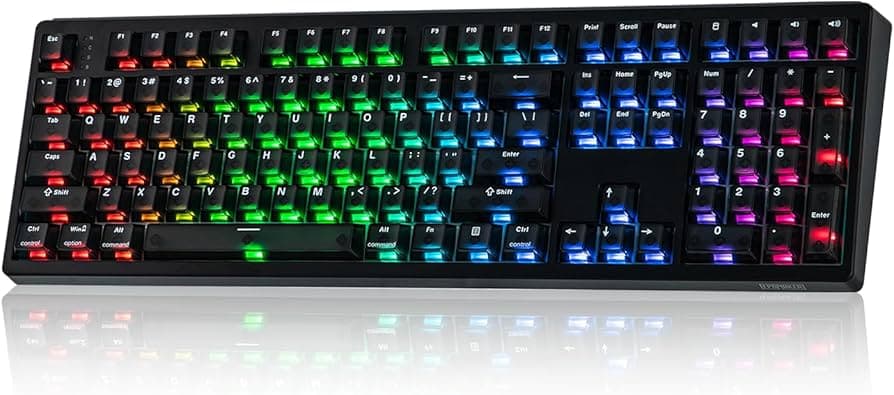
JLab Daybreak TKL brings Hall effect features to a budget keyboard
JLab's $149.99 Daybreak TKL shows Hall effect boards are sliding into budget territory, with Rapid Trigger and adjustable actuation now reaching mainstream buyers.

The JLab Daybreak TKL matters because it brings magnetic-switch features into a price range that does not automatically belong to the premium aisle anymore. At $149.99, it folds in Rapid Trigger behavior, adjustable actuation, magnetic analog switches, and an 8000 Hz polling rate, then wraps them in a compact tenkeyless layout that still looks built for real daily use.
Hall effect features at a price people can actually consider
The clearest reason to pay attention here is not novelty for novelty’s sake. It is the way the Daybreak TKL turns a feature set that has often felt exclusive into something that fits a more ordinary keyboard budget. If you have been curious about Hall effect boards but have not wanted to jump straight into a high-priced experiment, this is the kind of product that lowers the barrier without stripping the concept down to a gimmick.
That matters most for two groups. First are gamers who want fast, repeatable input and the flexibility to tune actuation to their own hands and habits. Second are people who split their keyboard time between work and play, because the Daybreak TKL is not trying to be a one-note esports accessory. It is trying to be a usable keyboard first, then a low-latency board second.
What magnetic-switch benefits still matter on a budget board
The magnetic switch story only matters if the advantages survive the trip to a lower price tier, and on the Daybreak TKL, several of them do. Rapid Trigger is the obvious one for games that reward instant re-presses and fast directional changes. Adjustable actuation also has real everyday value, because you can set the board to feel lighter or more deliberate depending on whether you are typing long documents or trying to avoid accidental presses in a match.
The 8000 Hz polling rate belongs in the same conversation, but with a practical caveat: it is part of the board’s performance pitch, not a magic upgrade that changes everything on its own. What makes the package appealing is the combination. Taken together, the analog switches, Rapid Trigger behavior, adjustable actuation, and high polling rate create a feature stack that usually shows up higher up the market, which is why the Daybreak TKL feels like a meaningful entry point instead of a stripped-down imitation.
The people most likely to feel the difference
If you spend most of your time in shooters, fast action games, or anything where quick repeated inputs matter, the board’s magnetic-switch behavior is the part you will notice first. Fortnite is the example that best captures the point here, because the keyboard is being framed as responsive enough for fast-paced play without forcing you to give up on the rest of your desktop life.
But the more interesting buyer is the person who does not want to own a separate “gaming board” and “work board.” The Daybreak TKL is described as comfortable enough for typing documents, answering email, and browsing the web, which means the performance features are not being isolated in a flashy niche product. They are being presented as something you can live with all day.
Why the included wrist rest changes the equation
One of the easiest ways budget keyboards cut corners is by making you solve ergonomics yourself later. JLab avoids that specific annoyance by including a wrist rest, and that matters more than it sounds. The added support helps the typing angle feel less fatiguing, which gives the Daybreak TKL a more complete out-of-box setup than many boards that assume you will fill in the gaps with separate accessories.
For a budget magnetic board, that is a smart move. The user is not just buying faster switches and higher polling. The user is getting a package that acknowledges comfort, and that makes the board easier to recommend to someone who wants to use it for long sessions instead of short bursts.
Where JLab saved money, and why it matters
The biggest tradeoff is the plastic construction. If your idea of a premium keyboard starts with an aluminum case and a heavy chassis, the Daybreak TKL will not satisfy that instinct. The board is clearly making room for its feature set by choosing a lighter, less premium-feeling shell.
The software is the other important compromise. It is described as useful and powerful, which is exactly what tinkerers want, but it also exposes so many settings that casual users may find it overwhelming. That split matters because magnetic boards are often sold on customization, and customization is only a benefit if you are willing to spend the time learning what each setting actually changes.
The lack of a numpad is the final tradeoff that will be felt immediately by spreadsheet-heavy users. Tenkeyless makes sense for desk space, mouse room, and a cleaner layout, but it is not universally convenient. If you rely on a number pad every day, this board’s compact shape is a limitation, not a feature.
What this says about the magnetic-board market
The Daybreak TKL hints at a broader price reset, but not a total one. It does not erase the premium tier, and it does not make every Hall effect board suddenly affordable. What it does show is that the category is getting close enough to mainstream pricing that more people can reasonably test the waters without feeling like they are buying a luxury curiosity.
That is the real inflection point. JLab is not just making a keyboard because it can; it is making a board that treats magnetic switches as something practical, not mystical. The company’s move beyond headphones and earbuds also matters here, because the Daybreak TKL feels intentional rather than like a first try from a brand wandering into keyboards by accident.
The Daybreak TKL lands in a useful place: cheap enough to make curiosity possible, capable enough to make the features worth learning, and modest enough in its compromises to keep the focus on what Hall effect actually changes. If you have been waiting for magnetic-switch benefits to reach a budget that feels like a real decision instead of a splurge, this is the shape of that moment.
This article was produced by Prism’s automated news system from verified source data, official records, and press releases, then run through automated quality and moderation checks before publishing. The system is built and supervised by the people who set the standards it runs under. Read our full AI policy.
Did this article answer your question?