Keychron shows carbon-fiber keyboard concept, and ultra-low magnetic prototype
Keychron’s carbon-fiber concept and ultra-low magnetic prototype turn thinness into the real test: what survives when a board goes below even low-profile norms?
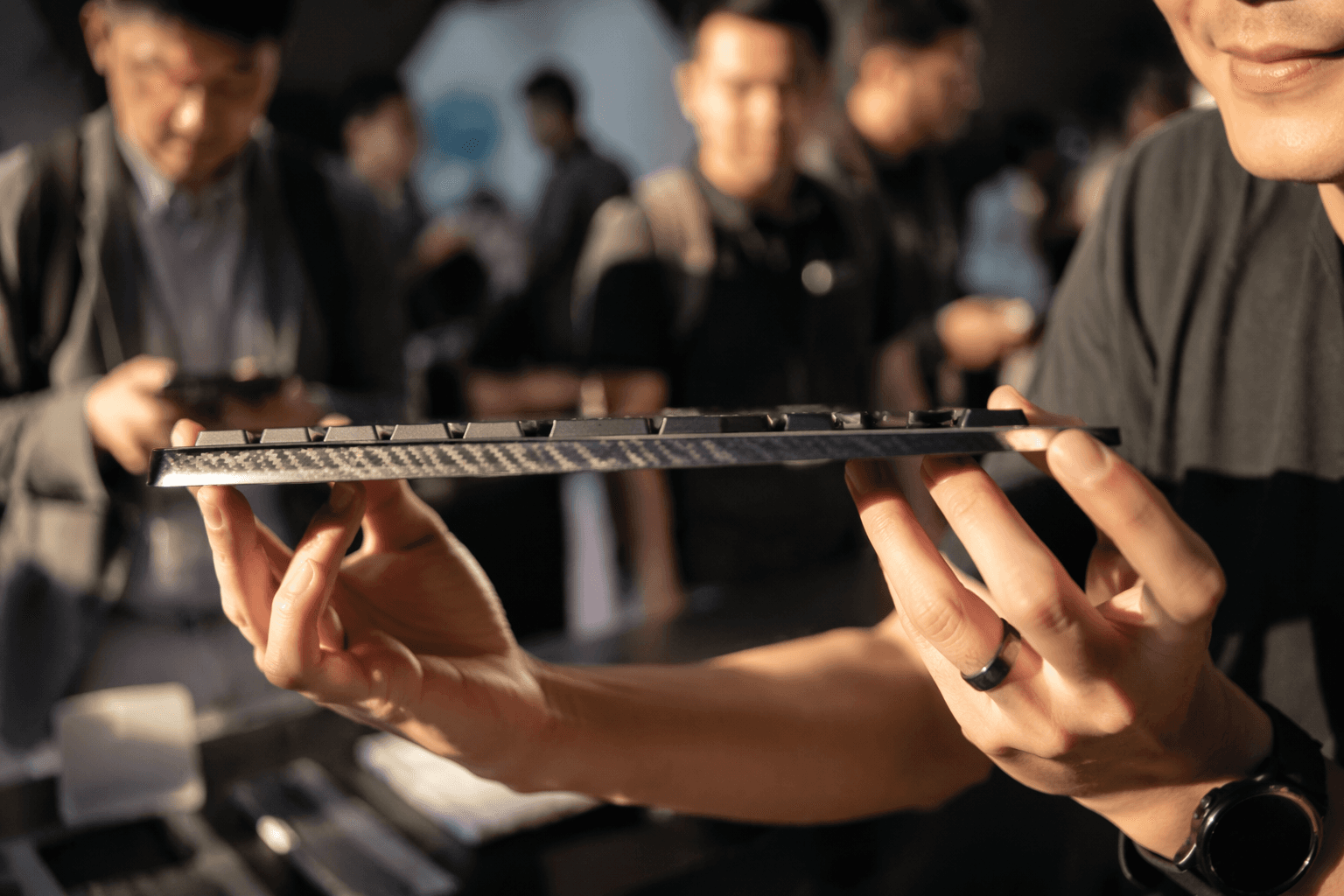
Keychron pushed past the usual low-profile playbook at Computex with a carbon-fiber concept that Dave James said was the skinniest keyboard he had ever typed on, plus an unnamed ultra-low-profile magnetic prototype that was still rough-edged but very real. Nick Xu showed the carbon-fiber board in a corner of the show and framed it as a concept piece meant to show “just how low Keychron can go,” while the company also signaled that the magnetic prototype could land near the end of the year and the carbon-fiber idea could become a product sometime in 2027.
That makes the story more than a novelty drop. In keyboard terms, Keychron is testing how far thinness can go before it starts colliding with the things enthusiasts care about most: key feel, flex, sound, and the ease of taking a board apart and changing it. Ultra-thin boards usually live in the portability lane, closer to laptop typing than to the thicker, more acoustically tuned boards that fill desks in the hobby. Keychron’s carbon-fiber shell matters because James still described it as “pretty darned solid,” which hints at the company trying to preserve rigidity even as it strips down height.
The contrast with Keychron’s current lineup is stark. The company’s homepage is already anchored by the Q Ultra 8K and V Ultra 8K families, and the Q Ultra line pairs 8,000Hz polling, ZMK firmware, Bluetooth and 2.4 GHz wireless, a full 6063 aluminum body, a double-gasket mount, Silk POM switches, and a claimed 660-hour battery life. Keychron’s low-profile collection is already deep too, with the K3 HE, K3 Ultra 8K, K5 Max, K15 Max, and B11 Pro Ultra-Slim Wireless Foldable Keyboard all aimed at users who want a slimmer desk footprint without abandoning mechanical keyboards altogether.
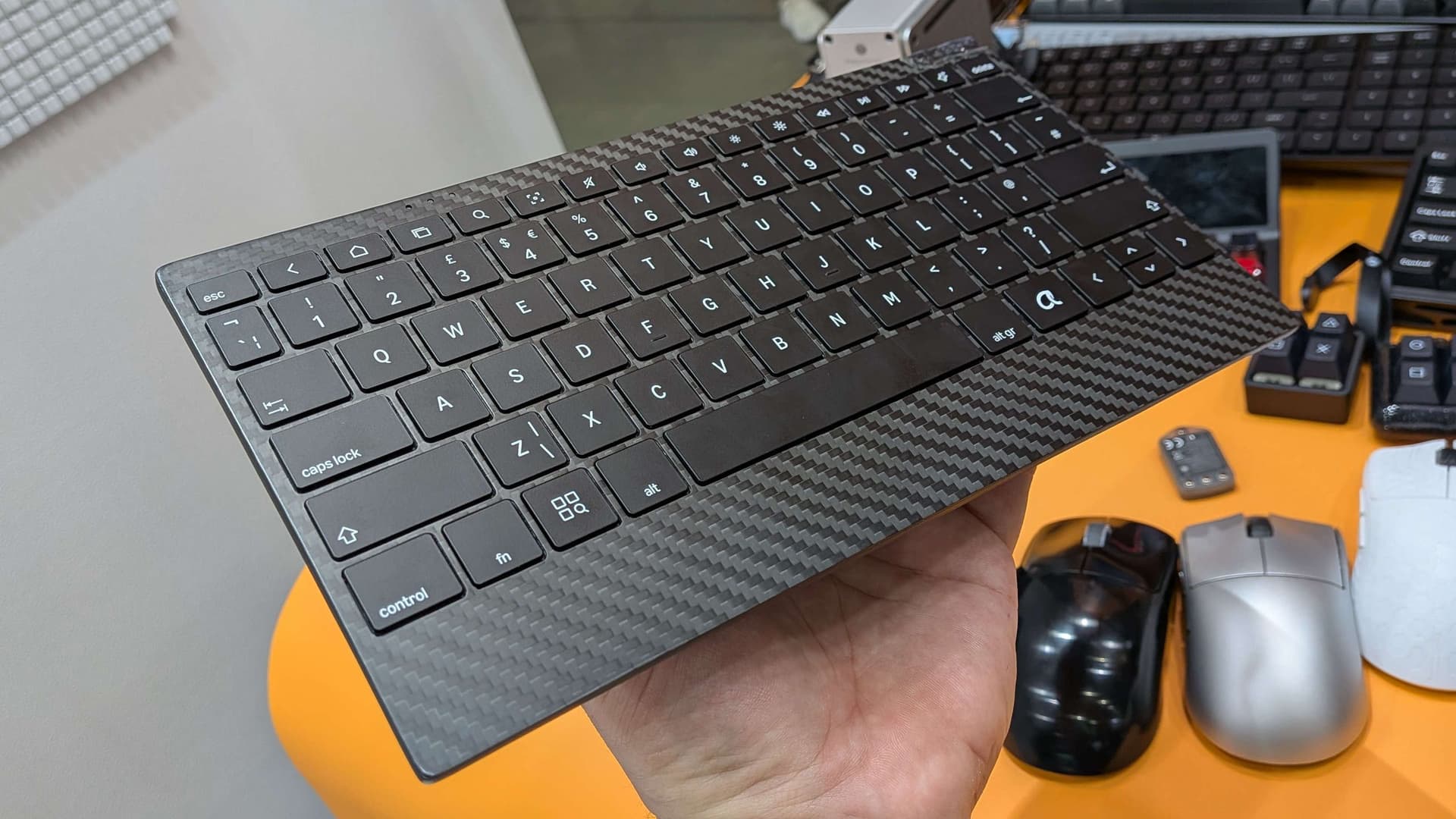
Keychron’s broader 2026 message is clear: materials and form factors are now part of the competition, not just switch specs and polling numbers. The carbon-fiber concept and the ultra-low magnetic prototype suggest a company trying to build boards that are lighter, lower, and still serious enough for the enthusiast crowd. The real question is not whether Keychron can make a thinner keyboard. It is how thin a board can get before the tradeoffs start to outweigh the gains.
This article was produced by Prism’s automated news system from verified source data, official records, and press releases, then run through automated quality and moderation checks before publishing. The system is built and supervised by the people who set the standards it runs under. Read our full AI policy.
Know something we missed? Have a correction or additional information?
Submit a Tip