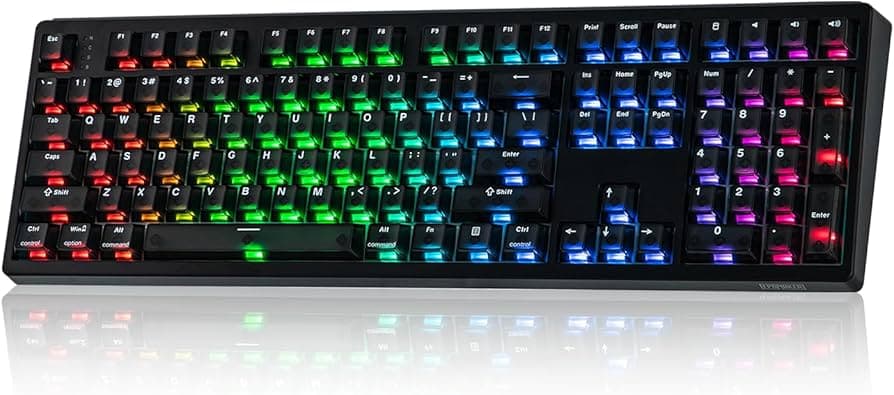
Mechanical keyboard buyers favor smoother factory-tuned switches in April sales roundup
April’s best-selling switches leaned hard toward smooth linears, with silent and Hall-effect models still gaining ground. Buyers are paying for refinement, not just hype.
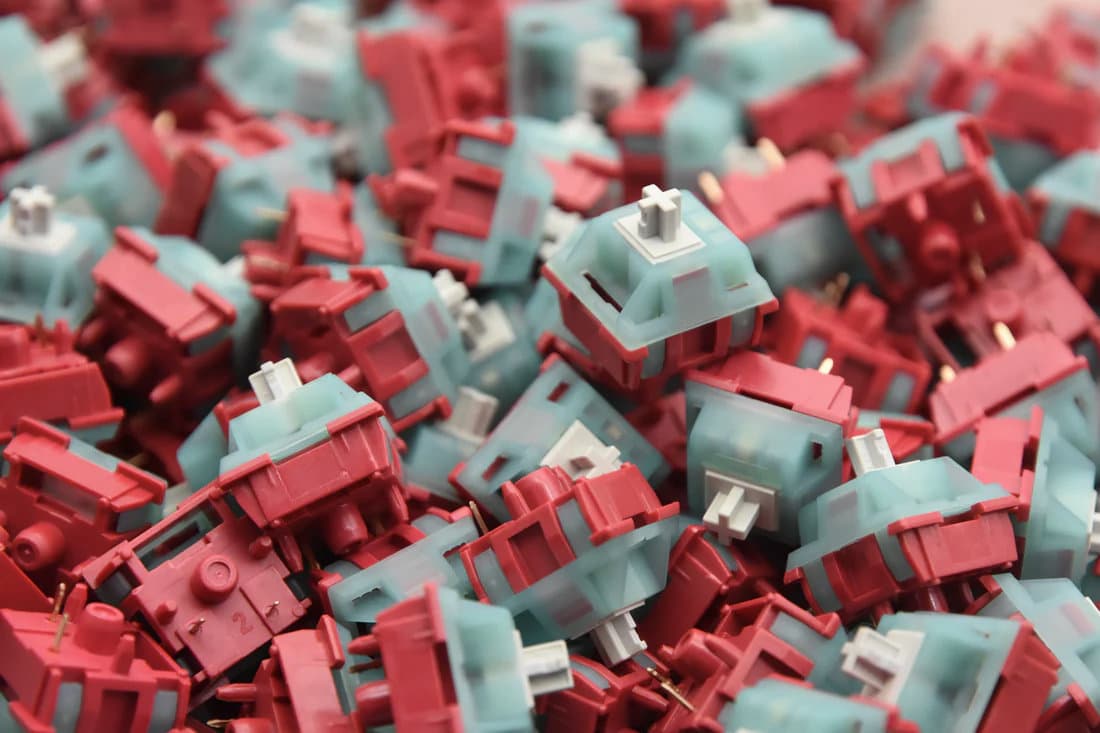
The money went where the smoothness is
The April sales picture is clear: mechanical keyboard buyers are gravitating toward switches that feel finished straight out of the box. KBD.news’s monthly roundup tracked sales from 18 contributors and came out to a bit less than 1 million switches sold, with 112 models mentioned and 14 appearing for the first time in the aggregated top lists. That is not a static market. It is a live read on what people actually chose to build, swap, and stock when the carts opened.
What stands out most is not just volume, but direction. The report says April was a relatively slow month, with only seven of the 18 shops posting gains and 11 reporting declines. Even so, the buying pattern inside that slowdown leaned toward smoother factory-tuned switches, better out-of-box quality, and switches that serve more than one use case. The hobby is still full of people who enjoy tuning, but the sales data suggests more buyers now want to skip the long modding detour and land on something satisfying immediately.
Linear still leads, but the story is broader than that
The top of the chart still favors linears, and the ratio says a lot about where the hobby’s center of gravity sits. In the April top 10, the linear-to-tactile split was 8:2. In the top 100, it was 58:35, with seven clicky models also making the cut. Silent switches were not a side note either: they accounted for 20 percent of the top 10 and 20 percent of the top 100.
That mix matters because it shows the market is no longer divided into neat typing and gaming camps. Linears remain the safe, easy recommendation for people chasing a clean stroke and low friction. Tactiles still have a real foothold, especially for people who want feedback without the noise of a clicky switch. Clickies are present, but they are the narrowest lane now, and silent models have become important enough to be counted alongside the louder favorites rather than treated as a niche afterthought.
Factory-tuned quality is becoming the default expectation
If there is one theme running through the April roundup, it is that buyers are rewarding switches that feel refined before they ever hit a stem polisher or lube station. That is a meaningful change in a community that has long treated tuning as part of the fun. The data suggests that a smoother stock feel has become a selling point in itself, not just a bonus.
This is where the hobby’s premium tier and budget tier start to blur. Some buyers are still chasing value, but many are clearly willing to pay for a switch that sounds and feels closer to a finished product on arrival. The practical payoff is obvious: less break-in uncertainty, less mod work, and fewer compromises when the board is meant to live on a desk every day.
Hall-effect and quiet tactiles are pulling the market in two useful directions
KBD.news also points to two categories that are growing for different reasons. Hall-effect switches are gaining speed, especially among competitive players who want performance features that mechanical switches do not always deliver. Quiet tactile options are also rising, which makes sense for office users and shared spaces where a board needs to stay usable without broadcasting every keypress.
That combination says a lot about the modern buyer. People are not choosing between “typing switches” and “gaming switches” as rigid labels anymore. They want one keyboard to do more than one job, and they want the switch choice to support that flexibility. In practice, that can mean a quieter tactile board for work calls and late-night sessions, or a Hall-effect setup for players who want a more responsive, adjustable feel without giving up everyday usability.
The market is still churning, even around familiar names
The April figures do not look like a market that has settled down. They look like a market with a stable core and a restless edge. KBD.news’s earlier reports help show that pattern. In September 2025, the long-running Gateron Oil King was dethroned by the Sillyworks × Gateron Type R, a sign that even established favorites can get pushed aside when a new feel catches on. In January 2026, the roundup showed about 1 million switches sold, 105 models mentioned, and 10 new models first appearing in the top lists. April pushed that to 112 models and 14 newcomers.
That is the kind of churn that matters. It says the center of the market remains concentrated, but the edges are active enough to keep introducing new names, new textures, and new buying habits. A few models may dominate the conversation, but the list is still open to challengers.
Regional buying patterns and shipping realities are part of the story now
One reason the roundup feels so useful is that it spans a wide geography, from the United States to China, Japan, France, Germany, India, Australia, and the United Kingdom. That breadth makes the data harder to dismiss as a single-market quirk. The decline in April was broad rather than isolated, which suggests the slowdown was not just one region cooling off.
It also shows how much the hobby now lives inside real-world constraints. StacksKB in India said the continued US-Israeli war against Iran and the resulting high fuel prices were making its small-batch import model unworkable. That is not the kind of detail people usually associate with switch sales, but it is exactly why the roundup matters. Keyboard parts may be tiny, but they still move through shipping lanes, fuel markets, and inventory systems before they reach a switch puller.
Read the rankings carefully, because not every top spot means the same thing
KBD.news also warns that per-shop rankings can be distorted by stock clearances and discount-driven buying. That is a crucial reminder for anyone trying to translate a single store’s top 10 into a broad trend. A switch can spike because it is genuinely hot, or because a shop is clearing old inventory at a tempting price.
That is why the aggregated view is more useful than any single storefront snapshot. The combined list smooths out some of the noise and makes the larger signal easier to trust: smoother linears are still the backbone, quieter tactiles are gaining room, Hall-effect is pulling in performance-minded buyers, and the market keeps rewarding boards that feel ready from day one.
What the April roundup really says about the hobby
Mordor Intelligence’s 2026 market framing fits neatly with this picture, because it treats the mechanical keyboard market as a category split by switch type, connectivity, form factor, keycap material, distribution channel, application, end user, and geography, including gaming, esports, office, and industrial use. RTINGS reaches a similar conclusion from the testing side: after evaluating more than 150 switches, it still says there is no single best switch for everyone.
That is the useful conclusion for anyone planning a build right now. The April sales list is not just a popularity contest. It is a snapshot of a community that wants smoother stock feel, quieter options when needed, and enough technical variety to serve both work and play. The hobby is not converging on one switch. It is converging on a standard of comfort that starts the moment the board comes out of the box.
This article was produced by Prism’s automated news system from verified source data, official records, and press releases, then run through automated quality and moderation checks before publishing. The system is built and supervised by the people who set the standards it runs under. Read our full AI policy.
Did this article answer your question?