YUNZII AL80 Packs Premium Features Into a $109.99 75% Keyboard
A $109.99 aluminum 75% with an LCD, knob, QMK/VIA, and hot-swap support looks far pricier than it is. The tradeoffs are real, but they stay mostly in the software.
Premium hardware at a budget price
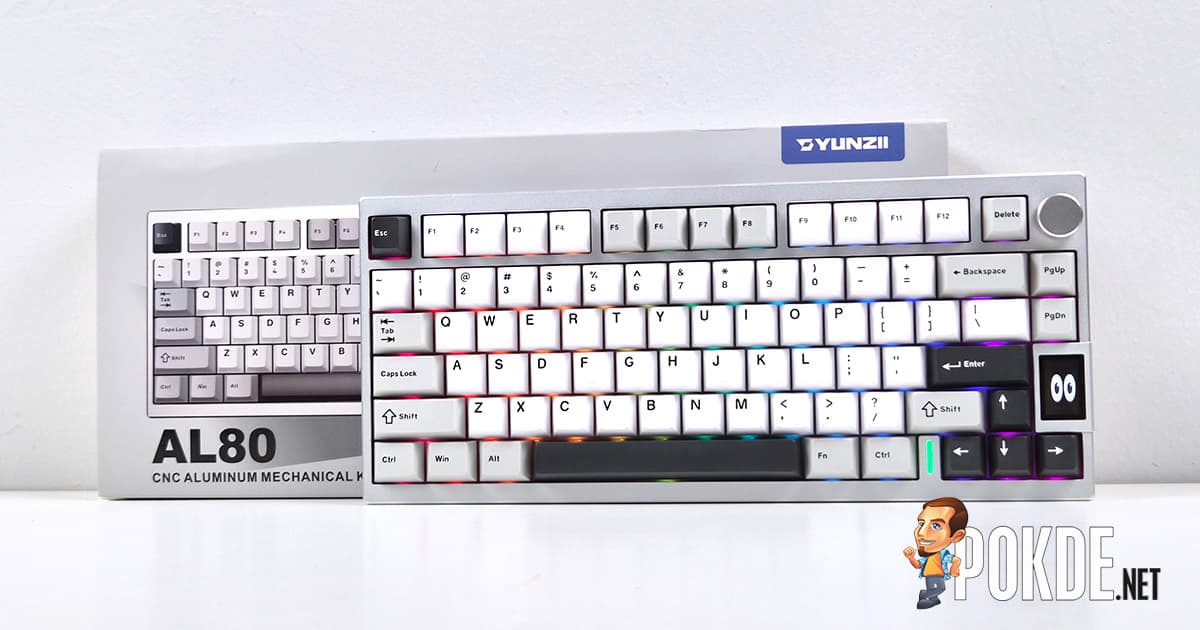
The YUNZII AL80 makes its case fast: this is a 75% keyboard with a CNC aluminum chassis, gasket mount, hot-swappable switches, pre-lubed stabilizers, a built-in LCD, a multifunction wheel, wireless and wired connectivity, QMK/VIA support, and double-shot PBT keycaps, all for $109.99. That spec sheet reads like a board several price tiers higher, which is exactly why the AL80 has landed as such a strong value play in a crowded segment.
The 75% format matters here. It keeps the function row and navigation cluster while trimming away the full-size footprint, so it remains practical for daily work without taking over the desk. YUNZII’s AL80 builds on the earlier AL65, but the new model feels aimed at a wider slice of the market, especially anyone who wants premium materials and enthusiast-grade features without moving into boutique pricing.
What the AL80 puts on the table
YUNZII’s product page deepens the value argument with a long list of extras that are easy to miss at first glance. The board is listed at $109.99, down from $139.00, and the storefront shows 115 customer reviews and 26 questions, which gives the AL80 a real-world footprint instead of the feel of a speculative launch.
The LCD is more than a novelty screen. YUNZII says it can show time, GIFs, photos, battery status, and connection mode, turning the top-right corner into a functional status hub rather than dead space. Add tri-mode connectivity, Bluetooth, 2.4 GHz wireless, and USB-C wired use, and the board starts looking like a desktop mainstay rather than a simple wireless keyboard.
There is also a surprising amount of polish packed into the basics:
- 6000mAh battery
- Support for up to five devices
- Over 20 backlight modes
- 1.68 million RGB colors
- Hot-swap support for 3-pin and 5-pin switches
- One-year warranty
That is the kind of list people usually associate with a more expensive custom-prebuilt, not a board trying to stay near the $100 mark.
Typing feel and acoustic identity
The strongest part of the AL80 story is how closely it tracks the enthusiast formula that usually costs more. Pokde’s review says the keyboard stands out for its typing experience, acoustic profile, build quality, battery life, and the overall completeness of the package. The board also ships with extras such as spare switches and extra keycaps, which makes the unboxing feel more generous than the price tag suggests.
YUNZII’s own later description of the board adds useful texture: it is an 80-key 75% aluminum keyboard with a knob, LCD screen, tri-mode connectivity, south-facing RGB, and a soft gasket-mounted structure. That combination is important because it is exactly the mix many custom-board buyers now look for, especially when the goal is a muted, cushioned sound signature rather than a hollow out-of-box experience.
The result is a keyboard that does not merely look premium from across the desk. It is built to behave like a premium board during long typing sessions, which is where value really gets tested.
Where the compromises show up
The AL80 is not flawless, and that is where the guide becomes useful. Pokde points to a fixed sleep-mode timeout, reduced customization layers compared with the AL65, a Windows-only LCD companion app, and the keyboard’s heavy weight as the main drawbacks. None of those issues break the board, but they do define the edges of the bargain.

That fixed timeout is the kind of annoyance that becomes obvious only after repeated use, especially if you leave the board idle often. The Windows-only app also narrows the appeal of the LCD for anyone who wants deeper screen customization outside that ecosystem. And while the weight helps the AL80 feel substantial on the desk, it also makes the board less convenient if you plan to move it between setups.
The bigger picture is clear, though: these compromises are easier to accept when the board already delivers an aluminum shell, gasket mounting, hot-swap support, and QMK/VIA at this price.
Why the 75% segment keeps getting more competitive
RTINGS helps explain why the AL80 lands in such a useful part of the market. The site says it has tested hundreds of keyboards and treats 75% as a general size category rather than a rigid standard. That flexibility leaves room for manufacturers to define the format in ways that suit different workflows, while still preserving the core appeal of a compact board with function-row access.
RTINGS also notes that recent premium mechanical keyboards often use aluminum cases, wireless connectivity, hot-swap support, and gasket-mounted designs. That matters because it shows how quickly features that once signaled boutique status have moved into the mainstream. The AL80 is part of that shift, taking the visual language and feature set of a higher-end custom build and compressing it into a price that is much easier to justify.
That is why the AL80 lands as more than just a good-value keyboard. It is a snapshot of where the hobby is headed, where premium materials, tri-mode connectivity, screen-based customization, and hot-swap flexibility are no longer rare luxuries. In that context, YUNZII’s AL80 does not just punch above its price. It shows how much farther the budget 75% category has been pushed, and how hard the next contender will have to work to feel like the better buy.
This article was produced by Prism’s automated news system from verified source data, official records, and press releases, then run through automated quality and moderation checks before publishing. The system is built and supervised by the people who set the standards it runs under. Read our full AI policy.
Did this article answer your question?