MMOrtho turns a split ortholinear keyboard into a smart desk ecosystem
A 62-key split ortholinear board now doubled as a desk dashboard, pulling Home Assistant, weather, and clock functions into one open build.
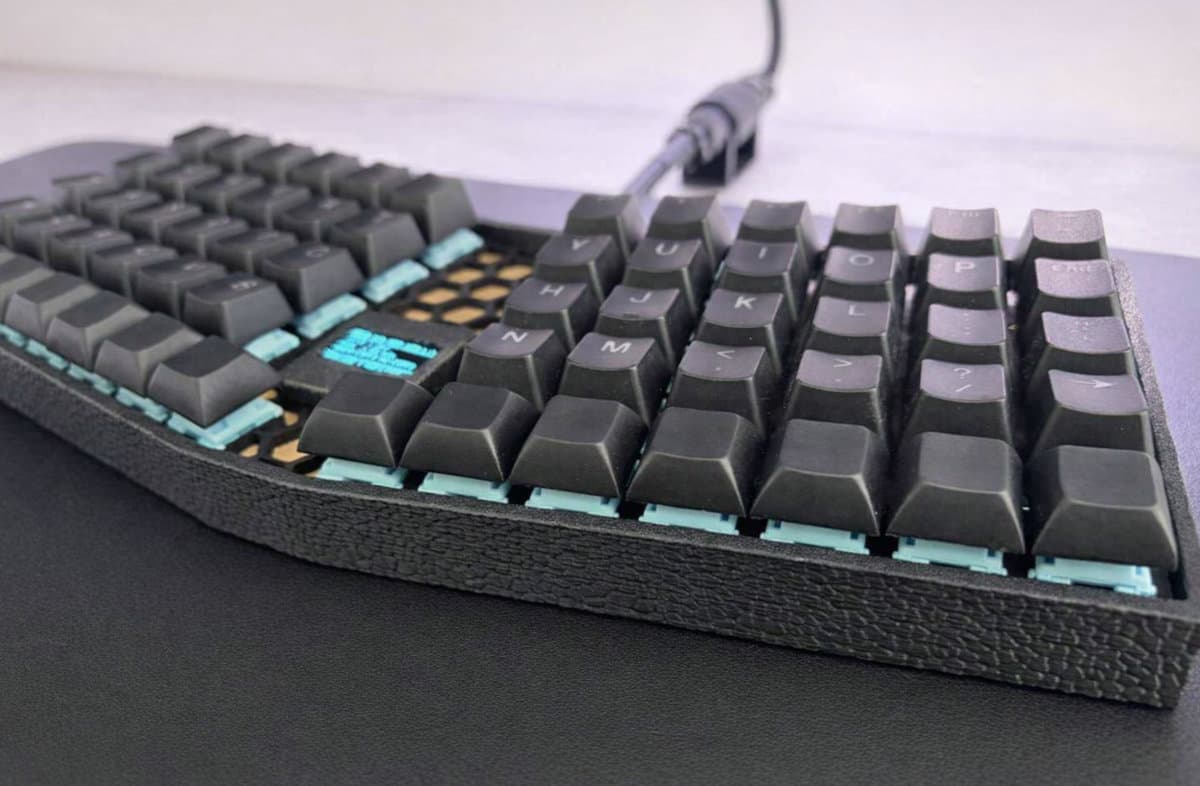
MMOrtho pushed the split-keyboard idea past the usual frame of switches, plates and keycaps. SKZBadHabit’s latest build wrapped a 62-key ortholinear board around a wider desk role, pairing input hardware with a web ecosystem that handled remaps, macros and settings without forcing a firmware reflash after the first setup.
The project took the form of a handwired unibody split, also described as a monoblock angled ortholinear board, and the GitHub repository labeled it plainly as an “Ortholinear split raspberry pi pico keyboard.” Under the hood, it ran on a Raspberry Pi Pico 2 W with CircuitPython, a combination that kept the build approachable while still leaving room for deep customization. The hardware list was unusually dense for a hobby board: a 6x5+1 layout, MX switches with hotswap support, an OLED display and a 3D-printed case meant for repeatable builds rather than a one-off display piece.
What made MMOrtho stand out was the way the software layer reached beyond typing. The setup docs called for Home Assistant URL, token and entity fields, along with weather city and NTP timezone offset settings. That meant the board was not just reading keystrokes. It was meant to plug into a live home automation stack and online weather data, then surface that information directly on the desk through Wi-Fi. The dashboard could show system status, network information and live weather, while NTP kept the board on time so it could serve as a dependable desk clock as well as a keyboard.
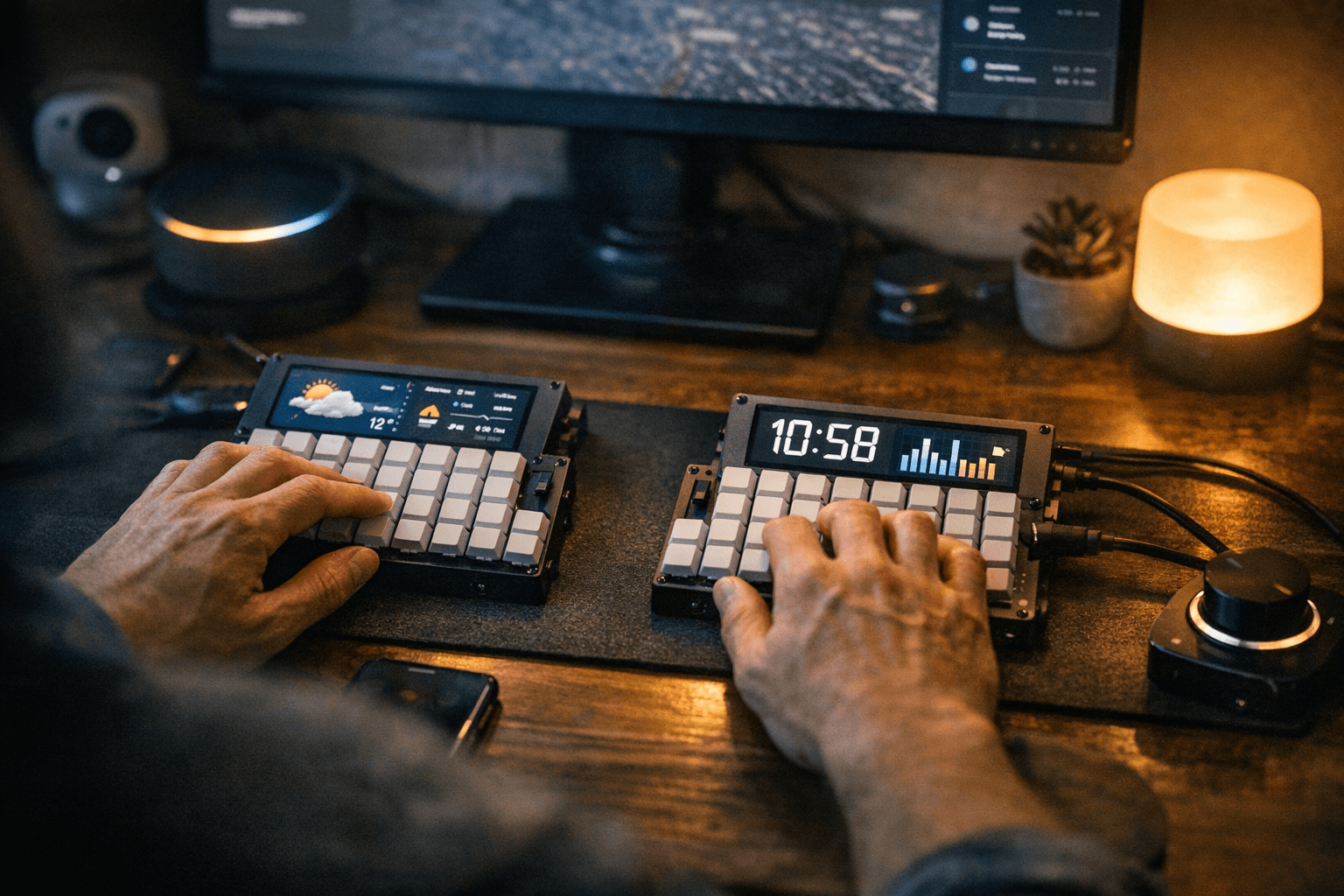
That combination pointed to where ambitious DIY keyboard culture has been heading: fewer isolated customs, more integrated workflow rigs. Split layouts still offered the familiar ergonomic appeal, with a shorter hand span and a cleaner desk footprint, but MMOrtho added something newer to the equation. It treated the keyboard as one node in a larger workspace, not the endpoint of the build.
Raspberry Pi’s Pico 2 W, announced on November 25, 2024 as the wireless version of Pico 2 and built around the RP2350 microcontroller, fit that vision neatly. CircuitPython’s dedicated Pico 2 W support underscored the same point: software-defined hardware is no longer an edge case in this hobby. MMOrtho showed a keyboard can now be a control surface, a status panel and a connected desk tool at once, and that is a meaningful step for the next wave of open-source builds.
This article was produced by Prism’s automated news system from verified source data, official records, and press releases, then run through automated quality and moderation checks before publishing. The system is built and supervised by the people who set the standards it runs under. Read our full AI policy.
Did this article answer your question?