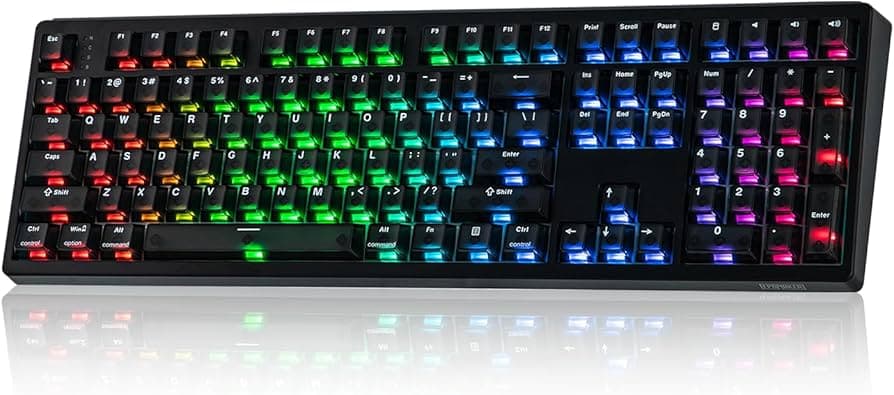
RTINGS crowns Wooting 80HE the best gaming keyboard
RTINGS’ pick isn’t about flashy specs. It’s about a magnetic board that lets each key be tuned for actuation, and that changes the whole gaming-keyboard conversation.

RTINGS’ gaming-keyboard guide makes a clear statement: the Wooting 80HE is the best gaming keyboard it has tested. That matters because the recommendation is built around one feature that changes how a board behaves in play, not just how it looks on a desk: magnetic switches with adjustable actuation distance per key. For competitive players, that shifts the center of gravity from branding and RGB toward fine control over sensitivity, and it explains why Hall-effect boards now sit at the top of the conversation.
The important part is not that the 80HE exists as another premium keyboard. It is that the guide treats its magnetic-switch behavior as the thing that defines the category. RTINGS is not presenting it as a novelty or a niche enthusiast flex. It is using it as the standard by which modern gaming keyboards are being measured, which is a very different kind of endorsement.

Why adjustable actuation changed what “best” means
A traditional mechanical keyboard gives you a familiar switch feel and a fixed trigger point. The Wooting 80HE takes that idea and lets you tune actuation distance per key, so the board can respond the way you want it to respond rather than the way one switch factory decided it should. That is the big leap here, especially for games where repeat inputs, movement control, and quick transitions matter.
The guide’s focus on magnetic switches and analog-style behavior shows how the high end of the market has moved. The conversation is no longer only about polling-rate claims or whether a board is hot-swappable. It is about response behavior, switch technology, and whether the keyboard can be tuned for the way you actually play. That is why Hall-effect and magnetic models now define the premium segment instead of trailing behind it.
For players who spend a lot of time in competitive games, the appeal is obvious. Fine control over sensitivity means the keyboard can be adjusted to match your hand, your game, and even individual keys. A board like the 80HE turns the keyboard into a tuning tool, not just an input device.
The 80HE is still a keyboard, so the build choices matter
RTINGS does not treat the Wooting 80HE as a pure performance object divorced from feel. The guide notes two case options, including a PCR plastic version and a more premium zinc-alloy version, and that difference matters because it affects the overall ownership experience. The board is not being sold as one monolithic package with a single personality. It is a platform with material choices that change the feel and the premium factor.
The mount also tells the same story. RTINGS says the gasket mount is on the stiffer side rather than super cushioned. That detail is useful because it keeps the board grounded in real typing behavior instead of letting the magnetic-switch headline do all the work. If you picture a soft, deeply cushioned gasket board, the 80HE is not that. It leans more controlled and firmer, which fits its identity as a performance-first board.
That trade-off is exactly what makes the guide useful to enthusiasts. It does not just repeat the marketing around Hall effect and actuation tuning. It balances gaming performance against typing feel and build choices, which is the right way to judge a board that sits at the top of such a crowded category.
What magnetic and Hall-effect boards change for buyers
The broader lesson from the guide is that gaming keyboards have become tuning tools rather than one-size-fits-all peripherals. Adjustable actuation is no longer a fringe feature that only one brand pushes on a spec sheet. It is now the benchmark around which the rest of the category is being organized.
That changes how people shop. The old checklist still exists, but it matters less than it used to. RGB, layout, hot-swap support, and raw polling-rate claims are still part of the discussion, but they are no longer the whole conversation. Now the real questions are about switch technology, response behavior, and how much your typing feel matters relative to in-game performance.
That is why the 80HE lands as more than a strong product recommendation. It signals that the top end of gaming keyboards in 2026 is being led by magnetic-switch boards, and that the most relevant comparison is increasingly about how a board behaves under your fingers across different tasks.
When a conventional mechanical board still makes more sense
A Hall-effect board is not automatically the right answer for everyone. If you want a softer, more cushioned typing feel, the 80HE’s stiffer gasket mount may already tell you that a conventional mechanical board could suit you better. The same is true if you care more about familiar switch travel and a straightforward typing experience than about per-key actuation tuning.
There is also a practical side to this choice. Not every player needs analog-style behavior or the ability to fine-tune actuation distance key by key. If your priority is simply a reliable gaming board with a feel you already know, a conventional mechanical keyboard can still be the more comfortable pick. The Wooting 80HE is a benchmark for control, not a requirement for every desk.
That makes the current market more interesting, not less. Magnetic boards are setting the performance ceiling, but mechanical boards still own the space where tactile comfort, simpler behavior, and familiar key feel matter more than deep tuning.
How to read a modern gaming-keyboard recommendation
RTINGS’ treatment of the Wooting 80HE is useful because it reflects how the category should be judged now. The best gaming keyboard is not necessarily the one with the loudest feature list. It is the one that gives you the most useful control over how the board behaves, while still making honest trade-offs on case material, mount stiffness, and typing feel.
That is the real story behind the 80HE’s place at the top. It is not just a flagship board with premium parts. It is the point where gaming-keyboard buying habits have changed, and where “best” now means a magnetic-switch board with tuning depth, not a generic mechanical model with a flashy badge.
This article was produced by Prism’s automated news system from verified source data, official records, and press releases, then run through automated quality and moderation checks before publishing. The system is built and supervised by the people who set the standards it runs under. Read our full AI policy.
Did this article answer your question?