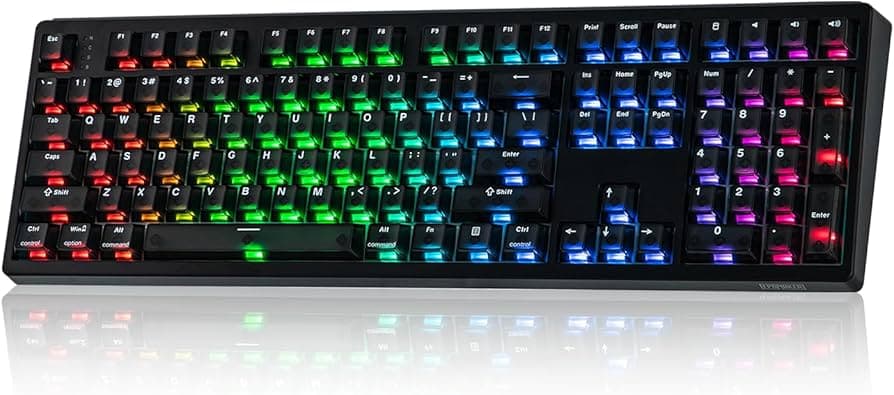
RTINGS reviews MonsGeek M1 V5 TMR, magnetic-switch keyboards mature
Magnetic switches just took a bigger step toward the mainstream, and MonsGeek’s compact wireless M1 V5 TMR is aimed right at the hobbyist middle ground.

RTINGS’ review of the MonsGeek M1 V5 TMR landed as magnetic-switch boards pushed further past the novelty phase and into real enthusiast territory. The compact 75 percent layout keeps arrow keys and a navigation cluster in play, while the wireless design adds 2.4GHz and Bluetooth support for a board that is built to move between desks without giving up the features hobbyists expect from a custom-leaning chassis.
The hardware stack is where the M1 V5 TMR starts to separate itself from a plain hot-swap compact board. RTINGS says the PCB includes pinouts for 3- and 5-pin mechanical switches, so the board is not locked into a single path. MonsGeek also positions it as a hybrid platform with magnetic and mechanical switch support, 0.01 mm actuation, tri-mode connectivity, vibrant RGB lighting, and rapid disassembly. That combination matters because it gives builders room to tune the board around feel, not just latency.

MonsGeek’s design language leans hard into the custom-keyboard mindset. The M1 V5 series uses a ball-catch rapid-disassembly system without screws or tools, which makes the board easier to open, clean, and modify than a lot of fixed-case magnetic keyboards. RTINGS also points to an aluminum chassis with internal dampening layers and a gasket system, a reminder that this is not being sold as a raw speed machine alone. It is trying to preserve a softer typing feel even while chasing the fast-trigger appeal that magnetic boards are known for.
The performance numbers reinforce that pitch. RTINGS lists a 32kHz device-side scan rate and an 8000Hz polling rate, putting the M1 V5 TMR squarely in premium gaming territory. RTINGS also frames it against the Wooting 80HE, Razer Huntsman V3 Pro 8KHz, and NuPhy WH80. In that comparison set, the MonsGeek stands out for being wireless while the Wooting 80HE is wired-only, and for staying in a smaller 75 percent size rather than moving to a larger footprint.

That is what makes the M1 V5 TMR feel important. It is not just another magnetic-switch board chasing rapid trigger buzzwords. It is a compact, wireless, mod-friendly keyboard that treats TMR as a platform for real tinkering, which makes it look less like an early-adopter toy and more like the shape this category has been working toward.
This article was produced by Prism’s automated news system from verified source data, official records, and press releases, then run through automated quality and moderation checks before publishing. The system is built and supervised by the people who set the standards it runs under. Read our full AI policy.
Did this article answer your question?