RTINGS Updates Low-Profile Keyboard Guide, Crowns NuPhy Air75 V3 as Best Pick
RTINGS’ updated low-profile guide says the slim-keyboard race now comes down to feel, wireless polish, and comfort. The NuPhy Air75 V3 leads because it does more than stay thin.

Low-profile boards are no longer just about being thin
The low-profile segment has moved well past the stage where “slim” was the whole pitch. RTINGS’ updated guide puts that shift into focus by treating low-profile keyboards as a serious enthusiast category, not a curiosity for laptop carry-ons. For the people actually buying them in 2026, the tradeoffs are practical: travel feel, wireless reliability, sound, portability, and whether the board still feels decent on a desk after a full workday.
That is why the guide lands with more weight than a simple recommendation list. RTINGS says low-profile keyboards are popular with students, mobile professionals, and gamers, which captures the three main reasons this category keeps growing. Students want something easy to move between rooms or campuses, mobile workers want a board that disappears into a bag, and gamers want a lower deck without giving up responsiveness or a familiar typing stance.
How RTINGS is testing the category matters
Part of the reason the guide is useful is the way RTINGS approaches keyboard testing. The company says it has tested 282 keyboard models and buys each keyboard itself, which keeps sample quality from depending on whatever a brand chooses to send. It also uses specialized tools like a Mecmesin force tester and a Beagle 480 USB analyzer, so switch feel and latency are measured instead of guessed.
That testing setup matters especially in low-profile keyboards, where tiny design choices can change the entire experience. RTINGS says its lab evaluates latency, switch feel, build quality, comfort, and overall typing experience on a standardized test bench. For enthusiasts used to custom boards, that kind of bench-based comparison is valuable because it lets slim keyboards be judged by the same hard-edged standards as full-size enthusiast favorites.
Why the NuPhy Air75 V3 is the board that changed the conversation
RTINGS’ top low-profile pick is the NuPhy Air75 V3, and the reasons go beyond the usual “good wireless, nice feel” shorthand. The board uses a gasket-mount design with improved damping, which is a meaningful detail for a category that often gets written off as hollow or rigid. RTINGS also points to better latency than earlier Air V2 models, plus the option for an additional multifunction knob on the top right.
That knob matters for two different groups at once. For Mac desk builders, it adds an easy control point for volume, media, or workflow shortcuts without eating into the board’s compact footprint. For gamers and productivity users alike, it gives the Air75 V3 a more finished, configurable feel than the bare-minimum wireless slab approach that still defines many slim boards.
NuPhy says the Air75 V3 is a 75% wireless mechanical keyboard, available in ANSI, JIS, and ISO versions, which makes it easier to slot into different desktop setups. The company also lists a low-profile knob option and Nano switches with 3.5 mm travel. That combination is exactly why the board resonates with hobbyists who want slimmer boards without giving up mod potential.
What travel users, Mac builders, and gamers are optimizing for
The real market story here is not one universal “best low-profile keyboard” use case. It is a set of distinct buyer profiles, each chasing a different payoff.
- Travel setup users want a board that slips into a bag, survives constant movement, and still feels like a proper keyboard once it lands on a hotel desk or office hot desk.
- Mac desk builders want a compact board that looks clean, supports multi-device pairing, and plays nicely with Windows and macOS modes when the setup changes.
- Gamers want lower height, cleaner desk ergonomics, and lower latency, but they do not want to sacrifice switch choice or wireless performance.
The Air75 V3 is positioned well across all three. RTINGS notes Bluetooth for efficiency and multi-device pairing, plus a 2.4 GHz wireless mode for better raw response. That split is important: Bluetooth makes sense for portable productivity, while 2.4 GHz is the mode people reach for when they care more about immediate input than convenience.
The segment is finally borrowing real enthusiast ideas
One reason low-profile boards feel more relevant now is that they are borrowing features the mechanical-keyboard community already values. NuPhy’s own product details and mid-2025 coverage point to hot-swappable low-profile switches, programmable controls, and dual Windows and Mac hardware support. Add the gasket mount and better damping, and the board starts to look less like a laptop accessory and more like a compact custom keyboard with a lower stance.
The pricing and hardware also help explain why the Air75 V3 has pulled ahead. Launch coverage put the starting price at $139, with a 13.2 mm-thick chassis and a 4,000 mAh battery. NuPhy says battery life can reach up to 1,200 hours with backlighting off, which is the sort of number that matters to people who do not want to think about charging every few days.
What the older switch story still teaches the category
The modern low-profile boom did not appear out of nowhere. Cherry says its MX Low Profile switches keep the MX-style crosspoint design in a slimmer package, and the company lists them at 11.9 mm tall, about 35% thinner than standard MX switches. Independent historical coverage places their introduction on January 12, 2018, which makes them part of the foundation under today’s polished low-profile boards.
That history matters because it shows how far the category has come. What once looked like a laptop-adjacent compromise now has enough maturity to support better acoustics, more switch choice, and stronger enthusiast appeal. In other words, the segment is no longer defined by what it lacks compared with full-height boards.
Ergonomics are part of the appeal, but not a magic fix
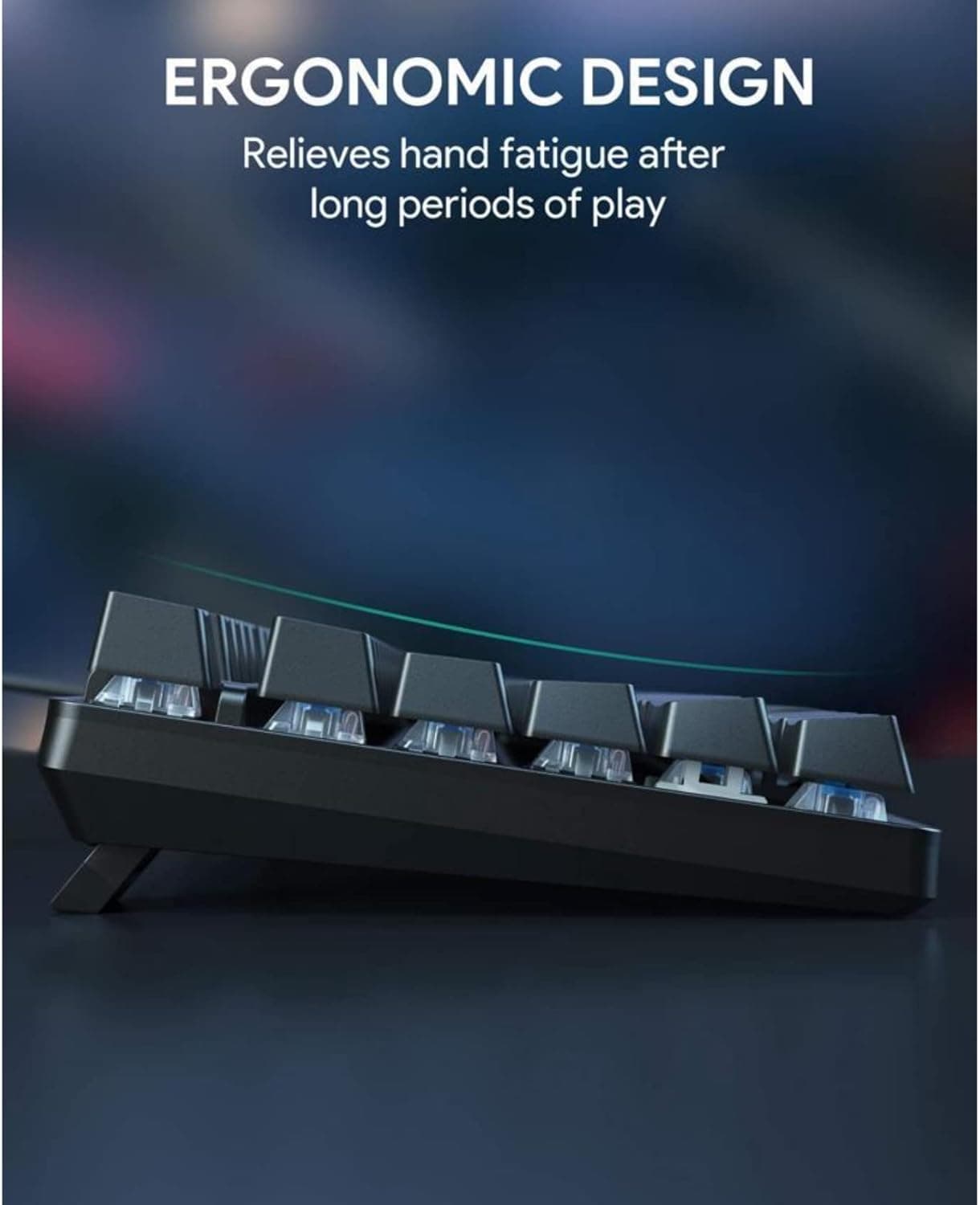
Low-profile keyboards often sell on comfort, and the logic is straightforward: a lower board can help keep your palms resting more naturally on the desk without forcing your wrists upward. A 2026 ergonomics study found the most comfort at a 0° keyboard slope with a 9.8 cm wrist support height among the tested conditions, which lines up with the idea that lower typing surfaces can be easier on the body in some setups.
That said, low-profile does not automatically mean ergonomic for everyone. Wrist angle, desk height, chair height, and support placement still shape the result. The best takeaway is simpler: thinner boards give you more room to build a flatter, less wrist-forward desk, and that is one reason the category keeps moving from niche to mainstream.
Where the segment still falls short for hobbyists
For all the progress, low-profile boards still have limits that matter to mechanical-keyboard fans. There are fewer switch and keycap ecosystems than in standard MX land, and the mod scene is not as deep. Acoustic tuning can improve dramatically, as the Air75 V3 shows, but low-profile boards still have less headroom for the kind of endless parts-swapping that defines the enthusiast hobby.
Even so, the RTINGS guide makes one thing clear: the best low-profile boards in 2026 are no longer excuses. They are legitimate choices for people who want a smaller footprint without surrendering the qualities that matter most, from wireless stability to typing feel to a desk setup that still looks intentional. The NuPhy Air75 V3 sits at the center of that shift because it treats slim design as a starting point, not a compromise.
This article was produced by Prism’s automated news system from verified source data, official records, and press releases, then run through automated quality and moderation checks before publishing. The system is built and supervised by the people who set the standards it runs under. Read our full AI policy.
Did this article answer your question?