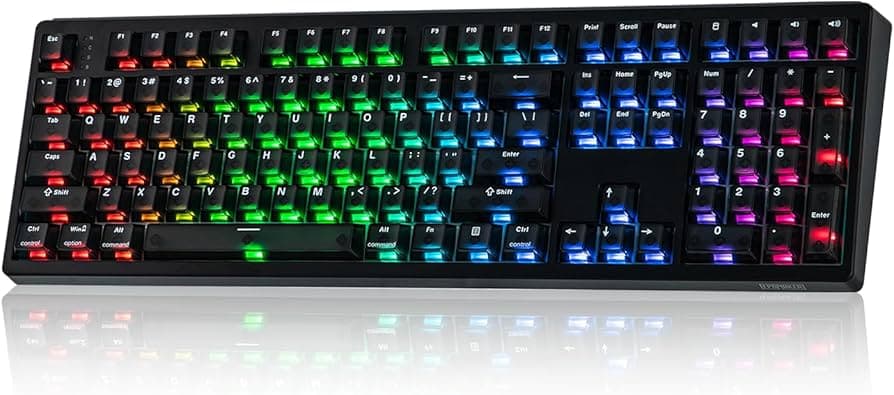
The Verge compares Evo75 and ATM98, two premium boards with different voices
Two premium boards, two beautiful philosophies: the Evo75 is thocky and expressive, while the ATM98 is quiet, office-ready, and full-size.

The real divide in this comparison is not price or polish, it is personality. The Evo75 and the ATM98 both live in the premium custom-keyboard lane, but they translate “beautifully made” into two very different experiences: one louder, lower-pitched, and more characterful, the other restrained, quieter, and built to disappear into a workday.
Two premium boards, two design languages
Antonio G. Di Benedetto’s June 16, 2026 Verge review treats the Evoworks Evo75 and the Dry Studio ATM98 as a head-to-head in taste as much as in hardware. That framing matters, because these boards are not trying to win by doing the same job better. They are the same kind of object, but they ask different questions: do you want a compact 75-percent board with an expressive acoustic identity, or a nearly full-size 98-key layout that leans into silence and utility?
That is why the comparison lands for mechanical-keyboard readers. It moves past the usual checklist of hot-swap sockets and wireless modes and gets into the part of the hobby that people actually remember after a week of use: how the board sounds, how it feels under the fingers, and whether it suits the room it lives in. In that sense, the pair functions like two very different sides of a beautifully made coin.
What the Evo75 is built to do
The Evo75 is positioned as the successor to the Evo80, and that lineage tells you a lot about its priorities. It keeps the enthusiast-friendly DNA, but refines it into a 75% layout, which gives you a compact footprint without losing the navigation cluster that many people still want on a daily driver. Its builder and retail materials also point to tri-mode connectivity, hot-swap support, a butterfly leaf-spring mounting system, and a stainless-steel weight, all of which put it squarely in the modern premium-custom conversation.

That construction language is matched by the design language. The Evo75 is described with a soft-tapered side profile, LED accents, a CNC aluminum case, and multiple colorways and plate-switch combinations. More important than any single spec is the way those choices stack up: the board is meant to feel lively, tuned, and a little more expressive than the average “nice” keyboard.
If your taste leans toward a typing sound that announces itself, the Evo75 is the board in this pairing that is framed as the more characterful option. It is the one that turns keystrokes into part of the experience, not just a way to get words onto a screen.
What the ATM98 is built to solve
Dry Studio’s ATM98 comes at the same category from the opposite angle. It is a 98-key, nearly full-size board with a dedicated numpad, and that alone changes the daily-use equation for anyone who spends time in spreadsheets, accounting, data entry, or any workflow that still benefits from a full layout. The keyboard is built around a silent-first design, with custom Light Sakura switches and an 8-layer dampening system aimed at keeping the sound profile crisp but subdued.
The industrial design leans harder into a composed, work-friendly identity. Dry Studio and Angry Miao describe it as Bauhaus-inspired, combining CNC aluminum with semi-transparent acrylic. The board’s Star Ring knob is not just decorative either, since it can control volume, scrolling, Caps Lock, and battery indicators, which makes it feel like a practical control surface rather than a flourish.

That restraint is part of the appeal. Where the Evo75 asks to be heard, the ATM98 tries to stay present without becoming intrusive, which is exactly why it makes sense for office use or shared spaces. If you want premium materials and custom-board tuning without broadcasting every keypress to the room, this is the side of the fork that makes more sense.
How to choose between sound, layout, and livability
The cleanest way to decide between these two boards is to start with the room you type in, not the spec sheet. If your desk setup rewards a compact footprint and you enjoy a keyboard with a more audible, low-pitched voice, the Evo75 has the stronger emotional pull. If your work demands a numpad, or if you simply want a quieter board that can disappear into an office environment, the ATM98 is the easier fit.
A few practical differences make the split clearer:
- Choose the Evo75 if you want a 75-percent layout with a more expressive acoustic identity.
- Choose the ATM98 if you want a 98-key layout with a dedicated numpad and a quiet-first build.
- Choose the Evo75 if the typing sound itself is part of the appeal.
- Choose the ATM98 if the goal is premium feel without acoustic attention.
The important point is that neither board is trying to be the universal answer. Both are competitive because each executes its own brief with unusual polish, and that is where the premium market has moved. The question is no longer which keyboard is best in the abstract, but which design language matches the way you work, game, or simply sit at your desk.
Why this comparison says something bigger about the hobby
The ATM98’s path into the market also shows how far custom keyboards now travel before they reach widespread attention. Dry Studio says it was established in Tokyo in 2023 by Angry Miao product designer Stan Fu, and Geekhack shows an ATM98 interest-check thread posted on September 14, 2025, which means the design had a public development trail long before retail coverage. The board was listed as a pre-sale item at $199, down from a regular $259, with shipping scheduled in batches from March 2026 after Indiegogo orders were processed.
That timeline matters because it shows how the hobby has changed. Premium boards are not just judged by materials anymore, but by the identity they build around those materials: a thocky, more talkative keyboard on one side, a hush-first, office-friendly machine on the other. The Evo75 and ATM98 make the same case from opposite directions, and that is what makes The Verge comparison useful. It does not tell you to want one voice over the other. It helps you recognize which voice already sounds most like your desk.
This article was produced by Prism’s automated news system from verified source data, official records, and press releases, then run through automated quality and moderation checks before publishing. The system is built and supervised by the people who set the standards it runs under. Read our full AI policy.
Did this article answer your question?