Why mechanical keyboard enthusiasts lube switches, and which lubes to use
The right lube kills scratch and spring ping, but the wrong viscosity will flatten tactiles and waste money. Here’s how 205g0, GPL 105, 3203, and 3204 actually fit a build.
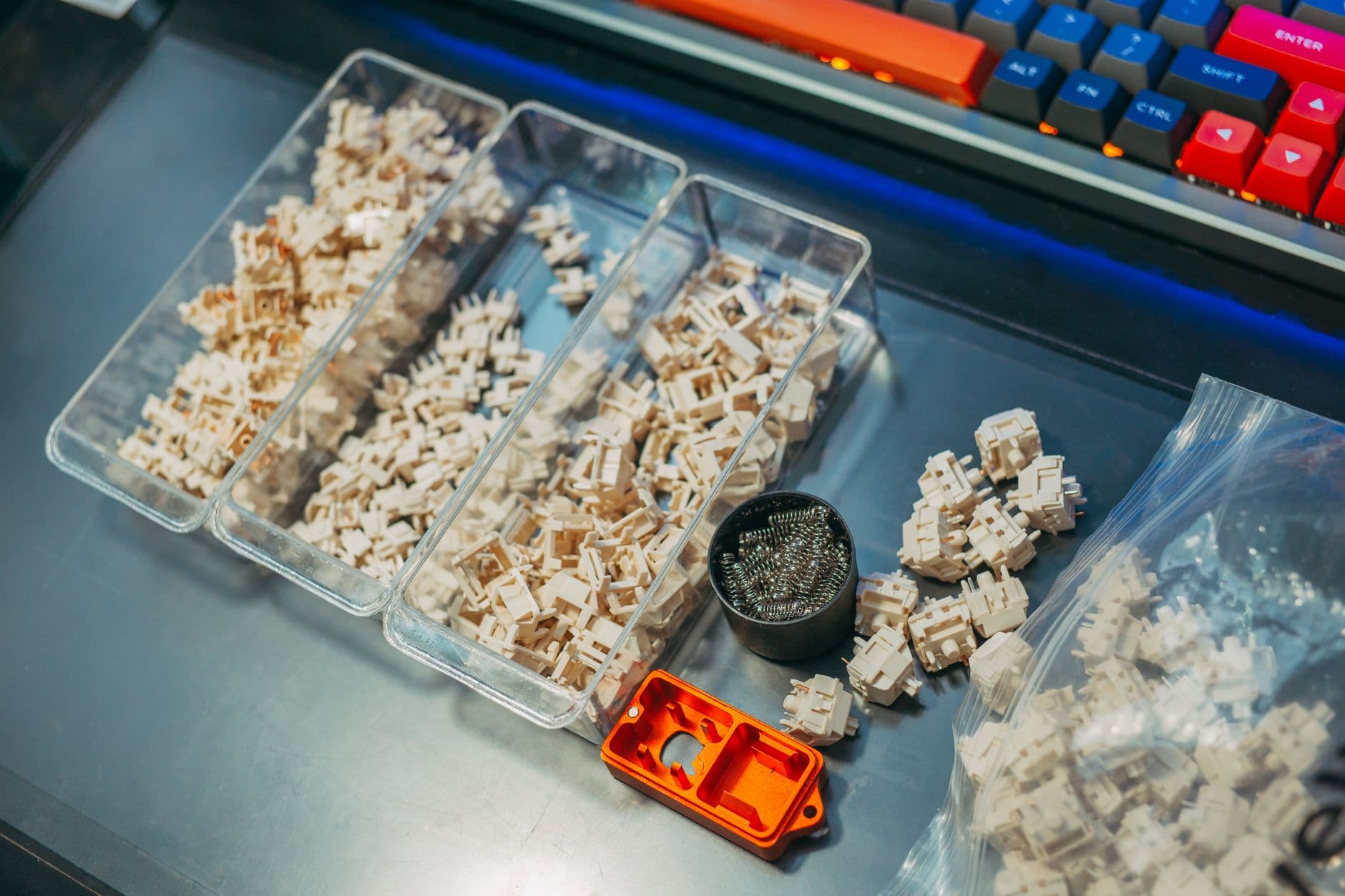
Scratch, spring ping, and stabilizer rattle are what make a board feel cheap in-hand. The hard part is not learning to lube, it’s matching the lube to the switch type and the parts you are touching, so you do not drown a tactile bump or pay for a viscosity you do not need.
Why enthusiasts bother with lube at all
Kinetic Labs split its switch-lubing guidance into three levels on Dec. 4, 2022, with later linear and tactile guides posted on Dec. 29 and Dec. 31. That split matters because a linear stem and a tactile leg do not want the same treatment. Lubing smooths switches, improves sound, and reduces stabilizer rattle.
A dry switch can sound scratchy and uneven, a loose spring can ping like a tiny bell, and a rattly stabilizer can dominate the whole board no matter how good the switches are. Lube does not magically fix every bad switch, but it is one of the few mods that changes feel and sound without replacing the board.
The decision tree that actually helps
If you want the classic smooth linear feel, reach for Krytox 205g0. It belongs on linear stem rails, bottom housing contact points, and stabilizers, and it is the shorthand that most builders use when they say they want a fuller, smoother board. A 5ml vial priced around $9.95 works out to roughly $1.40 for a 70-switch build, assuming a thin coat and the common 5ml hobby format.
205g0 prevents the old beginner trap of leaving linears half-dry because you were afraid of lube. It is also the lube most likely to get overused on tactiles, where too much on the stem legs can blunt the bump and turn a crisp switch into a mushy one.
If your main enemy is spring ping, GPL 105 is the right tool. This is the thin oil that belongs on springs, in spring bags, and on other parts where you want to quiet the metal without laying down a heavy film on the stem. A 5ml bottle at about $17.50 comes out to roughly $2.45 per 70-switch build.
GPL 105 prevents the common mistake of smearing thicker grease everywhere just to silence a spring. That is wasted effort, and on a switch build it can create more drag than you wanted, especially if you only needed to treat the spring itself.
If you are tuning tactiles and want to keep the bump intact, TriboSys 3203 is the safer pick. Kinetic Labs’ Jun. 27, 2022 comparison puts 3203 and 3204 at the center of tactile tuning, and Miller-Stephenson lists TriboSys 3203 and 3204 as grade 0 semi-fluid lubricants used on mechanical key switches and stabilizers to optimize acoustic and tactile properties. Use 3203 on tactile stem rails and housing contact points, and stay off the tactile legs unless you really know what you are doing.

3203 prevents the classic over-lube mistake on tactiles: the bump gets flattened, the switch loses its character, and you end up chasing that tactile feel back with different springs or films. At roughly $15 to $17 for 5ml, a 70-switch build lands around $2.10 to $2.38.
If you want a slightly fuller, more damped tactile or a smoother linear with a bit more body, TriboSys 3204 is the heavier option in the pair. It still belongs on stem rails and housing contact points, and the same caution applies to tactile legs, which should be avoided or treated carefully so the bump survives. A 5ml jar priced at $7.99 works out to about $1.12 per 70-switch build.
3204 prevents the mistake of choosing a lube that is too light to do the job when your board is still scratchy or too noisy. It is the better pick when you want more damping than 3203 without jumping all the way to a heavier, more muting feel.
What these lubes actually are
Krytox is the family name most builders know because Chemours bases the oils and greases on PFPE, or perfluoropolyether. Those lubricants are chemically inert, nonflammable, and do not damage plastics or elastomers, and Chemours rates the GPL line for continuous temperatures up to 204°C, with short-term peaks to 220°C.
TriboSys sits in the same hobby canon for a different reason. Miller-Stephenson lists 3203 and 3204 as advanced grade 0 semi-fluid lubricants that behave like grease while offering oil-like performance, which is exactly the middle ground tactile tuners want when they are trying to cut scratch without erasing feel.
The mistake most builders make
Alexotos’ Nov. 30, 2022 guide description urged builders to start light and experiment rather than over-lubing. That advice is still the one that saves the most boards, because the difference between smooth and gummy is often just one too many passes on the brush.
The other recurring mistake is treating every switch the same. Kinetic Labs’ separate linear and tactile guides exist for a reason, and the old “Lubing Switches: Where to Lube” reference sheet, first posted on Sept. 18, 2018 and built by Awalkerstop, made the same point years ago. If you only remember one rule, make it this: linears can take fuller coverage, tactiles need restraint, and tactile legs are where a careless hand ruins the result.
This article was produced by Prism’s automated news system from verified source data, official records, and press releases, then run through automated quality and moderation checks before publishing. The system is built and supervised by the people who set the standards it runs under. Read our full AI policy.
Did this article answer your question?