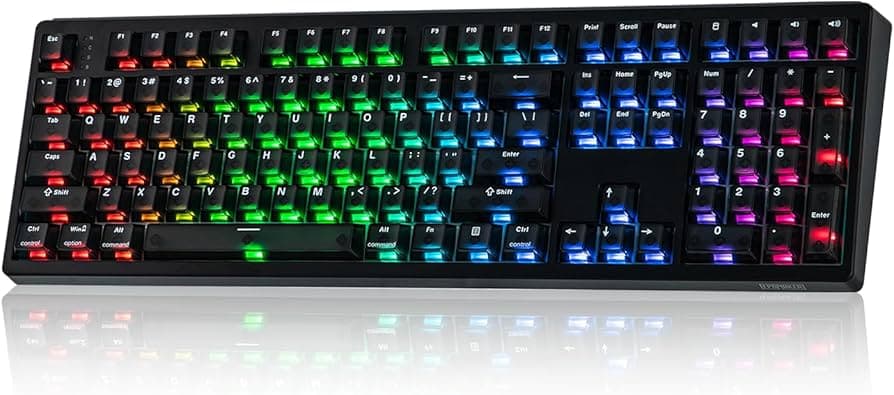
Wireless mechanical gaming keyboards poised for rapid premium market growth
Market modeling projects global wireless mechanical gaming keyboards at about USD 2,026.92 million in 2025, with a 26.55% CAGR to 2033. This matters because low-latency wireless and magnetic switch tech will reshape buying and design priorities.

A fresh market model projects the global wireless mechanical gaming keyboard market at roughly USD 2,026.92 million in 2025 and forecasts an aggressive 26.55% compound annual growth rate from 2025 through 2033. The projection pins growth on stronger gaming demand, advances in low-latency wireless stacks such as 2.4GHz and proprietary RF, and rising adoption of Hall-effect and other magnetic switch technologies combined with rapid-trigger features.
Premium designs are the standout driver. Higher average selling prices are expected as Hall-effect, TMR and analog switch layouts move beyond niche builds into commercially available boards. That premium push aligns with gamers and competitive players prioritizing ultra-low latency and finer actuation control. At the same time, hot-swap and modular layouts are becoming mainstream, lowering the barrier for buyers who want to experiment with magnetic or analog switches without soldering.
Regionally, growth pressure will come from APAC, where rising demand is expected to accelerate adoption and influence global supply and pricing. The analysis also segments the market by type, end user and region, and frames vendor positioning with the usual market-research deliverables: tables, forecasts, a vendor landscape, and SWOT and PEST analyses packaged for enterprise-level buyers.
For keyboard shoppers, that means wireless options will no longer be a boutique flex. Verify latency claims and whether a board uses 2.4GHz or a proprietary RF implementation versus Bluetooth, since responsiveness remains the primary practical difference for gamers. Check for hot-swap sockets and modular PCBs if you value switch experimentation, and expect battery life and firmware quality to be key differentiators as wireless becomes the norm. Expect premium wireless boards to carry higher price tags, but also offer features that justify the cost: analog sensing, magnetic switches, and rapid-trigger modes.

For designers, small brands and group-buy organizers, the forecast signals opportunity and cost pressure. Investing in robust RF stacks, offering modular designs that support Hall-effect or analog switches, and positioning products for APAC tastes can capture higher ASPs. Supply-chain planning will matter as demand shifts toward premium components and new sensor technologies.
The takeaway: wireless mechanical keyboards are moving from luxury novelty to a mainstream competitive category. Prepare for more premium wireless offerings, wider availability of magnetic and analog switch options, and stronger regional demand from APAC, meaning more choices and likely higher price points, but also more performance-focused boards for players and tinkerers alike.
This article was produced by Prism’s automated news system from verified source data, official records, and press releases, then run through automated quality and moderation checks before publishing. The system is built and supervised by the people who set the standards it runs under. Read our full AI policy.
Did this article answer your question?