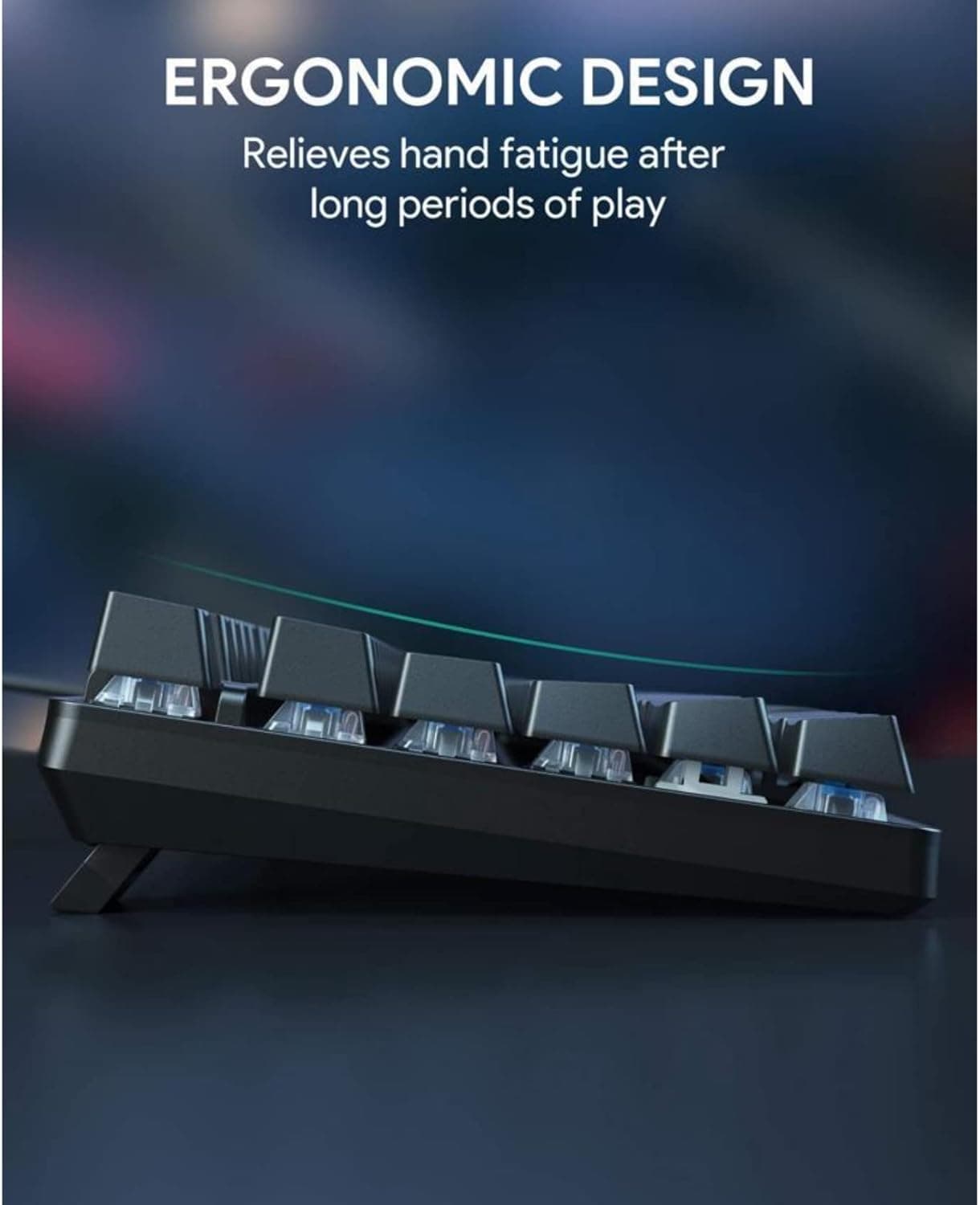
Wireless Split Keyboards Elytra and NocFree & Reach Early Backers
At 420g, the Elytra is lighter than most tablets; the NocFree & and Elytra both cleared production and reached early backers as the first concurrent fully wireless CNC-aluminum splits to ship.

The Elytra from ElimKeys and the NocFree & from Solar both cleared final production and began moving to backers in late March and early April, a simultaneous arrival that represents a genuine inflection point for the fully wireless split category: two competing designs, both cable-free between halves, shipping at the same time after overlapping crowdfunding campaigns.
The NocFree & moved to early backers first. Solar's Kickstarter-funded board comes in at approximately 1 kg (2.2 lbs) and introduces gasket mounting to a category that has rarely offered it, making it the first low-profile split keyboard to include that construction. Connectivity spans Bluetooth (three paired devices simultaneously), 2.4GHz dongle, and wired USB-C, with battery life rated between one and three months per charge. A magnetic aluminum tenting kit does double duty as a display stand when the board is off the desk. The 75% layout with standard QWERTY arrangement is designed to shorten the adaptation curve for users switching from conventional boards. At $349, it sits firmly at the premium end of the accessible split market.
The Elytra points in a different direction on nearly every specification. ElimKeys' CNC aluminum halves weigh 420g combined (0.93 lbs), roughly half the NocFree &'s mass and lighter than most tablets. That number comes from biomimetic machining: the name and the design principle both reference beetle elytra, the wing covers that carry structural load while shedding mass. The 63-key board stays at 11.8mm slim by omitting the function row and the right Shift key. Kailh CloudShell White low-profile switches come hot-swappable from the factory, and ZMK firmware manages the tri-mode wireless stack across wired, 2.4GHz, and Bluetooth modes. The Hong Kong-based Kickstarter campaign raised HK$ 368,814 against a HK$ 50,000 goal from 227 backers. As of April 1, the CNC aluminum halves were confirmed as incoming for reviewer testing.
TechBroll published a hands-on with the Elytra in January 2026, making it one of the first outlets to get the board in hand. For sustained travel data, Bulsuk, who has tracked both keyboards since their respective crowdfunding launches, confirmed plans to "carry each keyboard in backpacks and use them to type hundreds of pages" before releasing full verdicts. That benchmark matters because the critical unknowns are the same for both boards: wireless latency under real workloads, battery behavior across daily commute cycles, and inter-half synchronization after the halves have spent time bouncing around in a bag.
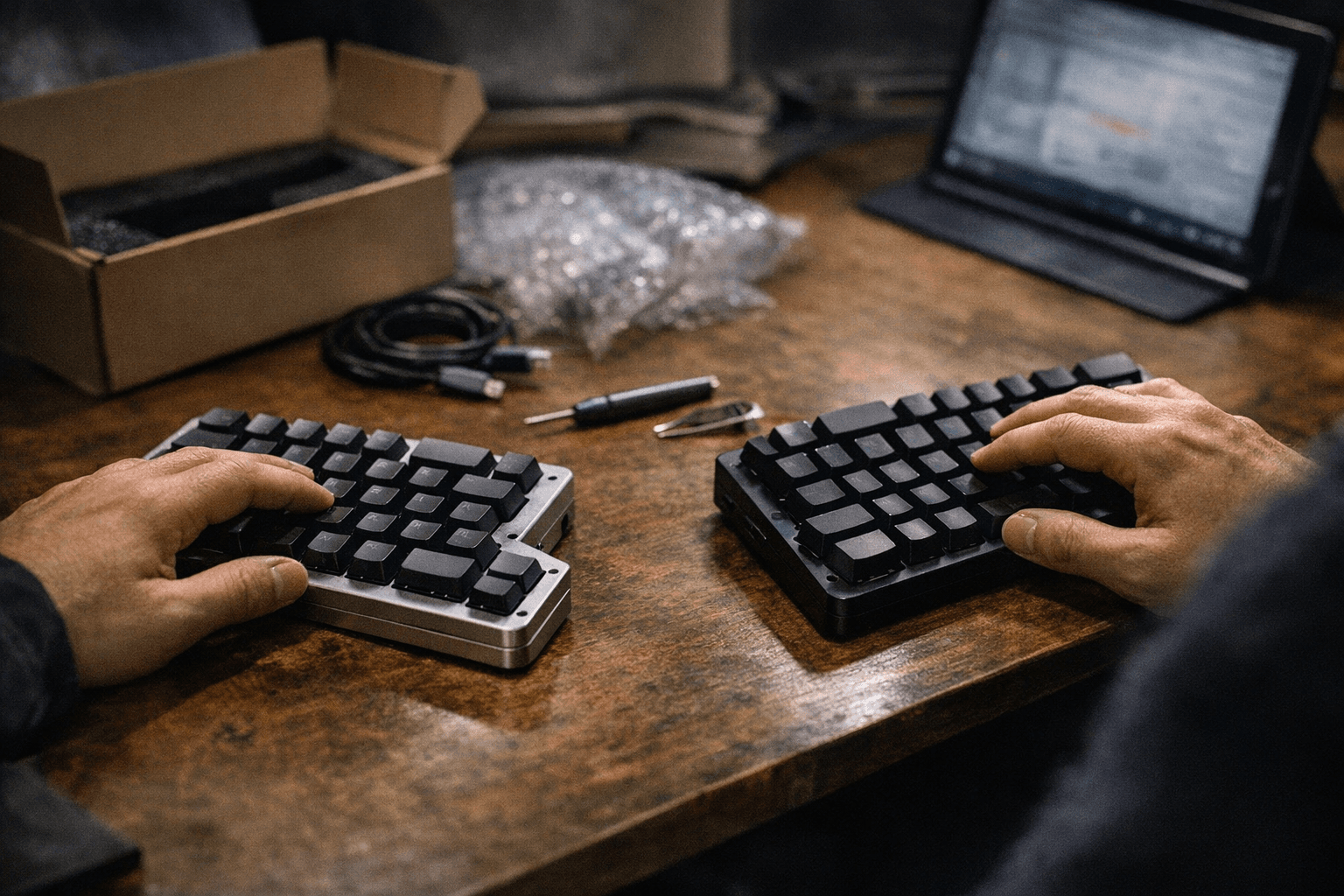
Community discussion on Hacker News and forum threads has split predictably along those lines: the Elytra's weight figure draws the most attention, while the NocFree &'s truly cable-free left-right synchronization draws its own thread of interest. Some commenters called both projects "milestones" for portable ergo splits, a label that carries weight given how many similar designs have stalled at prototype.
The decision axis between the two boards is unusually clean. The Elytra, with its travel case add-on, 11.8mm profile, and sub-1 lb total weight, is built for the packable end of the spectrum. The NocFree &, heavier but equipped with a tenting kit, gasket mount, five color options, and a closer-to-full layout, targets daily ergonomic use where portability is a feature rather than the headline. Reviewers now have hardware in hand; the latency and battery numbers are next.
This article was produced by Prism’s automated news system from verified source data, official records, and press releases, then run through automated quality and moderation checks before publishing. The system is built and supervised by the people who set the standards it runs under. Read our full AI policy.
Did this article answer your question?