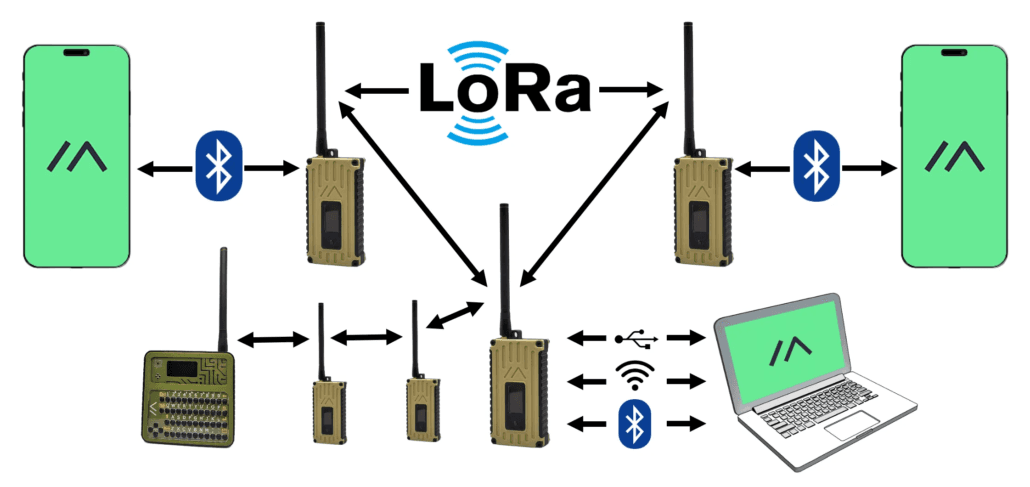
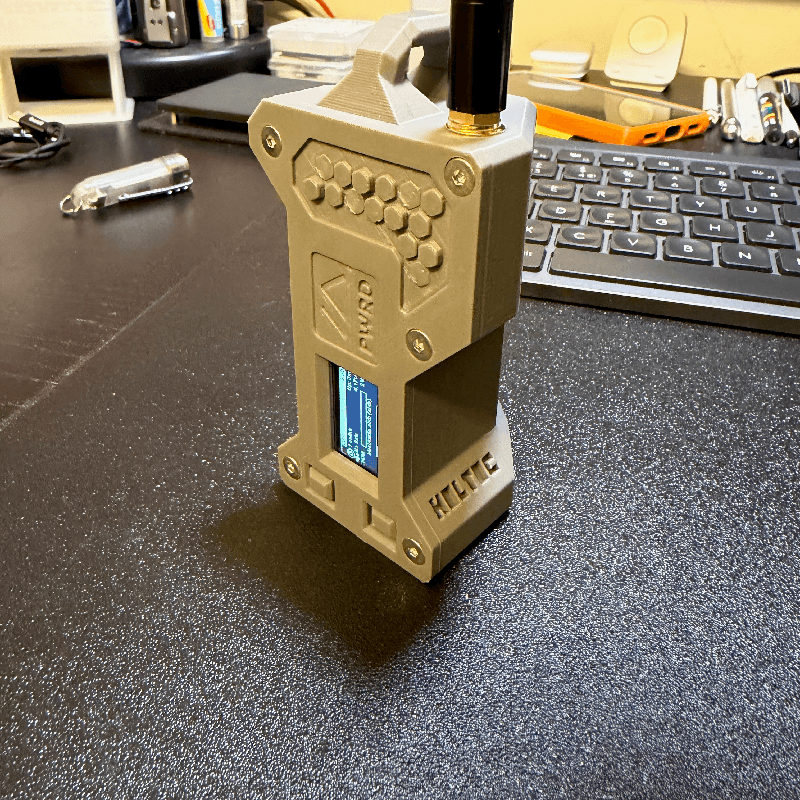
Airsoft team tests Meshtastic trackers in forested terrain with tree relay nodes
A tree-mounted relay can matter more than the tracker itself when airsoft teams push Meshtastic into woods, where battery, canopy loss, and ATAK integration decide the winner.
The forest is where the spec sheet gets judged
The airsoft team’s question cuts straight to the heart of Meshtastic field use: will the node still work when the map says “woods” and the radios say “good luck”? The poster had already been burned by finicky Heltec 114-based trackers, so this was not a casual upgrade hunt. It was a practical attempt to find a tracker that could survive movement, partial obscuration, and a relay node perched up a tree without turning the whole mesh into guesswork.
That is why the Wio Tracker L1 Pro drew attention in the first place. On paper, it is a compact, integrated Meshtastic node, but the real test is whether it behaves like dependable kit when an airsoft squad is moving through a forested area and one elevated relay is doing the heavy lifting. In that setting, the difference between “it powers on” and “it keeps a live team connected” is everything.
What the Wio Tracker L1 Pro brings to the field
Seeed Studio describes the Wio Tracker L1 Pro as a fully integrated Meshtastic device with an OLED display, rechargeable battery, nRF52840 processor, L76K GPS, and a LoRa radio covering 862 to 930 MHz. That combination makes it attractive for crews that want a self-contained tracker rather than a pile of separate parts and cables. The built-in display and GPS matter because they turn the node into something that can be checked quickly in the field, not just managed from a bench.
The form factor also matters more than people sometimes admit. A tracker that is compact, self-contained, and designed as a finished unit is easier to clip onto a kit bag, pass between players, or leave on a stationary relay point up in a tree. For a team trying to keep pace with fast movement under a canopy, that sort of simplicity can be the difference between useful and annoying.
Battery claims are only a starting point
The battery question in the forum post is the one that deserves the least hand-waving. Seeed Studio’s June 25, 2025 launch post says the Wio Tracker L1 Pro uses a 2000mAh rechargeable battery and can last up to 5 days. A later Seeed Studio forum unboxing post repeated a 2.5-day battery-life claim. Those figures are helpful, but they are not forest guarantees.
In woods, runtime changes with GPS use, transmit frequency, sleep settings, and how active the node stays during play. A tracker that spends more time waking, locating, and pushing packets will behave very differently from one sitting still on a desk. If the goal is forested airsoft, the battery test needs to reflect motion, not just idle time.
A useful buying checklist starts there:
- How often does GPS stay on during play?
- How aggressive are the transmit settings?
- Does the node remain in a low-power state when the team pauses?
- Does the battery still hold up when the relay node is elevated and the moving units are constantly reacquiring signal?
Meshtastic’s power documentation makes the same point from another angle: power-saving settings, wake intervals, transmit power, bandwidth, spread factor, and hop limits all affect runtime and network behavior. In other words, battery life is a network design issue as much as a hardware spec.
A tree relay changes the conversation
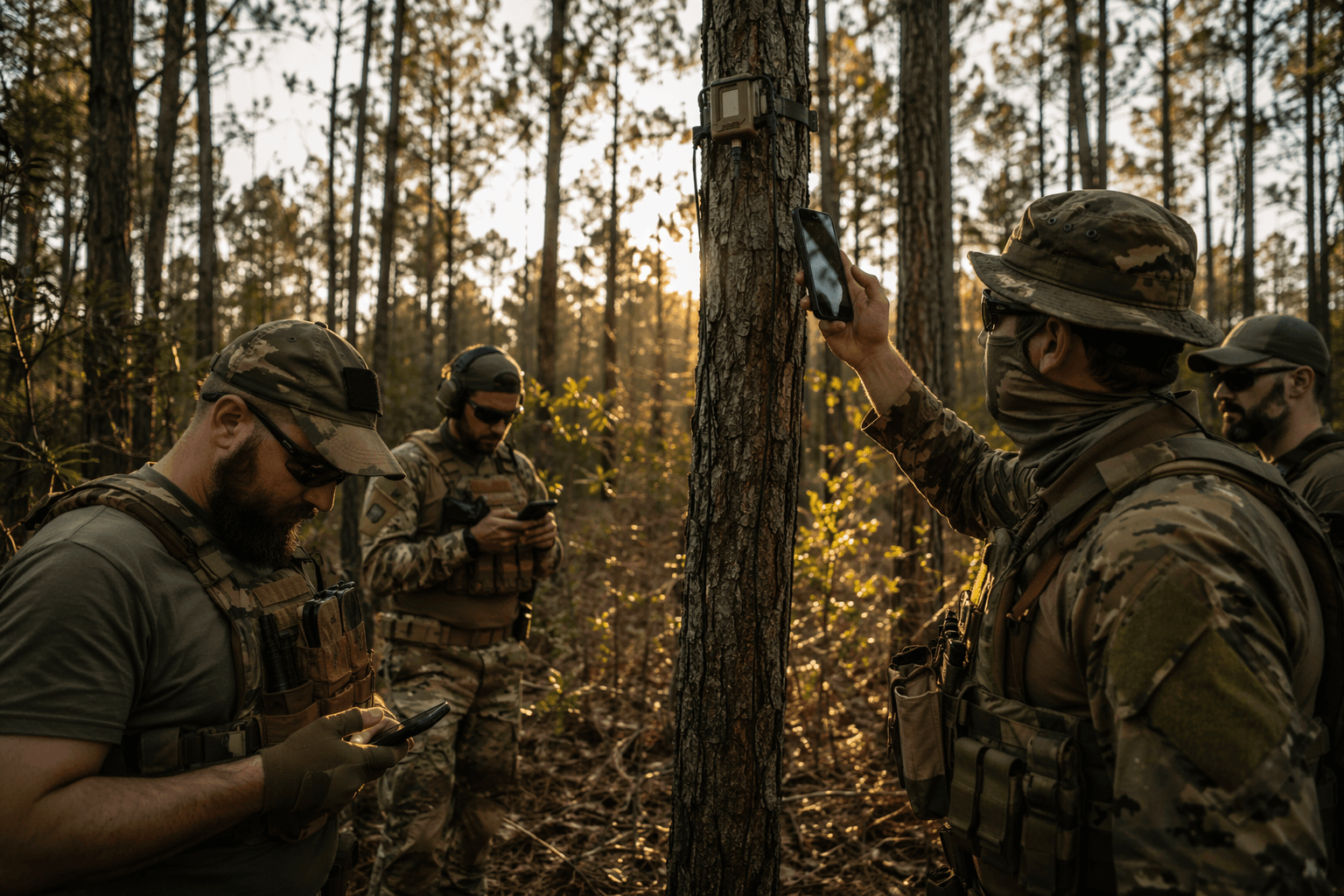
The most interesting detail in the forum post is the relay node mounted up a tree. That one choice tells you the user is already thinking like a field operator, not a shopper. Elevation changes propagation, and in a forested environment a stationary high point can be far more valuable than another “better” handheld node.
Meshtastic’s Site Planner exists for exactly this kind of thinking. It uses terrain and simulation parameters to predict where signal will reach, which is a reminder that placement is part of the system. In wooded terrain, line of sight is fragmented, foliage eats signal, and bodies move through the path in ways no product page can fully model. A tree relay is not just a convenience. It is a deliberate attempt to hold a mesh together when the canopy wants to break it apart.
That is also why the forum question matters so much. The real issue is not whether the Wio Tracker L1 Pro can transmit. It is whether it can keep pace with a moving team while a fixed relay above the tree line gives the mesh a fighting chance.
ATAK makes the use case more serious
The poster’s mention of ATAK and the Meshtastic TAK plugin pushes this beyond hobby curiosity. Meshtastic’s official ATAK plugin documentation says the plugin integrates Meshtastic with ATAK on Android. The GitHub project says it can share position location information, chat messages, and other Cursor-on-Target events over the mesh. That means the airsoft team is treating the trackers as part of a live situational-awareness stack, not just as text devices.
That changes what matters in the field. Slow updates, inconsistent links, or a relay that only works in perfect conditions are more than annoyances when the mesh is feeding a map view. For a team using ATAK, the question becomes whether the tracker can support timely location sharing while still surviving the realities of motion, cover, and battery drain.
Why long-range records do not answer this question
Meshtastic’s documented range records are impressive, but they belong to a different world. The current ground-to-ground record is 331 km, and the current air record is 206 km. Those numbers show what LoRa can do under carefully controlled conditions, but they do not tell you how a node behaves when a player is moving under dense cover with a tree relay trying to bridge the gaps.
Meshtastic’s range-test guidance also reinforces the same caution. Range-test mode is chatty, and it can slow down your mesh. That is a useful warning for anyone trying to extrapolate from lab-style testing into actual field play. The forest is not a record attempt. It is a messy, obstructed, constantly shifting environment where real usability shows up only when the node keeps working after the first burst of optimism fades.
What to evaluate before buying for wooded airsoft
The Wio Tracker L1 Pro looks well matched to the job only if the field variables line up. Before buying, the most important questions are practical ones:
- Does the battery survive active movement, not just idle use?
- Does the built-in GPS stay reliable under canopy?
- Does the 862 to 930 MHz LoRa radio hold up when bodies and foliage get between nodes?
- Does the tree-mounted relay actually improve coverage in the places the team moves?
- Does the node fit cleanly into the ATAK workflow without adding friction?
- Are the power and radio settings tuned for the team’s pace, or just left at defaults?
That is the data gap the forum post exposes. The Wio Tracker L1 Pro may look like a neat all-in-one answer, but the woods decide whether it is a tracker or a liability. In forested airsoft, the best Meshtastic node is the one that still knows where the team is when the canopy, the movement, and the relay all start working against it.
This article was produced by Prism’s automated news system from verified source data, official records, and press releases, then run through automated quality and moderation checks before publishing. The system is built and supervised by the people who set the standards it runs under. Read our full AI policy.
Did this article answer your question?