ArXiv paper details Meshtastic smart campus mesh with solar sensing
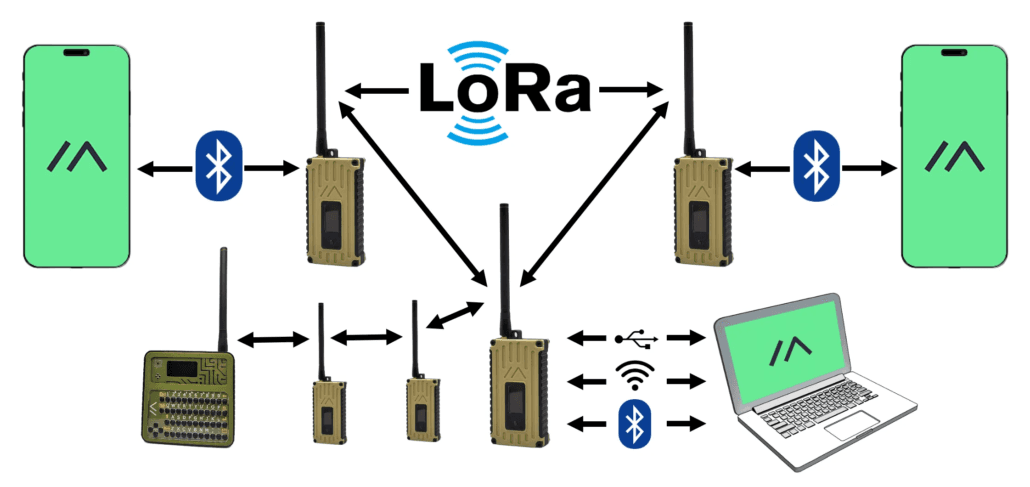
A Colombian campus build put Meshtastic to work with solar sensors, mobile trackers, and a Raspberry Pi 4 gateway, then fed the data into Node-RED, InfluxDB, and Grafana.

If you want Meshtastic to do more than move chat packets, this paper goes straight to the hard part: keeping a solar node, mobile trackers, and an edge gateway alive on a campus mesh without wasting radio budget.
The arXiv preprint, 2605.20379, titled A Meshtastic-based LoRa Mesh System for Smart Campus Applications: From Solar-Powered Sensing to Containerized Data Management, was submitted May 19, 2026 by Rafael Garzon Andosilla, José de Jesús Rugeles Uribe, Guillermo Antonio Hernandez Ortiz, Edgar Santiago Quiroz Puentes, and José de Jesús Rugeles. It describes a smart-campus deployment at Universidad Militar Nueva Granada, or UMNG, in Colombia, and frames Meshtastic as a practical low-cost substrate for campus telemetry rather than a novelty radio toy.

The build leans on hardware that hobbyists will recognize immediately. One ecological sensing node ran on a Raspberry Pi Pico paired with a Semtech SX1262 transceiver and solar power. Mobile tracking came from Seeed SenseCAP T1000-E devices. A Raspberry Pi 4 served as the edge gateway, which is the part that makes the whole system feel copyable for a makerspace or neighborhood lab: keep the radios small and low-power in the field, then centralize the messy data work at the edge.
That edge stack used Docker Compose to tie together Node-RED for ingestion, InfluxDB for time-series storage, and Grafana for live dashboards. In practice, that is the difference between a mesh that merely forwards messages and one that becomes an operational telemetry system. The paper’s setup shows how Meshtastic can be paired with a normal data pipeline, so the radio layer handles the hard-to-reach places while the gateway turns packets into charts, logs, and something a club can actually monitor.
The radio rules matter just as much as the hardware. Meshtastic’s own documentation says a mesh forms when nodes share the same LoRa spreading factor, center frequency, and bandwidth, and it warns that unnecessary ROUTER or REPEATER roles can raise packet collisions, reduce delivery rates, and burn hops. That warning lands especially hard on a campus, where mobility and radio settings like spreading factor and transmit power already make deployment tricky.
The larger takeaway is simple: a Meshtastic campus mesh scales when the build stays disciplined. Solar power keeps the sensor node off the wall socket, the Raspberry Pi 4 keeps the data manageable, and the mesh only works if every node speaks the same radio language.
This article was produced by Prism’s automated news system from verified source data, official records, and press releases, then run through automated quality and moderation checks before publishing. The system is built and supervised by the people who set the standards it runs under. Read our full AI policy.
Did this article answer your question?