Bitcoin and Meshtastic framed as tools for digital sovereignty
Bitcoin and Meshtastic meet in the same place: outage-proof, permissionless infrastructure. The overlap is real, but only if you keep it grounded in radios, keys, and range.
Bitcoin and Meshtastic keep showing up in the same conversation because both are built around a stubborn idea: useful systems should still work when centralized infrastructure does not. D-Central’s June 26 essay puts that argument plainly, casting mesh networking as the communications twin of Bitcoin’s money rails, with both designed to be open source, permissionless, and resistant to censorship. That framing lands best when it is tied to something concrete: a cheap radio node that still moves a message when a carrier, tower, or platform is out of reach.
Where the sovereignty analogy actually fits
The strongest overlap between Bitcoin and Meshtastic is not philosophy, it is failure mode. A Bitcoin wallet can still hold value when banking rails are unavailable; a Meshtastic node can still pass messages when the phone network is down, the internet is absent, or a group needs to coordinate beyond carrier coverage. D-Central’s sovereignty hub pushes that idea further by placing mesh comms alongside Nostr identity, open hardware, and own-your-compute as layers around Bitcoin, with the internet treated as a dependency and mesh as the fallback.
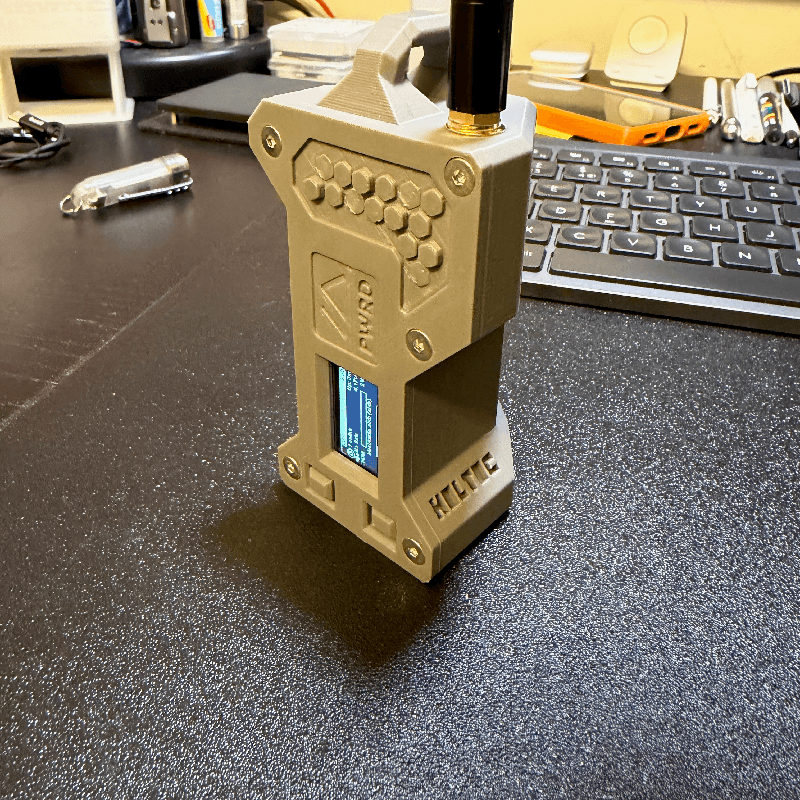
That is where Meshtastic stops looking like a novelty and starts looking like a practical tool. D-Central says a $30 LoRa radio running Meshtastic firmware can relay text across kilometres without infrastructure, and it even describes Meshtastic as a way to move Bitcoin transactions off-grid. For field operators, builders, and anyone who has watched a local outage knock out ordinary messaging, that is the shareable hook: a low-cost node can still push useful information when the usual stack disappears.
How Meshtastic actually works
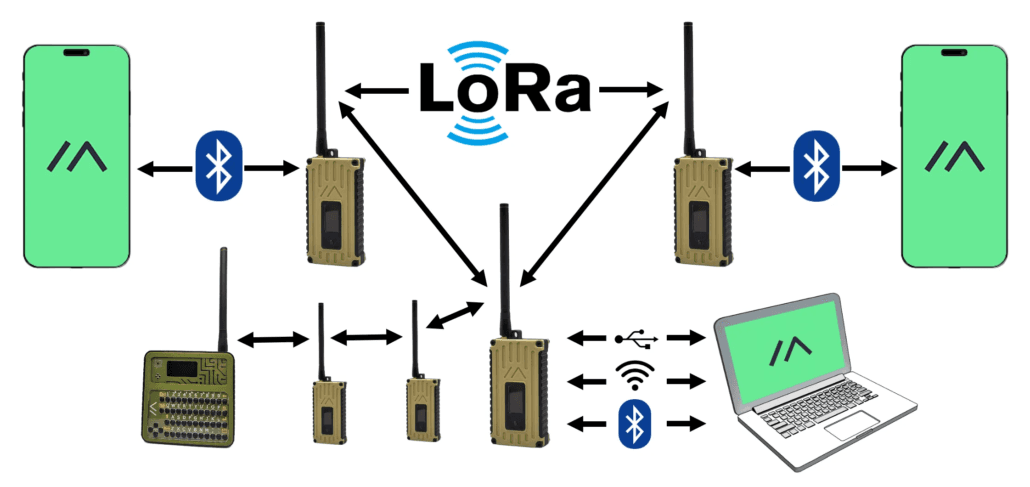
Meshtastic describes itself as an open source, off-grid, decentralized mesh network built to run on affordable, low-power devices, and it says the project is 100% community driven. The official materials are explicit about the basics: no cell towers, no internet, and no need to ask any carrier for permission. Radios automatically form a mesh to forward packets, and a phone is optional rather than required.
The message path is more flexible than a lot of newcomers expect. A phone can hand a message to a radio over Bluetooth, Wi-Fi/Ethernet, or serial, then the packet is broadcast and retransmitted if no acknowledgement arrives. That forwarding behavior is the technical backbone behind the “self-healing” claim that often gets attached to Meshtastic, because a packet does not depend on one perfect hop to survive.
The channel structure is also more practical than abstract. Meshtastic’s docs say Channel 0 is the default, and up to 8 channels can exist in a mesh. That matters when you are separating public coordination from a smaller group conversation, or when you are trying to keep different teams from stepping on each other in the same region.
Why LoRa and spectrum rules matter
Meshtastic is tied tightly to LoRa, and that is part of why it has attracted so much attention from off-grid users. The official radio settings document maps North America to the 902–928 MHz ISM band, with regional presets and power limits depending on where you are operating. In the United States and Canada, that license-free spectrum is one of the reasons the project is so approachable: you can deploy off-the-shelf hardware without building a carrier relationship first.

That regulatory reality is easy to miss when people describe Meshtastic as a “decentralized communications layer.” It is decentralized in architecture, but it is also practical in a more mundane sense, because it lives in a band ordinary users can actually touch. That is a big part of the appeal, and it is a reason the Bitcoin comparison resonates with people who care about independence but still need a legal, low-friction way to get a network on the air.
Where the metaphor starts to overreach
The sovereignty story gets weaker when Meshtastic is treated as if it were a full substitute for encrypted internet messaging or a stand-in for Bitcoin itself. Meshtastic’s security model is real, but it has tradeoffs. The docs say encryption is optional at the channel level, and the project introduced public-key cryptography for direct messages in firmware 2.5.0. It also warns users to back up keys carefully, because reinstalling firmware regenerates public and private keys.
That is the kind of detail that keeps the analogy honest. A resilient mesh is not the same as financial finality, and a low-power radio mesh is not the same as a universal privacy layer. Packet size, hardware limits, range, terrain, and spectrum rules still shape what the network can do. Meshtastic is strongest when it is used for what it was built for: short, robust, off-grid communication that survives conditions where a phone app or cloud service would simply stop.
A project that keeps moving beyond hobby status
The community side of Meshtastic also shows why the project is being taken seriously. The official blog archive includes a June 21, 2025 preview release for Meshtastic 2.7, described as the biggest overhaul of the default UI in more than four years and a formal rename of the interface to BaseUI. It also shows a February 17, 2026 post about integrating TAK, Meshtastic, and iOS, which points to a project that is moving into interoperability and operational use cases rather than staying frozen as a radio experiment.
Meshtastic’s own blog also notes event-specific firmware deployed at DEF CON, along with 2025 partnerships involving event organizers and community groups such as Darknet-NG and the Lonely Hackers Club. Add in the project’s active community pages, app ecosystem, enclosures, and site planner tools for predicting range, and the picture is not of a one-off firmware download but of a living platform with enough momentum to keep finding new users.
Bitcoin and Meshtastic are not the same thing, and they should not be sold as if they are. But when the question is what still works when the usual infrastructure goes dark, the comparison is tight where it counts: one keeps value moving, the other keeps messages moving, and both make more sense once you test them against an outage instead of a slogan.
This article was produced by Prism’s automated news system from verified source data, official records, and press releases, then run through automated quality and moderation checks before publishing. The system is built and supervised by the people who set the standards it runs under. Read our full AI policy.
Did this article answer your question?