Elecrow CrowPanel Advance makes Meshtastic an easy low-risk buy
A $35 CrowPanel Advance lets you try Meshtastic without buying a throwaway node, and it still stays useful as an ESP32 touchscreen if the mesh never clicks.

The easiest low-regret on-ramp
Meshtastic is built around affordable, low-power devices that use LoRa radios to send messages without internet or cell service, but the hardest part for newcomers is still the first purchase. A single-purpose node can feel like a gamble if your local mesh is thin or if the radio never becomes part of your daily routine. Elecrow's CrowPanel Advance changes that equation by pairing a 3.5-inch touchscreen with Meshtastic support and a price of $34.30, turning the first buy into something you can keep using even if your area never grows a big network.
What the CrowPanel Advance actually is
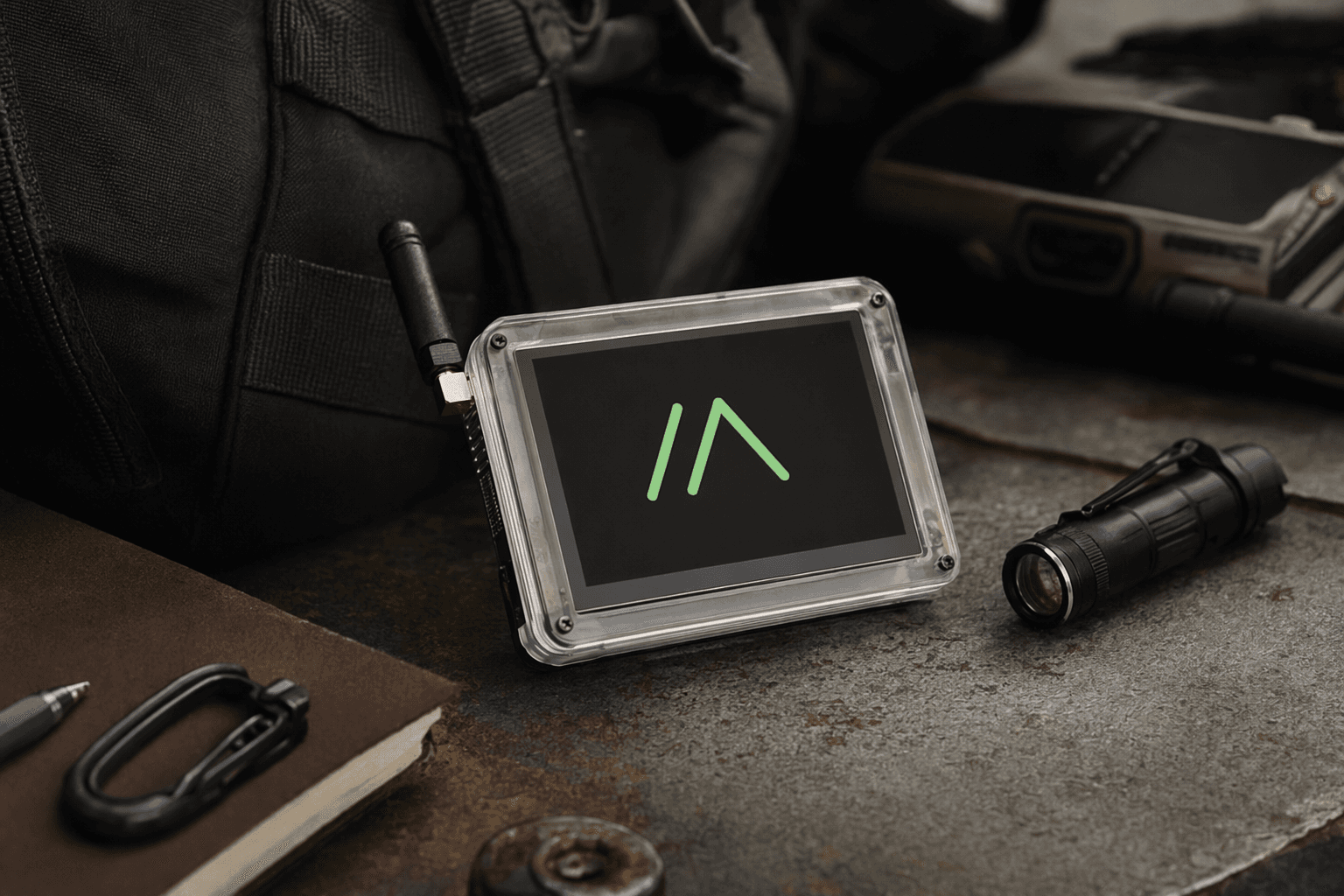
The 3.5-inch model uses a 480x320 IPS capacitive touch display with an integrated ESP32-S3 module, and Elecrow ships it with Meshtastic firmware already installed. It also includes Bluetooth 5.0 and BLE, speaker and microphone support, RTC functionality, and compatibility with Arduino IDE, Espressif IDF, and LVGL. That combination matters because it is not just a radio with a screen attached. It is a touchscreen ESP32 platform that happens to fit into Meshtastic's hardware stack.
Why that flexibility matters
Meshtastic's official docs describe the project as a community-driven, open-source, decentralized mesh network, and they say support is 100% volunteer based. That makes hardware confidence important. When you buy into a platform that already supports more than 100 devices, you want something that feels like a safe bet, not a short-lived experiment. The CrowPanel Advance helps there because Meshtastic's hardware directory now lists Elecrow under supported hardware, with the CrowPanel Advance series described as high-performance IPS touchscreens with LoRa capabilities and MUI support.
What you can do in the first week
In practical terms, the CrowPanel Advance gives you a low-risk way to test how Meshtastic fits into your own routine. You can pair it with a phone or computer over Bluetooth, explore the mesh without needing internet, and decide whether a local network is actually useful where you live or travel. Because it is still an ESP32 device, you can also treat it as a development target for Arduino IDE, Espressif IDF, or LVGL, and you are not stuck with dead weight if the mesh side remains quiet.
- Use it as a portable status panel for an existing mesh.
- Keep it as a secondary node that still has a screen if you later buy other hardware.
- Build interface experiments on top of the ESP32-S3 instead of starting with a radio-only box.
- Reuse it outside Meshtastic if your interests shift toward touchscreen projects.
How it compares with the usual starter-node path
The common first step in Meshtastic is still a dedicated device, and Elecrow's own ThinkNode M5 shows why. That unit comes with an ESP32-S3, an SX1262 LoRa chip, a 1.54-inch EPD display, built-in GPS, a 1200mAh battery, and an integrated enclosed design. It is a classic portable off-grid node, and it is easy to see why it got one reviewer into Meshtastic in the first place. The CrowPanel Advance takes a different route: less battery-first, less radio-first, more reusable as a general-purpose touchscreen computer that also talks mesh.
The ThinkNode line is already part of Meshtastic's ecosystem. Meshtastic says the ThinkNode series was designed by Elecrow for portable off-grid communication and mesh networking, and its hardware pages list the ThinkNode M2 as an ESP32-S3 device with SX1262 while the M1 and M3 use nRF52840-based designs. That breadth makes Elecrow a familiar name in the project, but the CrowPanel Advance is the more interesting buy for anyone still deciding whether the hobby is worth the commitment.
Why the broader ecosystem makes this a smarter bet
Meshtastic's range-test page gives a sense of why people keep tinkering even after the novelty wears off, with record figures of 331 km on the ground and 206 km in the air. Those numbers are not the everyday use case, but they underline the point that Meshtastic is a serious long-range platform, not just a chat app with a logo. At the same time, the maintenance burden of supporting so many devices means the ecosystem needs hardware partners that can keep producing gear people will actually want to buy.
That is where the CrowPanel Advance lands well. Elecrow already has a place in the supported-device list, the ThinkNode family shows it can ship practical off-grid hardware, and the CrowPanel Advance adds something the hobby has been missing: a cheap Meshtastic-capable screen that still looks useful when you stop thinking about Meshtastic.
The low-risk buy that changes the entry point
The CrowPanel Advance does not replace the appeal of a purpose-built node, but it does make the first purchase easier to justify. If your local mesh takes off, you have a node and display in one box. If it does not, you still own a 3.5-inch ESP32-S3 touchscreen with Bluetooth, audio support, RTC, and a software stack you can keep building on. That is the kind of purchase that lowers the barrier without trapping you in a dead-end, and for a lot of curious Meshtastic newcomers, that is the cleanest way in.
This article was produced by Prism’s automated news system from verified source data, official records, and press releases, then run through automated quality and moderation checks before publishing. The system is built and supervised by the people who set the standards it runs under. Read our full AI policy.
Know something we missed? Have a correction or additional information?
Submit a Tip