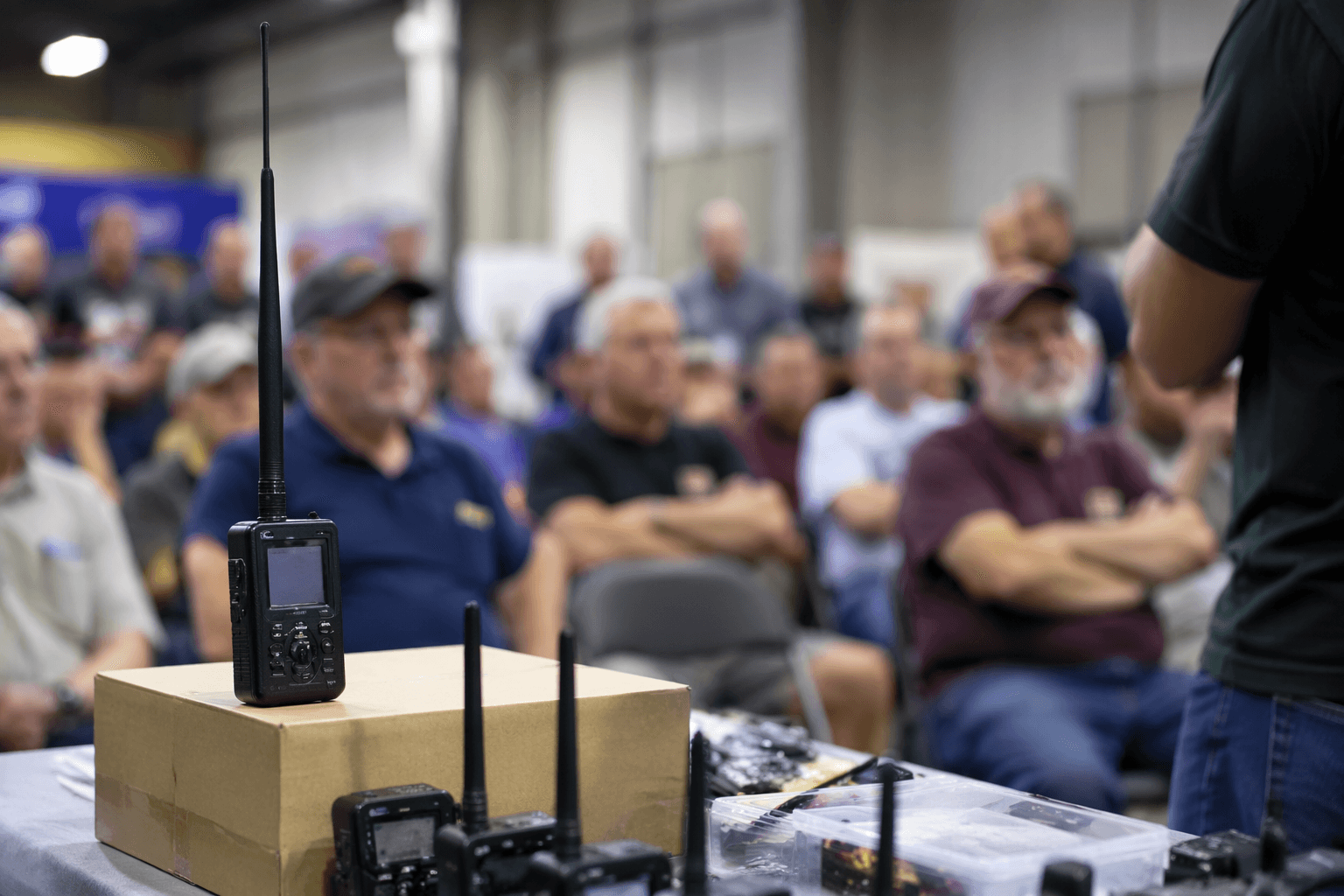
Meshtastic band plans shape range, legality, and mesh resilience
Pick the wrong Meshtastic band and you can lose legality, range, and mesh reach before the first packet. The right band plan is a deployment decision, not a footnote.
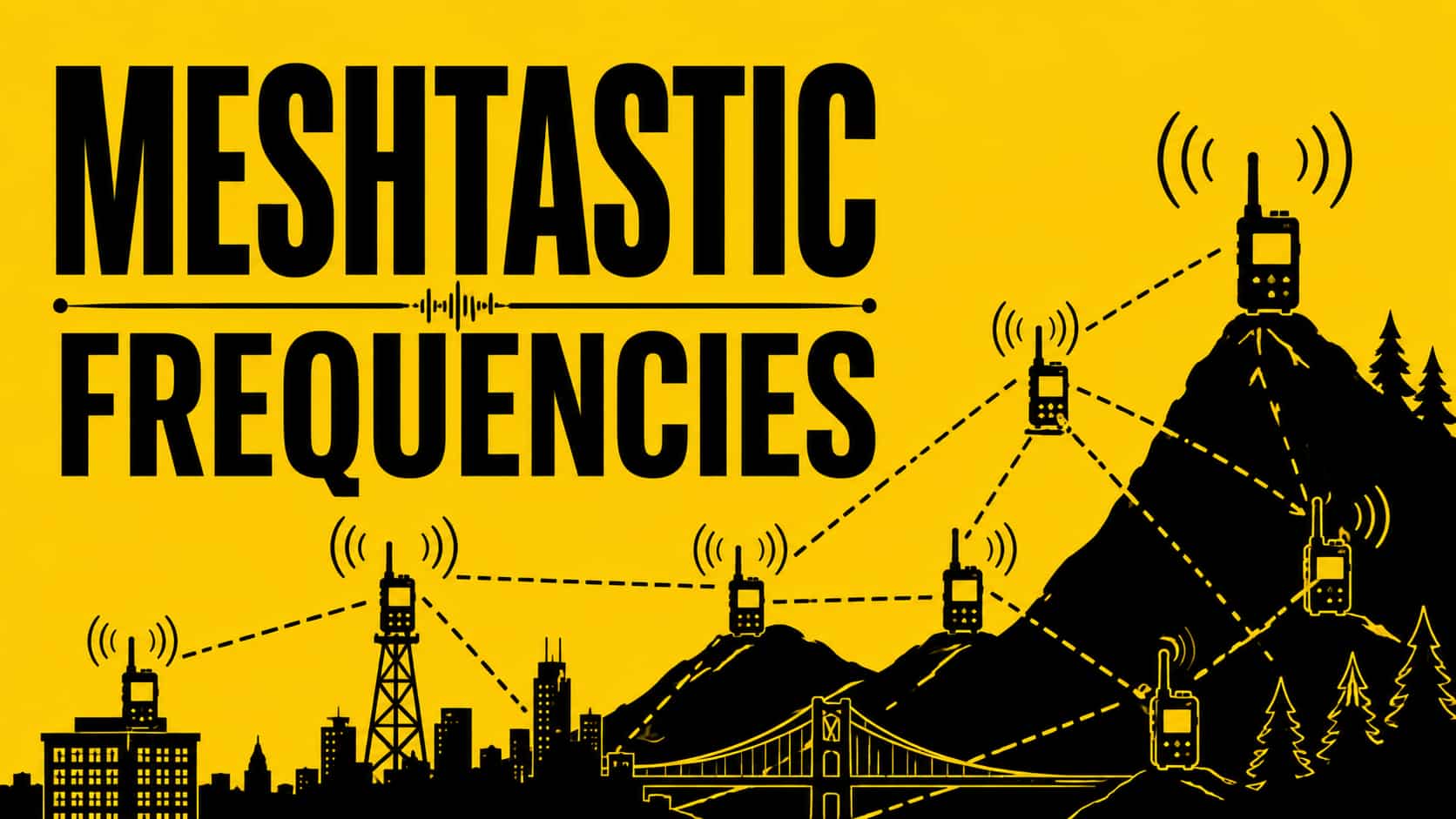
Meshtastic nodes do not fail politely when the band plan is wrong. A radio built for the wrong region can be legal nowhere, noisy everywhere, and far less useful once a mesh starts carrying real traffic.
The band plan is the first deployment decision
That is the core lesson behind any serious Meshtastic setup: frequency choice is not a technical footnote, it is the decision that shapes legality, compatibility, antenna fit, interference exposure, and the resilience of the mesh itself. Meshtastic is a community-driven, open-source project built on inexpensive LoRa radios for long-range off-grid communication, and its own README makes the point plainly: the radios can forward packets as a mesh, and no phone is required. That makes the system appealing for text messaging, GPS position sharing, telemetry, and emergency communications, but none of those use cases work well if the node is sitting on the wrong band plan.
The practical payoff is simple. Before you buy hardware or flash a node, you need to know which regional allocation applies where you live and where the node will actually operate. The project now maintains a LoRa Region by Country table for exactly that reason, because too many deployment mistakes start with a guess that “915” or “868” is close enough.
North America and Europe are not interchangeable
In the United States and other 902–928 MHz regions, Meshtastic treats 915 MHz-class deployments as the default world. Its documentation says the North America band spans 902–928 MHz, with LongFast offering 104 frequency slots there. After a factory reset, a North American radio comes up on LongFast with frequency slot 0, which maps to slot 20 centered at 906.875 MHz. That is not trivia. It is the difference between a node that boots into a known-good regional setting and one that quietly drifts into confusion because someone assumed “915” was a universal label.
Europe is different. Meshtastic says 868 MHz is generally the most popular frequency band for Meshtastic in Europe, and its radio settings documentation also notes a 433 MHz European band from 433 to 434 MHz with a maximum of +10 dBm ERP. Those are separate deployment choices with different antenna expectations, different device behavior, and different legal constraints. A node built for North America is not automatically the right choice for Europe, and the reverse is just as true.
That regional split matters because the wrong assumption can strand a node off-network. The radio may still power up, but the packets will not be where you expect them, and a mesh only looks simple until you discover that half your group is centered on one regional block while the rest are sitting on another.
The rules shape airtime as much as power
The legal layer is not abstract either. In the United States, the FCC’s Part 15.247 rule covers operation within 902–928 MHz, which is why North American Meshtastic gear is built around that ISM block. In Europe, the radio-equipment framework is anchored by Directive 2014/53/EU, adopted on April 16, 2014, and the short-range-device rules in the 863–870 MHz band have historically allowed non-specific SRDs only with either a maximum 0.1% duty cycle or listen-before-talk.
That means the user experience is shaped by more than transmit power. Industry band breakdowns commonly discuss sub-band caps ranging from 0.1% to 10% duty cycle depending on the slice of spectrum, so even within the same broad European range, the rules can change what a node is allowed to do on the air. A busy urban environment adds another layer. Congestion, local RF noise, and duty-cycle limits can matter as much as raw power when you are trying to keep a mesh responsive under stress.
This is where Meshtastic’s low data rate and mesh-forwarding model make sense. LoRa is good at pulling small messages through rough conditions, but it is still a shared radio system. If you are planning for real-world use, the limits are part of the design, not an afterthought.
Choose the hardware for the region, then match the antenna
The cleanest deployment-minded checklist starts with the region, then moves to the radio, then the antenna. Pick the correct regional hardware first, because the wrong hardware can be inconvenient at best and non-compliant at worst. Then match the antenna to the band, because a badly matched antenna can erase the gain you thought you were buying with better transmit power.
Meshtastic’s documentation helps here by spelling out the defaults more explicitly than a lot of hobby radio projects ever do. North America gets the 902–928 MHz band, LongFast’s 104 slots, and a factory-reset default that lands on slot 20 at 906.875 MHz. Europe gets 868 MHz as the most popular band, with a separate 433 MHz option for some devices. Those are the sorts of concrete details that keep a new build from becoming an expensive experiment.
For operators, this also changes how you think about range. Frequency choice affects antenna size and propagation, but real-world reach is still bounded by the legal limits and the RF environment around you. A clean site with the right band can outperform a powerful radio sitting in a noisy neighborhood with the wrong assumptions baked in.
Meshtastic works because it is a system, not just a radio
The appeal of Meshtastic is that it turns hobby radio into something more immediate. You can send text, share positions, push telemetry, and build emergency links without a phone in the loop. That makes the project feel approachable, but it also makes configuration discipline more important, not less. The mesh only stays resilient if every node is built for the same regional reality.
That is why the band-plan question sits at the center of deployment. Get the region right, and the rest of the setup starts to make sense: the antenna fits, the packets land where they should, and the node is more likely to stay legal and useful when the mesh gets busy. Get it wrong, and the failure can be subtle, expensive, and hard to diagnose until the first long-range message never arrives.
Meshtastic’s quiet strength has always been that it looks like a simple off-grid gadget and behaves like a real radio system. The band plan is the part that decides whether it becomes a dependable node or an off-network box with a good idea inside it.
This article was produced by Prism’s automated news system from verified source data, official records, and press releases, then run through automated quality and moderation checks before publishing. The system is built and supervised by the people who set the standards it runs under. Read our full AI policy.
Know something we missed? Have a correction or additional information?
Submit a Tip