Meshtastic bug breaks double-press position pings on secondary channels
A firmware regression silently dropped double-press position pings when the PRIMARY channel had location off, breaking a shortcut many field users rely on.
A firmware issue opened about eleven hours ago exposed a regression that can make a familiar button press disappear into the mesh. When a node’s PRIMARY channel has position disabled, a double press no longer sends the expected position ping on secondary channels, even though that shortcut is documented as an ad hoc position broadcast on supported hardware.
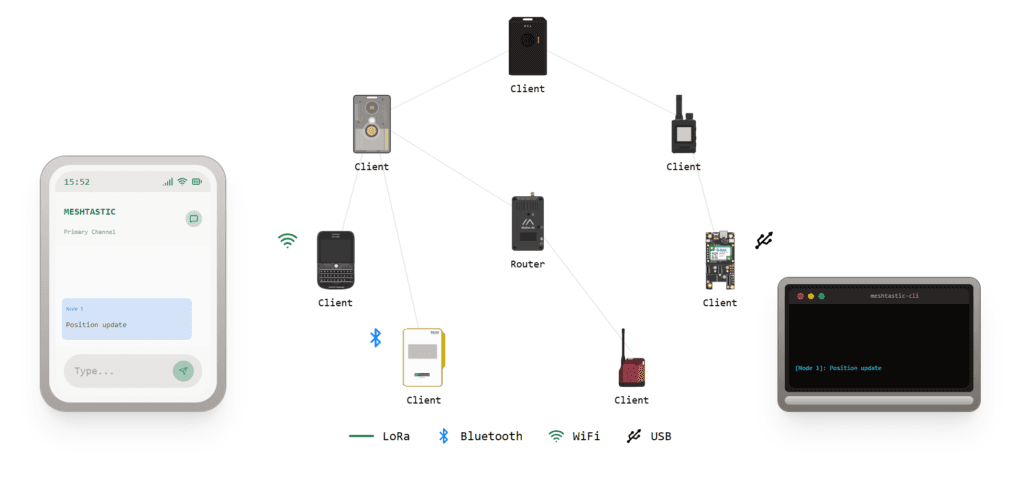
That matters because the double press is not a niche trick buried in one board family. Meshtastic documents the behavior across Heltec devices, LILYGO boards, RAK hardware, Nano Series units, and Station Series gear, including Heltec LoRa 32, T-Beam, Vision Master, Mesh Node, LILYGO TTGO LoRa, T-Echo, RAK WisBlock, Nano Series, and Station Series models. In other words, the bug hits a common physical interaction that many operators use to announce presence or check connectivity without opening the phone app.
The failure is especially awkward in the channel setups Meshtastic already encourages. The channel system is built for group broadcasts and direct messages, and the configuration tips say telemetry is shared over the PRIMARY channel by default. They also say the lowest-index secondary channel with location sharing enabled receives automatic position broadcasts, and Meshtastic now supports controlling location precision per channel. That makes it normal, not exotic, to keep position off on the primary channel while using a secondary channel for operational traffic or privacy-sensitive location sharing.
The quickest field test takes less than a minute: on a supported node, disable position on the PRIMARY channel, leave a secondary channel with location sharing enabled, and double press the button. If the expected position ping does not appear, the node is in the failure state described by the issue. The risky setup is any configuration that depends on secondary-channel position behavior while the primary channel is deliberately kept positionless.
The bug cuts against one of Meshtastic’s core promises. The network is designed as an open source, off-grid, decentralized mesh that runs on affordable, low-power devices, and that is exactly why these shortcuts matter. A hidden mismatch between the docs and the button behavior can leave a field user thinking a node is working when the shortcut has quietly stopped doing the one job it was meant to do.
This article was produced by Prism’s automated news system from verified source data, official records, and press releases, then run through automated quality and moderation checks before publishing. The system is built and supervised by the people who set the standards it runs under. Read our full AI policy.
Did this article answer your question?