Meshtastic operators can harden mesh networks before hurricane season
The mesh fails first at the edges: dead batteries, flooded enclosures, bad antennas, and a backhaul that vanishes before landfall.

The failure points show up before the wind does
The first thing a storm takes from a mesh is usually not the mesh itself. It is the power, the antenna you meant to secure, the node you assumed was fine because it was still online yesterday, and the backhaul that quietly disappears when the ISP upstream goes dark. If you run Meshtastic in hurricane country, especially in South Florida, the job before landfall is not to admire coverage. It is to find the weak links while there is still time to fix them.
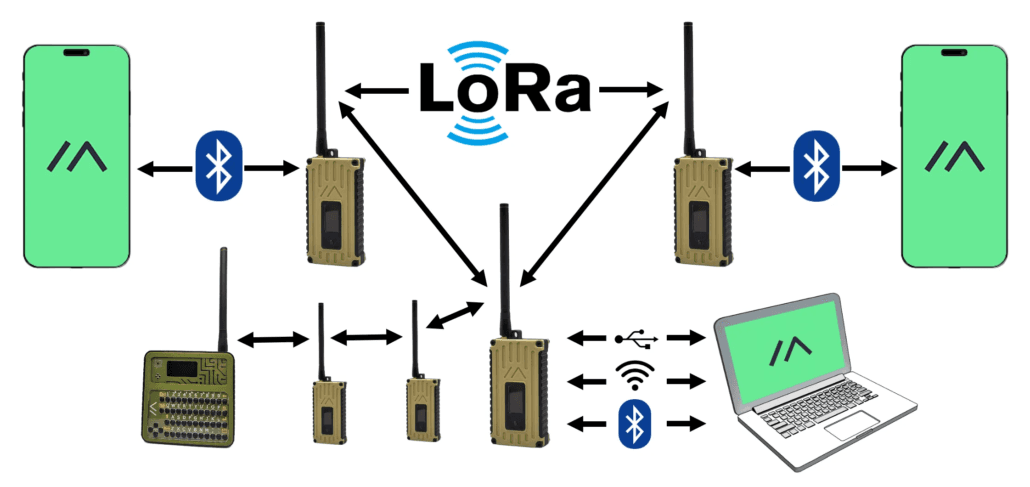
Meshtastic is built for exactly this kind of stress. It is an open-source, off-grid, decentralized mesh network designed for affordable, low-power devices, with no cell towers and no internet required. That matters when the storm turns the normal communications stack into a liability. When commercial networks saturate and the power flickers, the mesh you tuned for months becomes the thing a neighborhood may actually rely on.
Start with the nodes most likely to fail first
The fastest way to harden a mesh is to stop treating every node as equally healthy. Before landfall, sort your node list by battery level and look hard at any device whose last-heard timestamp is older than 24 hours. That triage tells you which nodes are already limping and which ones are most likely to disappear when sunlight weakens, mains power fails, or a marginal battery finally gives out.
Firmware health belongs in the same audit. A stale device in calm weather is an inconvenience; in a storm, it is a hidden outage waiting to happen. Check for broken antennas, loose connectors, and anything that looks fine from the dashboard but has not actually been heard from in a day. If you wait until rain bands are already in the area, you have already missed the window to replace, recharge, or relocate the weak node.
Physical hardening matters more than elegance
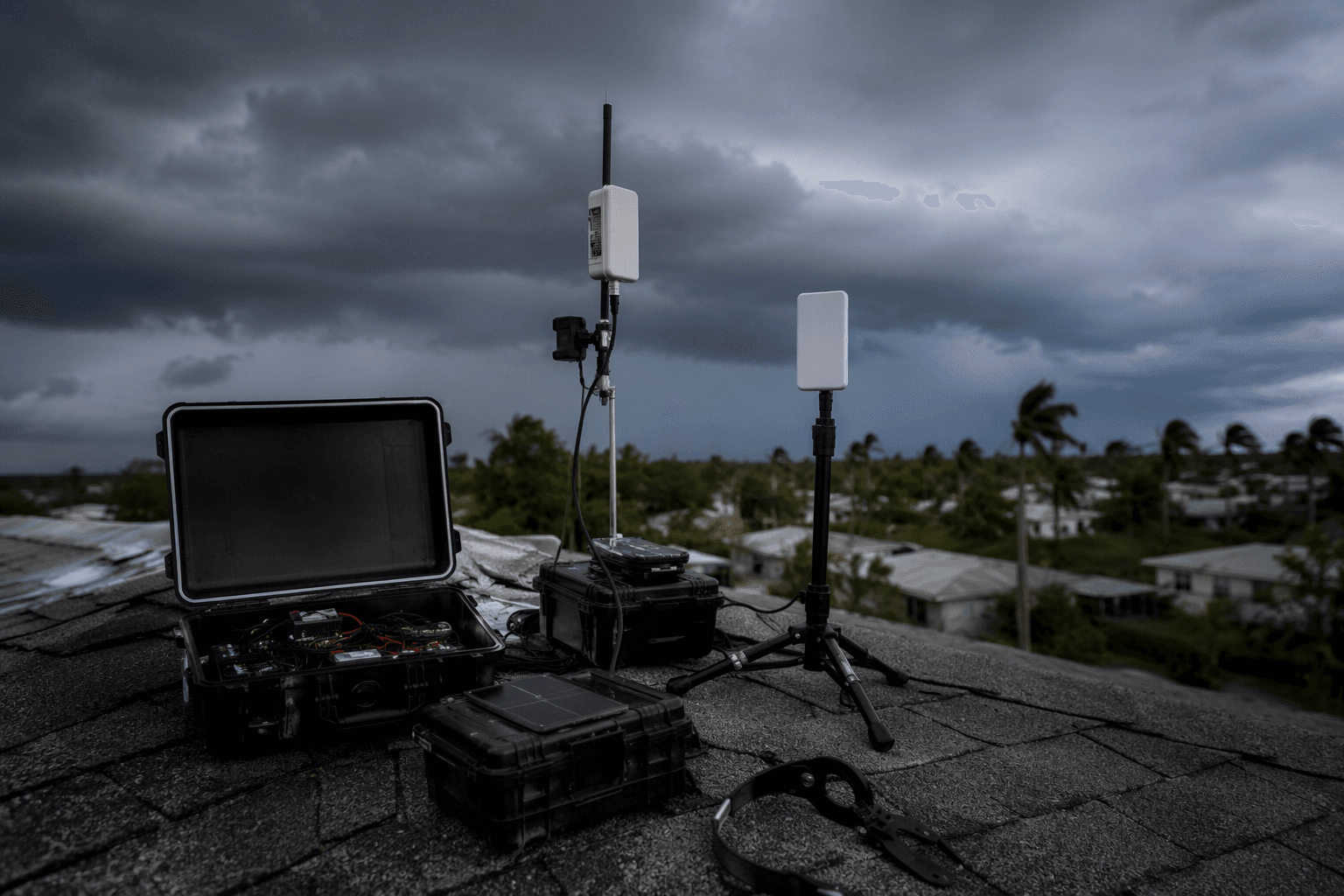
A hurricane punishes hardware that looks tidy but is not secure. Guy your masts, lower whip antennas if you can, and make sure anything mounted high can survive wind, vibration, and debris. Solar setups need a reality check too: clean panels, confirm charging behavior, and make sure the battery autonomy is enough to ride through a prolonged stretch without useful sunlight.
Enclosures deserve the same skepticism. Verify gaskets, cable entries, and seals, because water intrusion is often what turns a recoverable outage into a dead node. Keep gear above flood risk whenever possible, even if that means moving a setup that has been “working fine” in place for months. In hurricane country, the best location is rarely the prettiest one.
Treat MQTT like a dependency, not a convenience
If your dashboard leans on MQTT, test it before the weather turns. Meshtastic provides a public MQTT service with restrictions to preserve network stability, and it also supports running your own server. That is the operational choice that matters before a storm: know whether your observability depends on a shared broker that could be noisy, filtered, or overwhelmed, or on infrastructure you control.
Bounding-box filters are not a nice-to-have here. They keep a public broker spike from flooding your dashboard with data that does not help you make storm decisions. Set only the notifications that matter in an outage: low battery, node offline, gateway disconnected. During a hurricane, signal is the scarce resource, and alert discipline keeps the operator from drowning in a wall of noise.
Build for local-first, not for the WAN
The right test for a storm-ready mesh is brutally simple: does it still make sense if the WAN cable is pulled? Meshtastic’s local-first design is the point. By default, nodes respond to administrative commands through local USB, Bluetooth, or TCP interfaces, and secure remote administration is sent over the mesh itself. That makes on-site resilience and secure operating discipline part of the same problem, not separate ones.
Do not forget your keys. Meshtastic recommends backing up keys so encrypted direct messaging survives device replacement or reconfiguration. That is the kind of detail people skip when the network is healthy and regret when the storm is gone and the hardware is not. If you are rebuilding nodes after the weather clears, a backed-up key can be the difference between recovering your network and starting from scratch.
Use telemetry as your storm dashboard
Meshtastic’s telemetry module gives you the numbers that matter when conditions deteriorate. Battery level, voltage, channel utilization, and airtime are not abstract metrics during a hurricane. They are the signs that tell you whether a node is draining too fast, whether a route is getting congested, and whether your mesh is still behaving like infrastructure instead of a toy.
During the storm, watch the charts for drift. A node that starts shedding voltage faster than expected needs attention. A route whose airtime is climbing may be absorbing retransmissions and losing efficiency. That visibility layer is what lets you decide where to send field attention, which device to reboot, and which node to assume will not survive the next weather cycle.
Use the season calendar, not your memory
This work belongs on the calendar because hurricane season does. NOAA says the Atlantic hurricane season runs from June 1 to November 30, and its May 22, 2026 outlook called for 8 to 14 named storms, 3 to 6 hurricanes, and 1 to 3 major hurricanes. Florida’s Division of Emergency Management was already urging residents to prepare during Florida Hurricane Preparedness Week, and that is the right instinct: by the time a named storm is close, the useful repairs are already behind you.
The broader communications picture supports the same mindset. The Federal Communications Commission adopted mandatory disaster-response initiative rules in 2022 to improve wireless resiliency during emergencies, while FCC and FEMA guidance recommends battery-powered, solar, or hand-cranked radios for emergency information when power and communications fail. NOAA Weather Radio stays on the air 24/7 with official weather and hazard information, which is a useful reminder that a mesh helps you coordinate, but it does not replace official alerting.
Storm history says the failure modes are real
Recent hurricanes have already shown why this matters. NOAA’s report on Hurricane Helene said the storm caused at least 250 U.S. fatalities. NOAA’s post-storm report on Hurricane Milton said east central Florida saw at least 19 confirmed tornadoes, hurricane-force wind gusts, and widespread damage to homes, businesses, trees, and power lines. Those are not theoretical risks, and they are not just wind problems. They are power failures, backhaul collapse, damaged infrastructure, and local communications strain all at once.
That is why the pre-landfall checklist has to be practical: audit battery health, sort nodes by urgency, inspect antennas and enclosures, verify MQTT filters, back up keys, and make sure the mesh still functions when the internet does not. If you do that work now, the storm becomes a test of your preparation instead of a lesson in what you forgot.
This article was produced by Prism’s automated news system from verified source data, official records, and press releases, then run through automated quality and moderation checks before publishing. The system is built and supervised by the people who set the standards it runs under. Read our full AI policy.
Did this article answer your question?