Detectorist uncovers medieval lead spindle whorl at village site
A cleaner signal after corroded coins and buttons turned up a lead spindle whorl, the kind of small find that points straight to medieval textile work.
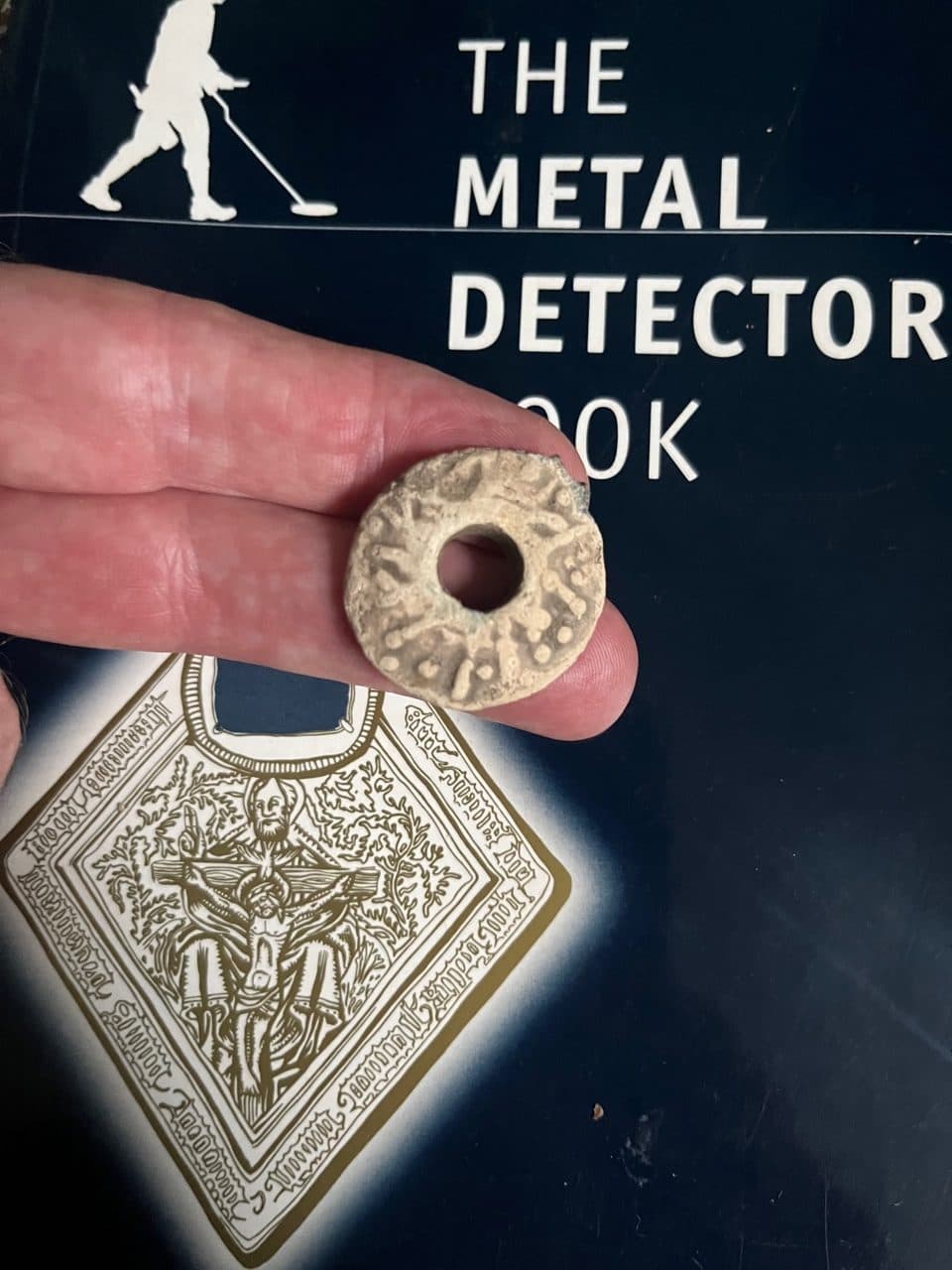
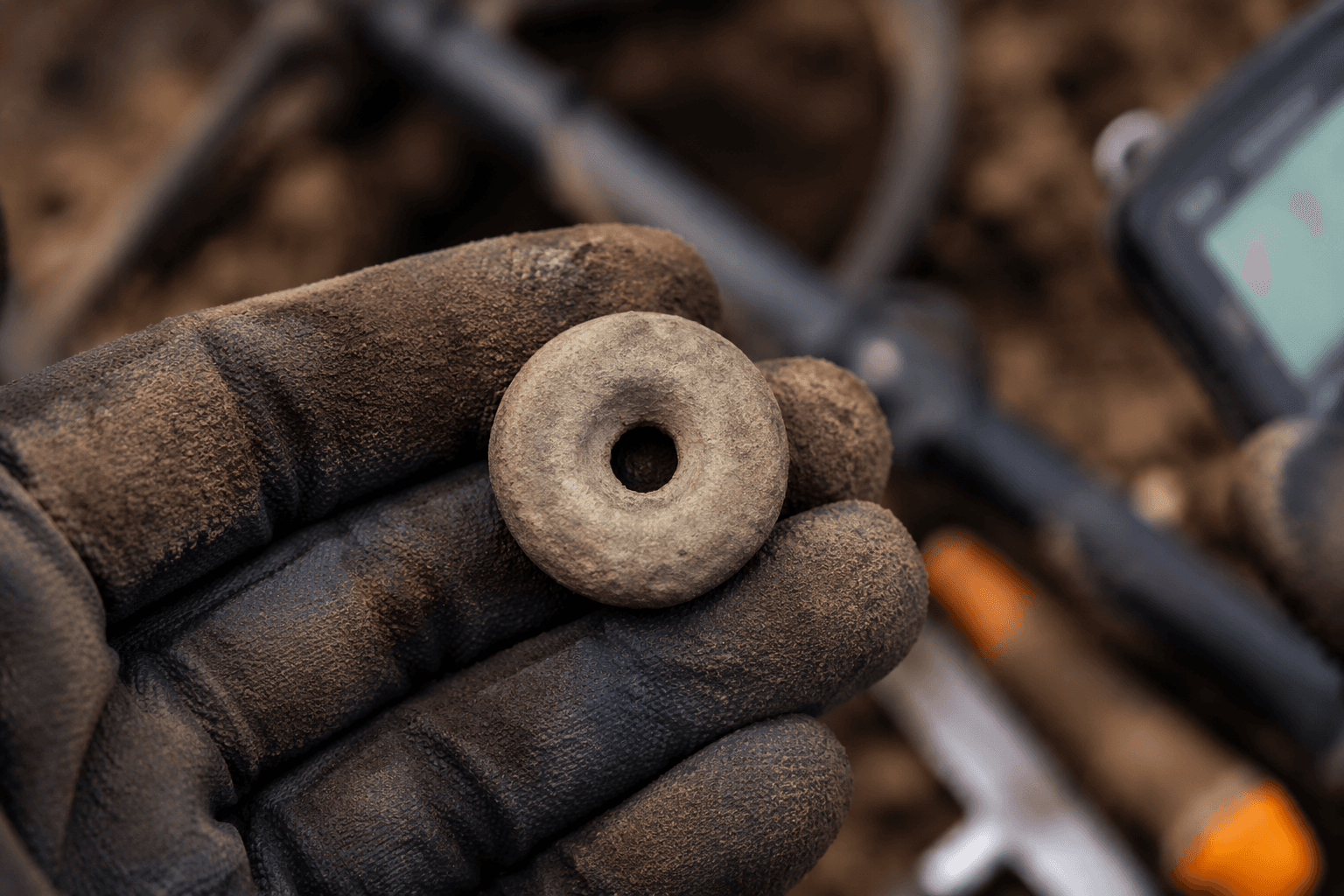
A clear signal on an old medieval village site led the detectorist behind Swing Beep Dig Repeat away from a pocket of corroded coins and buttons and into a far better find. After cutting a neat plug and checking the hole with a pinpointer, a small round lead spindle whorl came out of the ground, the sort of object that can look like scrap at first glance but carries a much bigger story in the hand.
That story starts with the shape. Spindle whorls are weights fixed to a spindle to help provide momentum while spinning and twisting fibres together, and Portable Antiquities Scheme records note that the method has been used since prehistoric times and continued through the Roman, medieval, post-medieval and modern periods. Lead was a practical choice because it was easy to shape and heavy enough to do the job, and surviving examples often show a dull grey surface, with plain or lightly decorated faces. Finds records show many lead whorls sit around 28 to 35 millimetres across, and can be biconical or bi-convex, while some are dated to about AD 1450 to 1550.
The broader archaeology backs up why that matters. Eleanor R. Standley’s work on hand spinning in medieval Britain, covering about AD 1200 to 1500, brought together a new corpus of lead-alloy spindle whorls recorded through the Portable Antiquities Scheme and Scottish Treasure Trove. In Perth and Kinross, archaeological research has gone further, saying drop spindles were probably the normal medieval method for making yarn there and that spinning was probably mostly women’s work. Historic England puts textile production at the heart of England’s economic base from the medieval period onward, long before the mechanisation of the 18th and 19th centuries reshaped the industry.

The appeal of the find is partly personal, too. The writer recalled a first spindle whorl that looked at first like a crude coin or token until cleaning revealed the hole through the middle. That kind of misread is familiar to detectorists, and it is exactly why a small lead disc deserves a second look in the finds pouch. The Portable Antiquities Scheme, run by the British Museum and Amgueddfa Cymru – National Museum Wales, had more than 1,781,180 items recorded by January 2025, and pieces like this one keep turning ordinary ground into a record of everyday labour. In the middle of a bag full of common finds, the spindle whorl is often the one that tells you who was working the site, and what kept the household going long after the swing has moved on.
This article was produced by Prism’s automated news system from verified source data, official records, and press releases, then run through automated quality and moderation checks before publishing. The system is built and supervised by the people who set the standards it runs under. Read our full AI policy.
Did this article answer your question?