Mindfulness Faces Backlash, Yet Research Still Shows Mental Health Benefits
Mindfulness may be facing backlash, but the research still points to real gains for anxiety, depression, pain, and stress when the practice is taught clearly.
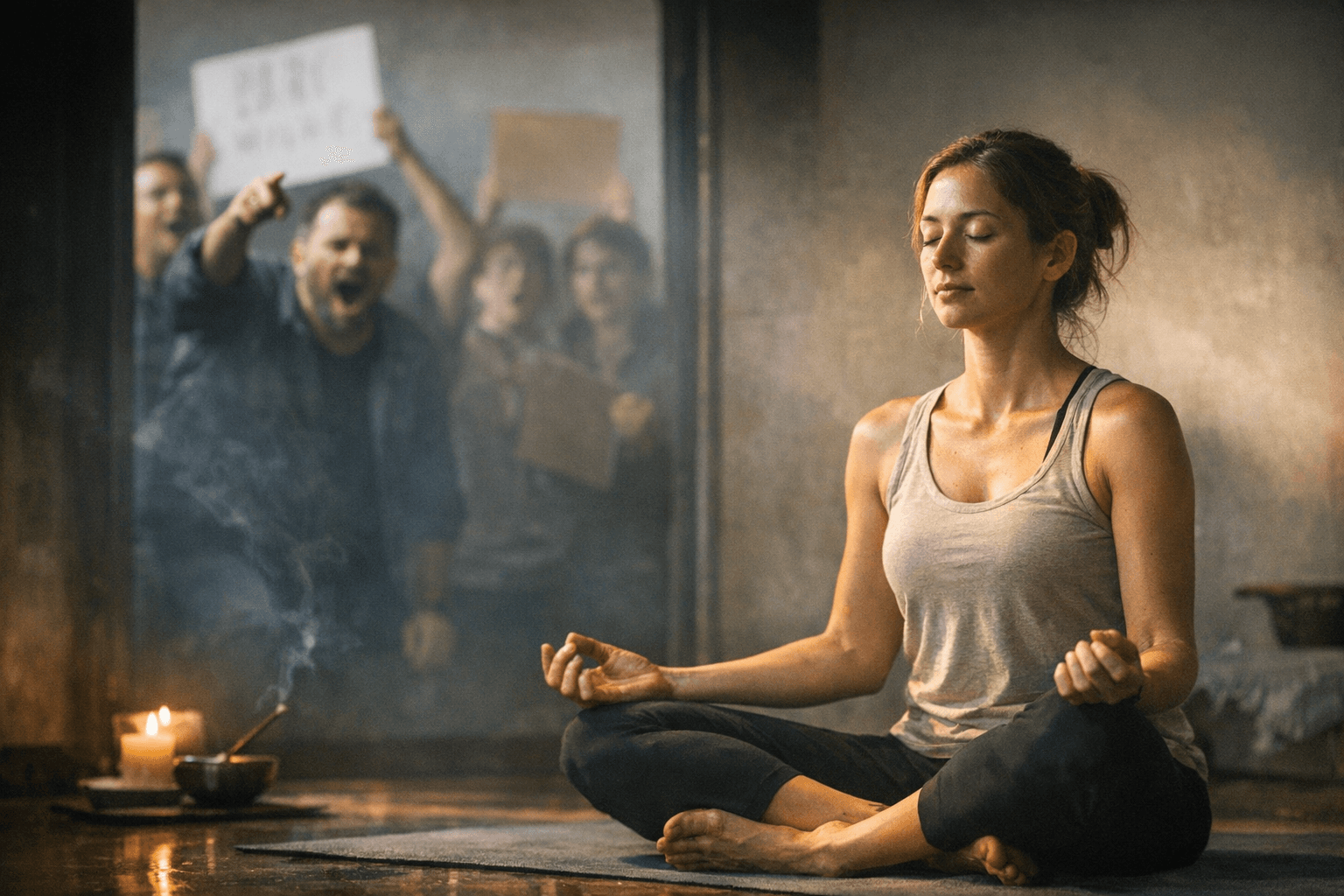
Mindfulness is not disappearing. It is being argued over.
The loudest criticism has shifted the conversation from “Does mindfulness work?” to “What was oversold, what was misunderstood, and what still genuinely helps?” That distinction matters, because the evidence base has not vanished with the hype. Mindfulness-based stress reduction, better known as MBSR, still sits at the center of the story, and the current debate is really about how to talk about benefits and limits without flattening either one.
How mindfulness moved into mainstream care
Jon Kabat-Zinn developed MBSR in the late 1970s, and it launched in clinical form in 1979. That matters because it helped move mindfulness out of strictly Buddhist and contemplative settings and into Western healthcare. The program gave clinicians a secular structure they could actually prescribe, study, and adapt, which is one reason mindfulness became the umbrella term it is today.
That translation into clinical language was powerful, but it also created the conditions for backlash. Once a practice is packaged for hospitals, workplaces, apps, and wellness branding all at once, the public hears one promise in many different voices. Some of those voices were careful. Others were not.
What the best-known studies still show
The strongest mainstream summary remains the 2014 JAMA Internal Medicine review, which found that mindfulness meditation programs produced small improvements in anxiety, depression, pain, stress or distress, and mental-health-related quality of life. The review also described moderate evidence for improved anxiety and depression, with low evidence for stress or distress and mental-health-related quality of life.
That combination is important because it is modest, not miraculous. Mindfulness is not a cure-all, but it is also not nothing. The evidence says the effects are real enough to matter for some people, especially when the practice is tied to concrete mental-health needs rather than sold as a vague life upgrade.
More recent work continues to test that picture rather than replace it. A 2023 paper in Nature Mental Health reported a systematic review and individual participant data meta-analysis of randomized controlled trials assessing mindfulness-based programs for adult mental health promotion. A 2024 systematic review and meta-analysis in Scientific Reports examined randomized controlled trials during the COVID-19 pandemic and focused on depressive symptoms. The newer studies keep the field moving toward narrower, more specific questions: who benefits, from what kind of practice, and in what setting.
What the backlash is actually reacting to
Some of the criticism is cultural, but some of it is scientific. Researchers have warned that parts of the mindfulness literature have not been as self-critical as they should have been, especially when early excitement outpaced careful measurement. The concern is not just that the public heard too much marketing. It is that some studies and public-facing claims blurred the line between early promise and settled proof.
That is why the current conversation feels different from a simple fad cycle. The sharpest critiques are pushing the field to define its terms better, report outcomes more clearly, and stop treating every positive effect as if it were large, universal, or easy to reproduce. In other words, the backlash is partly a correction.
The part people avoid talking about: adverse effects
A serious guide to mindfulness now has to include harms, not as a scare tactic but as part of responsible teaching. A 2024 to 2025 review discussion of adverse effects notes that meditation and mindfulness studies are increasingly examining experiences such as anxiety, traumatic re-experiencing, and altered time-space perception. That is a crucial change in the field, because it acknowledges that not every practitioner has a soothing experience.
One widely discussed report cited by York University’s trauma blog found that about 58% of participants in one mindfulness-based program reported at least one negative experience during practice, and 37% said meditation negatively affected daily life. Those numbers do not cancel out the benefits found elsewhere, but they do make one point impossible to ignore: mindfulness is an intervention, not a mood accessory, and interventions can have side effects.
That is also why reporting standards matter so much. The literature has increasingly called for clearer definitions of adverse events and a more systematic way to document them in meditation trials. Without that, the field risks repeating the same pattern, enthusiasm first, accounting later.
How to read the evidence without getting trapped by the hype
The most useful way to think about mindfulness now is to separate the practice from the packaging. The practice itself, especially when taught clearly, still has support for helping with anxiety, depression, pain, and stress-related outcomes. The packaging, however, has often promised more than the evidence can safely deliver.
A grounded approach looks like this:
- Use mindfulness for specific mental-health needs, not as a replacement for treatment when treatment is needed.
- Favor programs with a clear structure, such as MBSR, rather than vague “mindfulness” branding with no method behind it.
- Expect small-to-moderate gains, not instant transformation.
- Treat uncomfortable experiences as real data, not personal failure.
- Ask whether a teacher or program explains both benefits and risks with equal seriousness.
That last point is where the public conversation is headed. Mindfulness is strongest when it is taught as a skill with limits, not a lifestyle halo.
Why the story still matters
The current debate is not really about whether mindfulness is over. It is about whether the public can finally hear a more accurate version of the story. The evidence says mindfulness-based programs can help with several mental health outcomes, even if the gains are usually modest. The critiques say the field has sometimes overreached, underdefined harm, and sold the practice too broadly.
Both things can be true at once. And once the hype is stripped away, what remains is still significant: a secular practice that entered Western healthcare through MBSR in 1979, a body of research that continues to show measurable benefits, and a field now mature enough to admit that honesty about limits is part of what makes the benefits believable.
This article was produced by Prism’s automated news system from verified source data, official records, and press releases, then run through automated quality and moderation checks before publishing. The system is built and supervised by the people who set the standards it runs under. Read our full AI policy.
Did this article answer your question?