Mindfulness Program Returns to Prison Radio, Helping Inmates Find Calm
And Breathe returns with prison-ready meditation built for noisy cells, giving people inside a repeatable way to calm down, focus, and get through the day.
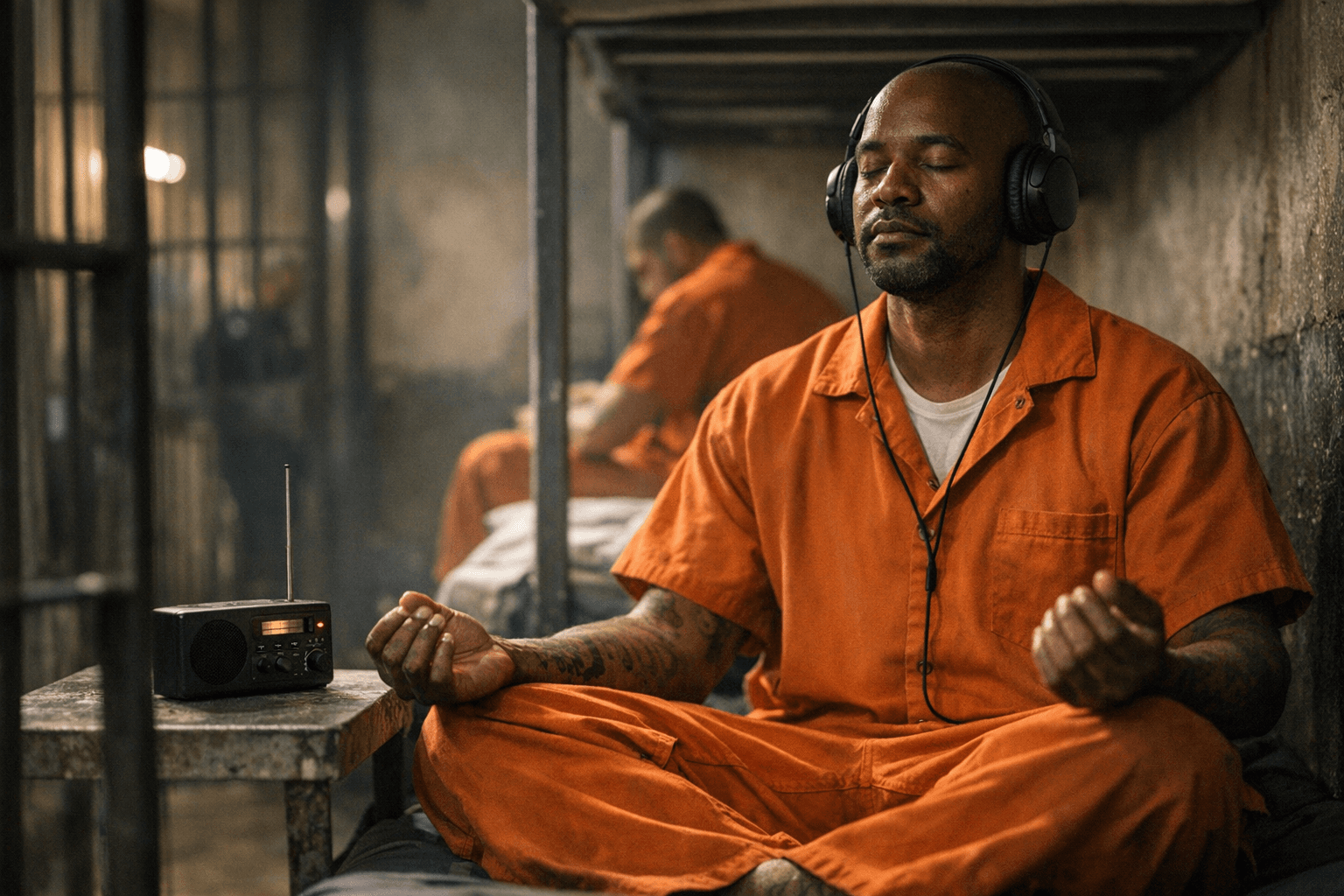
Main Man Ali says the sessions help him calm down, stop stressing, and focus on himself, which is exactly why And Breathe matters inside prison. The returning radio series turns a few guided minutes into a usable reset for people living with noise, crowding, and very little privacy.
A mindfulness format built for prison life
And Breathe is not trying to sound like polished studio wellness. It is designed for a setting where privacy is scarce, autonomy is limited, and emotional pressure is constant, and that is what makes the format so effective. The program is back on National Prison Radio, where it can reach people through in-cell TV and Launchpad across prisons in England and Wales.
That reach matters because prison is one of the hardest places to make mindfulness feel realistic. A session has to be short, simple, and repeatable if it is going to work behind bars. And Breathe meets that need with a structure that treats meditation as a practical coping tool, not a luxury add-on.
A simple structure that lowers the barrier
Each episode starts with Sam, the NPR producer, setting the mood with a carefully chosen chill-out playlist. Then Emily, a meditation expert who works in prisons herself, takes over with guided exercises shaped by firsthand knowledge of daily life inside. That detail is crucial: the practice is built for the realities of prison, not imported as generic self-help.
The show also moves with intention. It begins at the basics and gradually introduces more advanced ideas, so a first-time listener can follow along without feeling left behind, while someone who has heard the series before still has something to build on. The result is a format that feels approachable, but never thin.
Why the schedule matters
The broadcast pattern is as important as the content. The main program airs every Tuesday at 5 p.m. and 10 p.m., while shorter practical meditation sessions repeat daily at 6:45 a.m. and 11:30 p.m. That repetition gives people multiple entry points, whether they are trying to settle into the day, recover from a stressful afternoon, or wind down before lights out.
In a prison routine, predictability is powerful. A familiar slot on the schedule can become a small anchor, the kind of thing someone returns to without needing extra permission, extra space, or extra equipment. That makes the show less like a special event and more like part of the week’s rhythm.
The prison radio system behind the program
National Prison Radio has been built for scale. The Prison Radio Association says the service was founded in 2009 and is available 24 hours a day, seven days a week in prison cells across England and Wales. It reaches up to 80,000 people behind bars, giving a mindfulness series like And Breathe a real chance to become part of daily life rather than a one-off listening experiment.
The station’s production model is part of the story too. Content is produced and presented by serving prisoners at HMP Brixton and HMP Styal alongside professional staff, which means the platform is not only broadcasting into prisons, it is also being shaped from inside them. The charity says it provided radio production training to 28 people across those two sites in the last reported year, showing how media work and rehabilitation are tied together.
That broader mission is not limited to one show. The Prison Radio Association says its programming is aimed at desistance-related factors, including attitudes, thinking and behaviour, and physical and mental health. In 2023 alone, it featured 328 organisations working in the criminal justice sector, and its podcasts were listened to 267,580 times over 12 months. Together, those numbers show a platform that functions as both a media outlet and a support system.
Why the return lands with real weight
The reason And Breathe feels meaningful is that it matches what mindfulness is supposed to do in a high-stress environment: reduce reactivity, support self-regulation, and create a few minutes of mental space. A 2020 UK prison study found that a brief mindfulness intervention led to statistically significant improvements in mindfulness skills, cognitive control, and heart-rate variability, along with significant decreases in stress among prisoners and staff.
That research helps explain why a short radio practice can matter so much inside. A guided breathing session will not change prison life, but it can change the next ten minutes, and sometimes that is enough to prevent a spiral. For someone trying to sleep, cool down after tension on the wing, or simply get back to themselves, the appeal is immediate.
A long arc of prison broadcasting
And Breathe also sits inside a much longer prison-radio history. The Prison Radio Association traces its roots to Radio Feltham in 1994, then to the charity’s founding in 2006, Electric Radio Brixton in 2007, and the national launch in 2009. That timeline shows how a project that began as a local experiment became a national service with a steady place in prison life.
Seen in that context, the return of a mindfulness series is not a novelty. It is a sign of how prison radio has matured into a system that can carry not only music, news, and information, but also concrete emotional support. In a place built around restriction, a calm voice, a steady playlist, and a guided breath can still offer something real: a moment of control, repeated every week, and available when it is needed most.
This article was produced by Prism’s automated news system from verified source data, official records, and press releases, then run through automated quality and moderation checks before publishing. The system is built and supervised by the people who set the standards it runs under. Read our full AI policy.
Did this article answer your question?


